
RMC
RMC 0.01uF Ceramic Disc Capacitor, 150 VAC and 1400 VDC, Z5U Dielectric
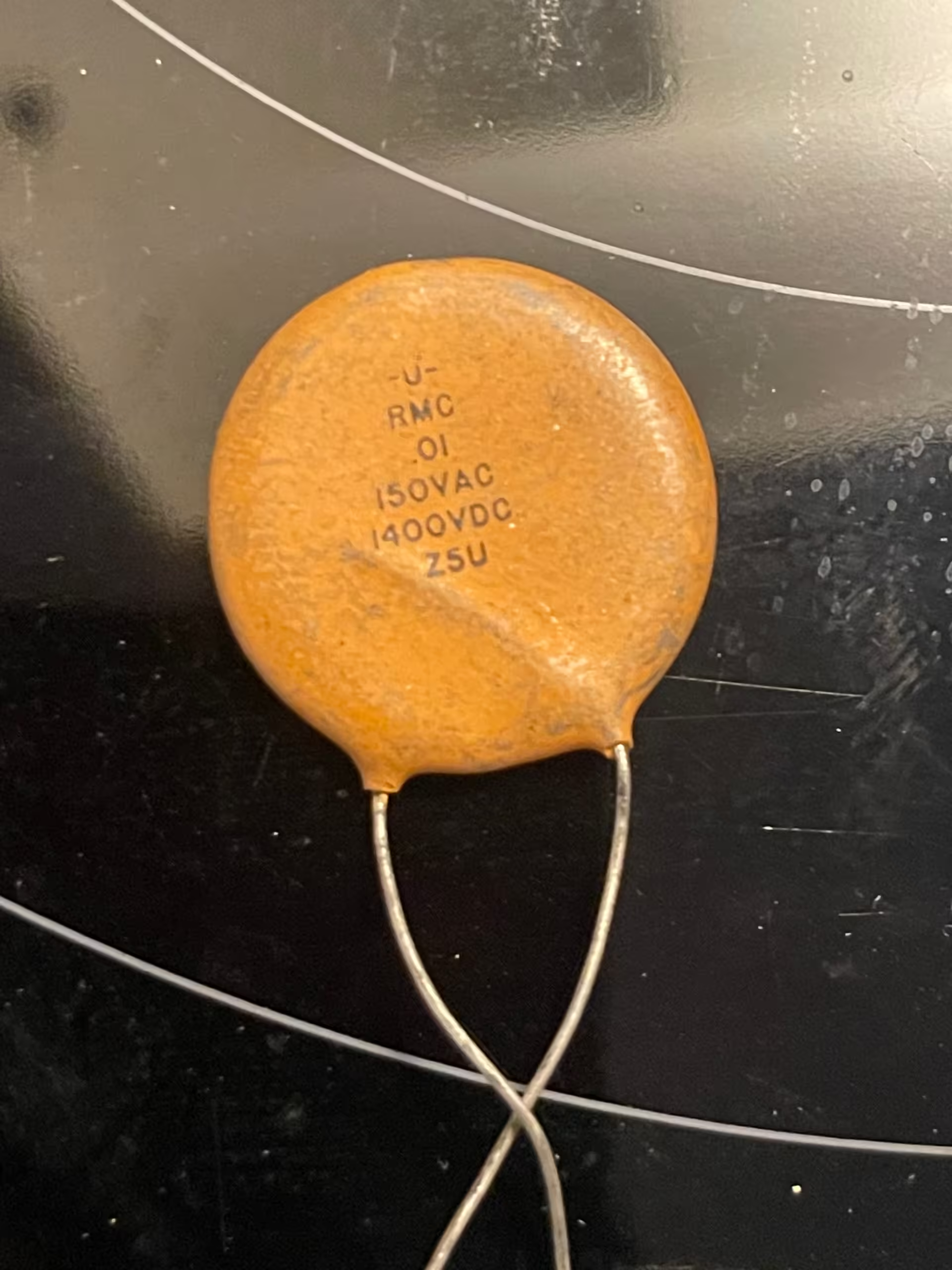
- 3 photos
Never used. The original pack has been opened, or the quantity was split off a full reel or tube. Leads are original and unclipped.
New old stock, open stock on the grading scaleSend the quantity you need. You get a quote back with shipping before anything is charged.
Videos
Filmed on the bench. Sound is stripped from product clips.
- 0:01
Video still with the full marking stack in focus.
- 0:12
Video still panning across the discs, markings blurred in this frame.
Specifications
| Specification | Value |
|---|---|
| Identification | |
| Part number | 9V4JS2ME |
| Manufacturer | RMC |
| Condition | New old stock, open stock |
| Date code | Not recorded |
| Package | Ceramic disc, radial leads |
| Country of origin | Not recorded |
| Family | Not recorded |
| Stock number | 9V4JS2ME |
| Electrical | |
| Capacitance | 0.01microfarad |
| Capacitance, alternative units | 10 nF, 10000 pF |
| DC voltage rating | 1400VDC |
| AC voltage rating | 150VAC |
| Dielectric | |
| Dielectric code | Z5U |
| Dielectric class | EIA class 2, ferroelectric ceramic |
| Z5U lower temperature limit | +10C |
| Z5U upper temperature limit | +85C |
| Z5U capacitance change over that range, referred to 25 C | +22 percent to -56 percent |
| Physical | |
| Construction | Ceramic disc, radial leads, coated |
| Sourcing | |
| Manufacturer status | RMC ceased trading in 2001. Plants were in Chicago, Illinois and Attica, Indiana. |
| This lot | |
| Full marking on the disc | -U- RMC .01 150VAC 1400VDC Z5U |
About this part
These are ceramic disc capacitors made by RMC, Radio Materials Corporation, a Chicago and Attica, Indiana maker of ceramic capacitors and resonators that traded its disc line under the DISCAP name and closed in 2001. The discs are marked 0.01 uF with a dual rating, 150 VAC and 1400 VDC, and a Z5U dielectric code.
The dual rating is the useful part: a disc rated for continuous AC service at 150 V is built to survive line frequency stress and self heating, not just a DC hipot, which is why parts like these went into line bypass, snubber and coupling positions in mains powered equipment, arc suppression across motor and switch contacts, and high voltage supplies in televisions and instruments.
Z5U is an EIA class 2 code and it is specific: Z sets the lower limit at plus 10 C, 5 sets the upper limit at plus 85 C, and U allows the capacitance to move plus 22 percent to minus 56 percent across that span, referred to the value at 25 C. Class 2 ceramic also loses capacitance under applied DC bias and ages logarithmically after firing. Use these for bypass, snubbing and coupling where value drift does not matter, never in timing, filters or oscillators. On old stock, look for chips and cracks in the coating, corrosion at the lead exit, and lead solderability.
Questions about this part
What does Z5U actually mean?
It is the EIA class 2 temperature characteristic code. Z means the lower operating limit is plus 10 C, 5 means the upper limit is plus 85 C, and U means the capacitance is permitted to vary from plus 22 percent to minus 56 percent over that range. Note the lower limit: Z5U is not specified below plus 10 C at all.
Why does it have both an AC and a DC rating?
The DC rating is the withstand limit for steady DC. The AC rating is much lower because continuous AC stress causes dielectric heating and because a class 2 ceramic under AC excitation dissipates real power. A part rated 150 VAC and 1400 VDC must not see more than 150 V RMS continuously.
Can I use these on a 120 V mains line?
Only with care. Line to line safety positions normally call for a part with an X or Y class safety approval, which is a separate qualification about failure mode, not just voltage. Do not substitute an unclassified disc into a safety critical position across the mains.
What tolerance are they?
The marking does not carry a tolerance letter, so the tolerance is unconfirmed. Z5U discs of this era were commonly supplied at plus or minus 20 percent, or minus 20 percent to plus 80 percent. Measure before use if the value matters.
Are they suitable for a timing or filter circuit?
No. Between the Z5U temperature envelope, the DC bias effect and ageing, the value in circuit can be far from the marked figure. Use C0G or NP0 ceramic, film or mica where the value has to hold.
Do ceramic discs go bad in storage?
The ceramic itself is stable, but class 2 dielectrics age, losing capacitance logarithmically with time since the last thermal excursion. Physical faults matter more: coating cracks, chips at the rim and corroded leads.
Who was RMC?
Radio Materials Corporation, a US ceramic component maker with plants in Chicago, Illinois and Attica, Indiana. It made ceramic capacitors, including the DISCAP disc line, and resonators. The company went out of business in 2001.