
9V4JS2MERMC
$1.754 in stockAsk for a quote
Manufacturer
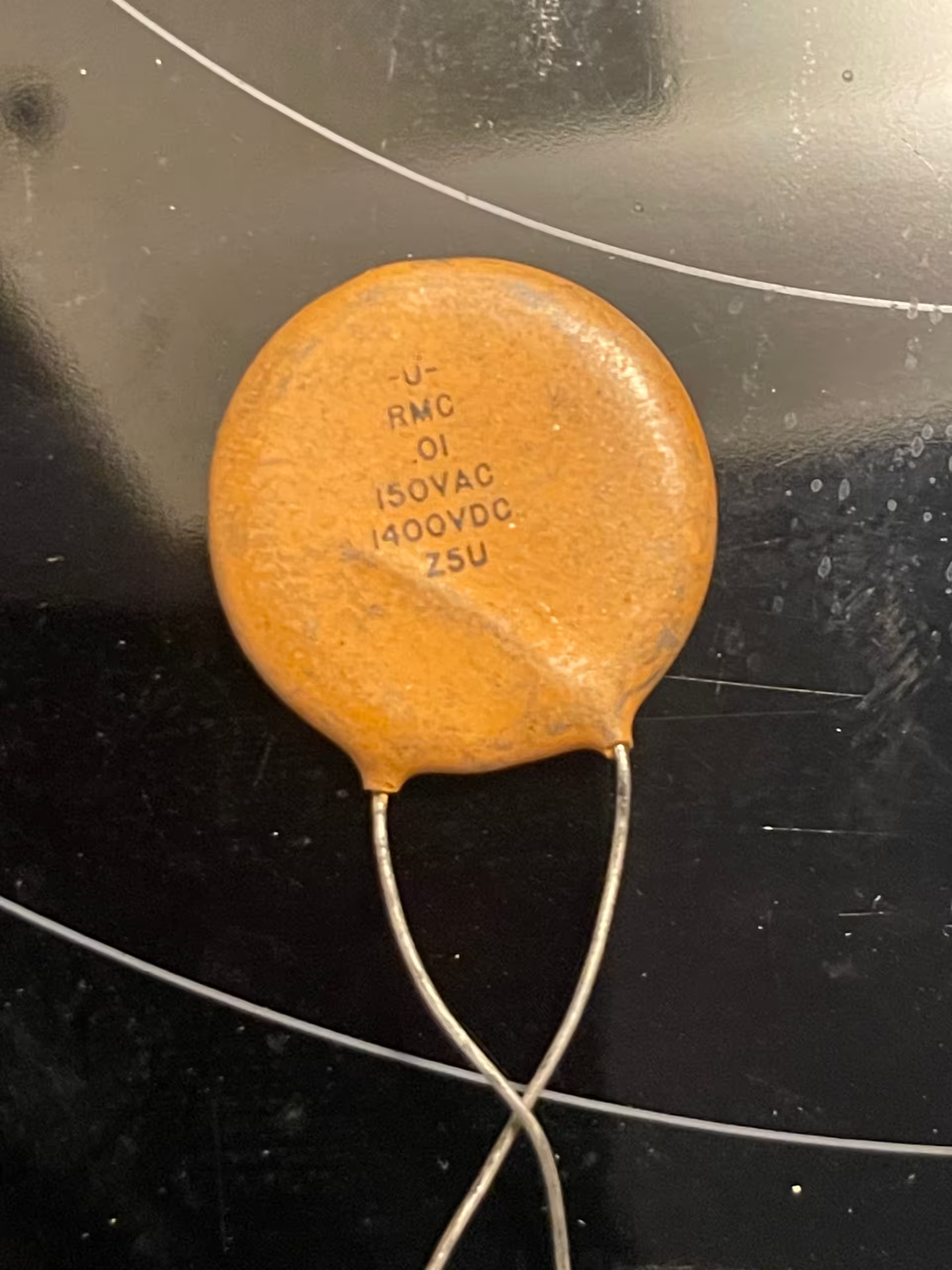
RMC is Radio Materials Corporation, a Chicago company that made ceramic capacitors, and for about thirty years it made an enormous number of them. If you have opened an American radio, television or piece of test gear built between the late 1940s and the 1970s, you have seen its work: small ceramic discs, often brown or grey, printed with a value and the letters RMC, and sold under the trade name Discap. The initials are what is printed on the parts, which is why they are what this page is filed under.
What they were known for. Volume, standardisation and the service trade. RMC discs were the ceramic capacitor a television repairman carried in his caddy, and the company sold them in service assortments as well as to manufacturers. The parts are unglamorous by design: a ceramic disc, two radial leads, a dipped phenolic or epoxy coating and a printed value. That format became so standard that it outlived the company and is still what a ceramic disc capacitor looks like today. Production ran from Chicago and later from a plant in Attica, Indiana.
What we do not know. The trail after the 1970s is thin. The name faded from the market and the Discap brand went with it, and the various accounts of who acquired what do not agree with each other well enough for us to state one as fact. If you know the documented history we would genuinely like to hear it. In the meantime we would rather write this paragraph than invent a tidy ending, because a confident wrong answer about provenance is worse than an honest gap.
What this means for old stock. Ceramic capacitors do not age the way electrolytics do. There is no electrolyte, no oxide layer to reform, and nothing chemically active at room temperature, so a sealed RMC disc from 1965 is electrically the part it was in 1965. What the dielectric does instead is behave the way it always did: a Z5U or a general purpose class 2 ceramic drifts substantially with temperature, loses capacitance under DC bias, and carries tolerances that look alarming to anyone used to film. That is the material, not the age. The failure to watch for is a cracked coating, usually from a lead bent too close to the body, and it is visible under a light.
Radio Materials Corporation, a Chicago maker of ceramic capacitors. The initials are what appears on the parts themselves alongside the value, so that is what the catalog files them under and what a search for them will match. The full company name opens the description above.
Electrically, yes. Nothing in a ceramic capacitor degrades with time alone: there is no electrolyte to dry out and no oxide to reform. Check the coating for cracks and the leads for corrosion, and if the body is sound the part measures what it always measured.
It was the Radio Materials Corporation trade name for its ceramic disc capacitors, and it was printed on packaging and service assortments rather than on the parts themselves. Seeing Discap on a box is a good sign the contents are original RMC stock rather than a later refill.
Because general purpose class 2 ceramic dielectrics trade accuracy for capacitance in a small body. A Z5U part is specified over a temperature band that allows a large swing, and it also loses capacitance under DC bias. That makes it an excellent bypass and coupling part and a poor timing part. It is a property of the material and has nothing to do with the age of the capacitor.
Only if it is rated for it and only where the application permits, and a disc rated in AC volts as well as DC was usually sold for exactly that. Use the AC figure, never the DC one, for anything continuously across a line. If the circuit is a safety application, a modern X or Y class part is the correct choice and we will say so rather than sell you an old disc for the job.