
FZT753TADiodes Incorporated
$7.505 in stockAsk for a quote
Manufacturer
This page covers two companies and one product line. The transistors here were designed and numbered by Zetex Semiconductors, an English firm in Oldham, near Manchester, spun out of the Ferranti semiconductor operation in 1989 and run as an independent business through the 1990s and 2000s. Diodes Incorporated is an American company founded in 1959 and headquartered in Texas, and it acquired Zetex in 2008. The part numbers survived the acquisition, so a transistor designed in Oldham is still catalogued and still made under the Diodes name, and stock carrying either logo is listed together on this page.
What Zetex was known for. Getting more current and more gain out of a small package than anyone thought reasonable. While the rest of the industry treated a surface mount transistor as a small signal device, Zetex built bipolar transistors with very low saturation voltages and high current handling in SOT23, SOT89 and SOT223 bodies, and made a genuine engineering argument out of it: a low saturation voltage means less heat, and less heat in a small package means you can run more current through it than the package size suggests. The E line leaded parts numbered ZTX and the SOT223 parts numbered FZT are the two families most people recognise, along with the high gain super beta types.
The Ferranti inheritance. Ferranti was one of the pioneers of British semiconductor manufacture and the Oldham site had been making transistors since the 1950s, so Zetex did not start from nothing in 1989. It started with a plant, a process and a set of engineers who had been optimising bipolar devices for thirty years, which is why a small English company was able to hold a defensible position in a market dominated by very large ones.
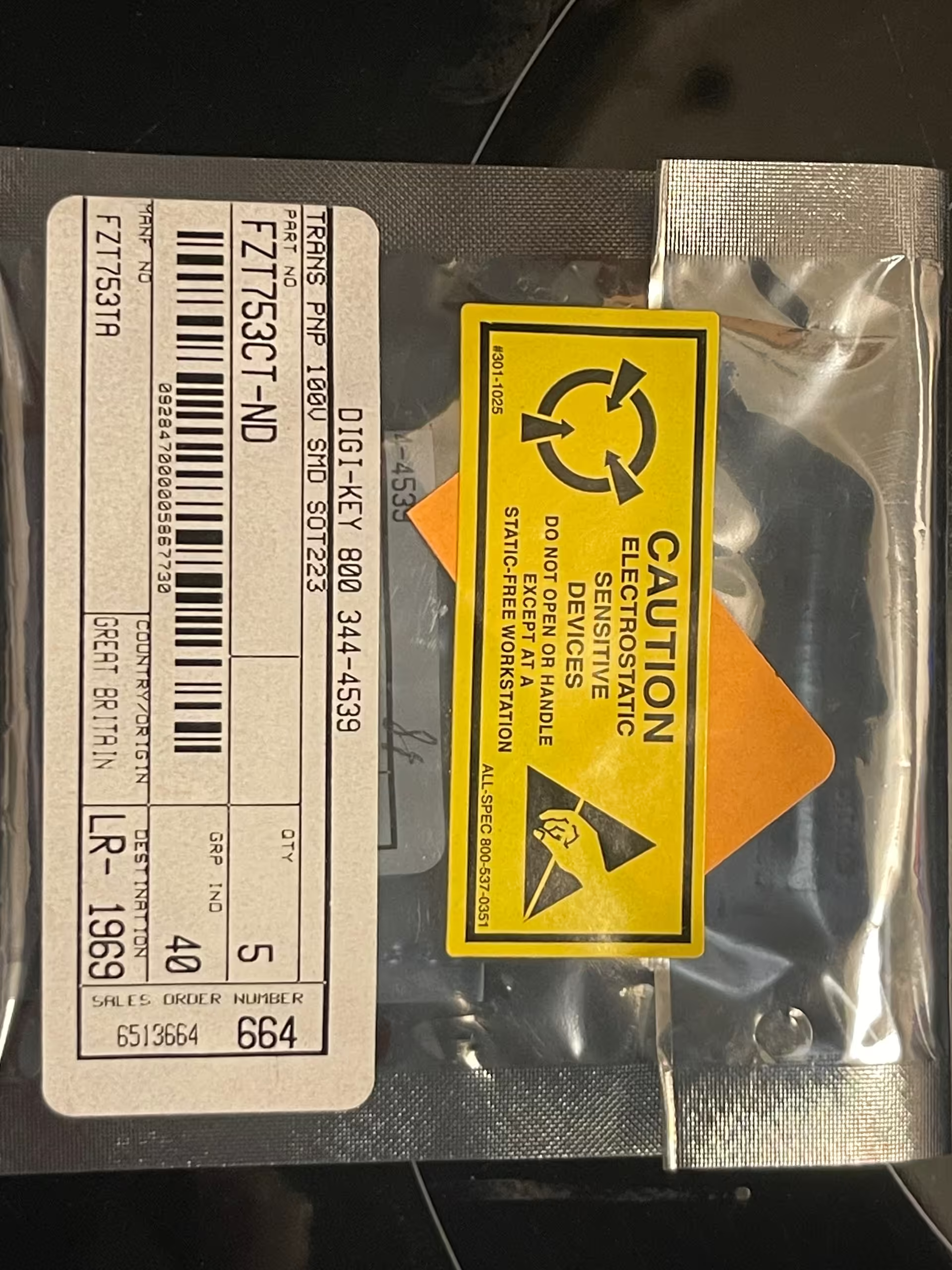
What this means for old stock. These are the easiest parts in the catalog to buy with confidence. Silicon does not age in storage, the packaging is modern tape and reel, and the datasheets are current because the part numbers are still in production. The FZT753TA on this page is a PNP medium power transistor rated 100 volts and 2 amps in SOT223, and the specification you can download today describes the part in the reel exactly. What you are buying is availability, not a gamble on condition.
Not electrically, for a part number that ran through the 2008 acquisition. Diodes Incorporated kept the Zetex numbering and the specification. The logo on the body tells you which era the part was packed in, which matters for provenance and for matching an existing reel, and it does not change the transistor.
It is the Zetex family code for the SOT223 medium power package. ZTX is the leaded E line equivalent, and the same device number often exists in both. A trailing suffix such as TA describes the tape and reel packing and is not a different transistor, so do not reject a substitution over the packing code alone.
Only if the dry pack has been opened. Plastic surface mount bodies absorb moisture from the air, and moisture flashes to steam in a reflow oven and cracks the package. Parts still sealed with a live desiccant are ready to run. An opened reel should be baked before reflow. Hand soldering does not put enough heat in fast enough for this to matter.
Usually because you need a part number that has gone end of life, or you need it now rather than on a long lead time, or you are matching an existing build and want the same date range across a batch. For a part still in production, buying new is often the better call, and we would rather say so than sell you something you did not need.
Provenance and packaging carry the argument. We buy sealed factory tape and reel where we can, we check that the reel label, the lot code and the body marking agree, and we say plainly when a part arrived loose or in an unlabelled bag, in which case it is graded lower. We do not decap or X ray, and we will never tell you a loose part is certainly authentic.