
4901-IBryant
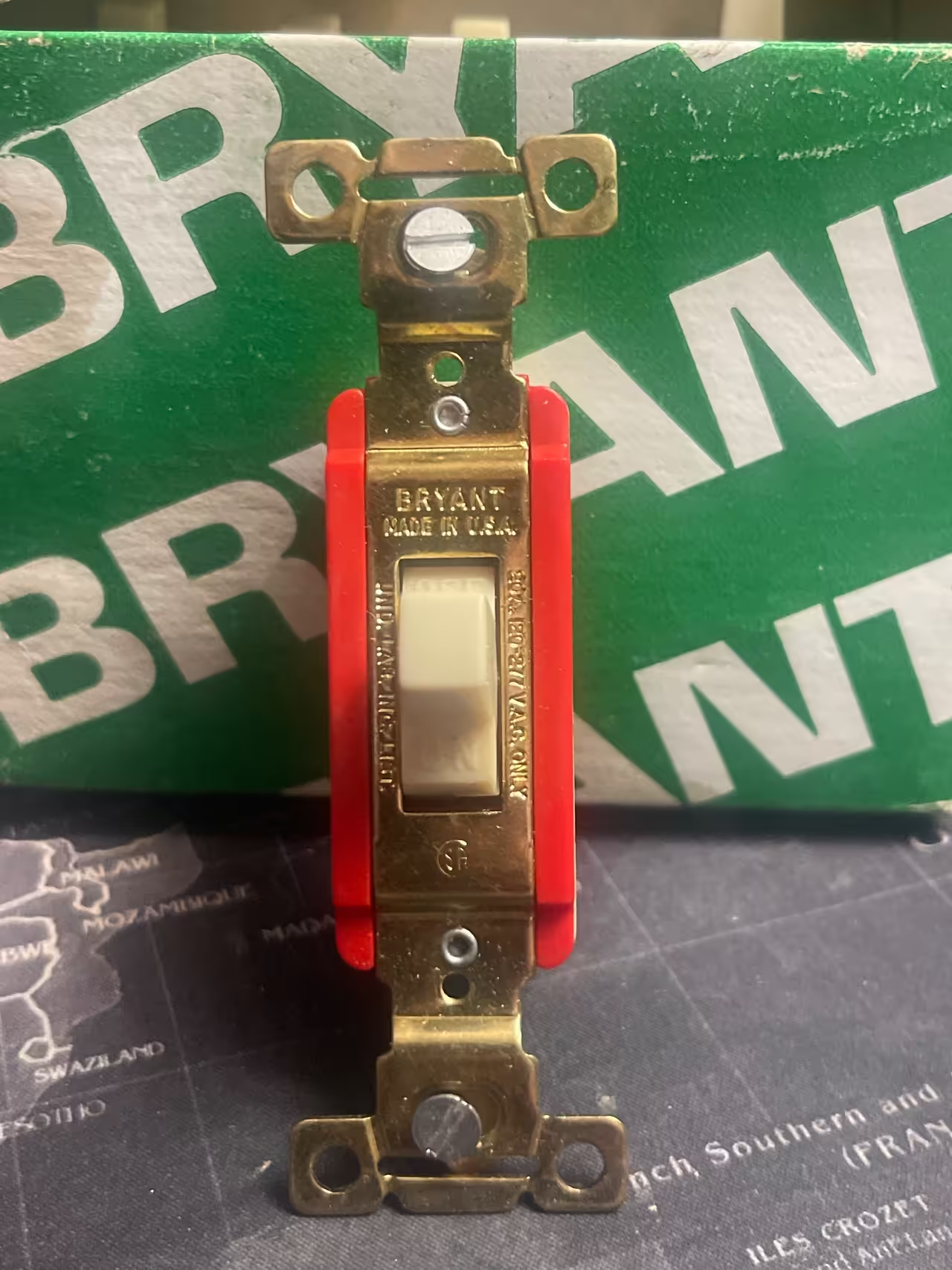
$24.0010 in stockAsk for a quote
Drawer
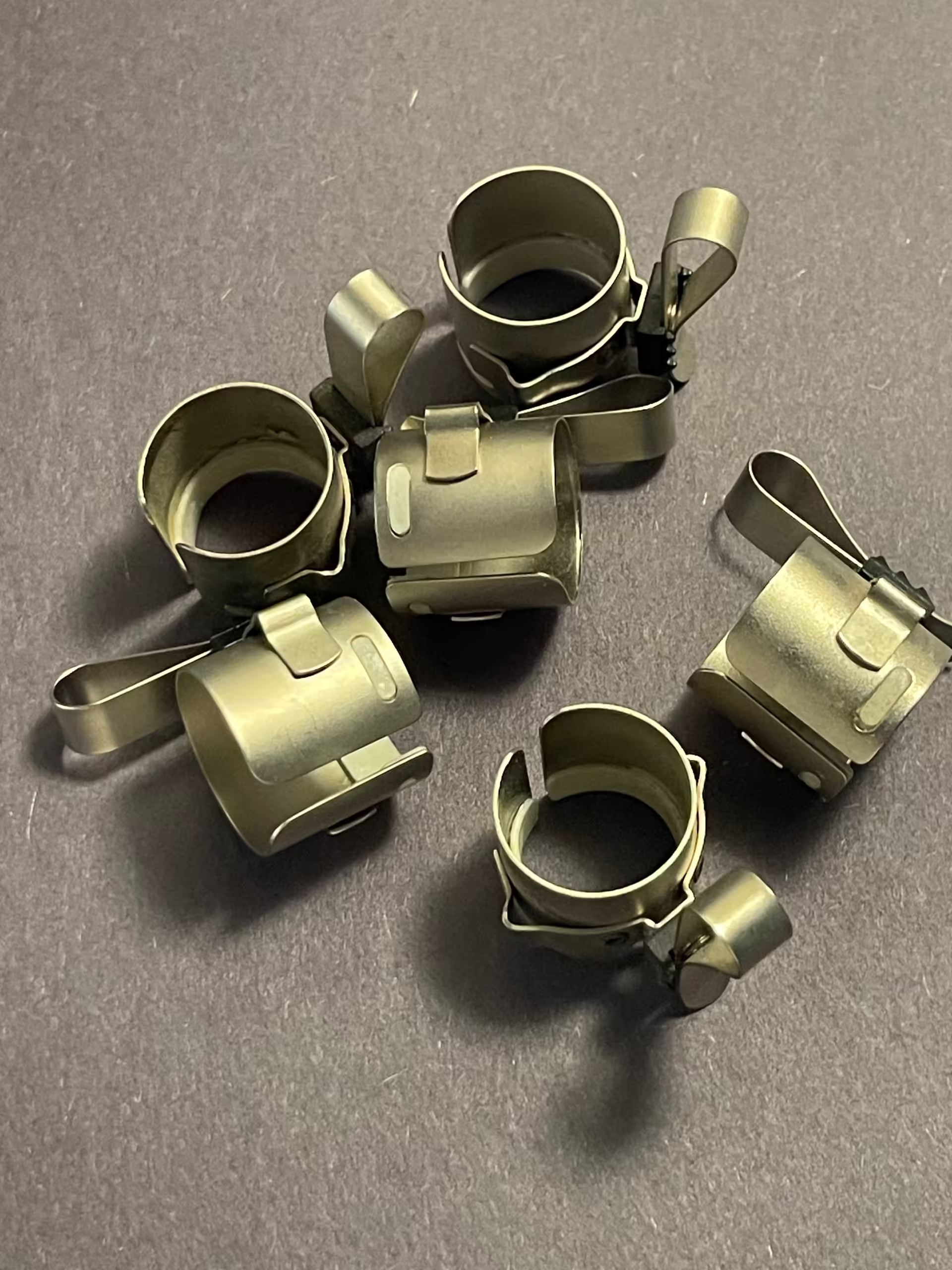
This drawer is the bench itself: hand tools, soldering accessories, grounding and static control hardware, and the consumables a repair job runs out of at nine on a Sunday evening. It is the one part of the catalog where old stock is often better than what is sold now, because small industrial hardware was built to a standard in the 1980s that nobody pays for today.
Static control hardware is the largest group: grounding clamps, bonding clips, wrist strap hardware, and the spring clamps that put a soldering iron barrel at ground potential instead of leaving it floating. That last one sounds trivial until you consider what an ungrounded tip does to a MOS gate. A tip carrying tens of volts of leakage is a hazard that leaves no evidence, because the damaged part fails weeks later and gets blamed on something else.
What ages here, and what does not. Steel, brass and beryllium copper hardware does not age at all if it was kept dry, and springs keep their temper. Plating tarnishes and a wipe brings it back. What does age is anything with a polymer or a chemistry in it: foam crumbles, adhesive backing on ESD mats lets go, rubber grips go sticky, and flux and solder paste have a real shelf life once opened. We say how old a consumable is rather than selling paste as though age were irrelevant.
Continuity is the whole specification for grounding hardware. A clip is doing its job when it makes a low resistance connection that stays put under vibration, and the failure is rarely the clip. It is the clip sitting on paint, or on anodised aluminium, which looks like bare metal and is an insulator. Bond to a machined or scraped surface and measure the joint rather than assuming it.
Condition here. Sealed means the original bag or blister has never been opened. Open stock means it was opened or split out of a bulk pack and never used. Pulled means it came off a bench or out of a decommissioned line, which for a steel clamp is close to irrelevant and for a foam backed mat is the whole story. Tools are graded on the same six point scale as everything else, so the words mean here what they mean in the tube drawer.
On arrival, check springs and jaws for corrosion under the plating, and check a clamp closes evenly along its length rather than gripping at one corner. For anything electrical, put a meter across it: clip to ground point, and expect a fraction of an ohm. For any consumable, read the date on the label and treat an undated tube as unknown.
So the tip sits at the same potential as your board and your wrist strap. An ungrounded or poorly grounded tip can carry tens of volts of leakage from the heater, and that discharges through whatever you touch it to. The parts it damages are the ones that fail later without explanation, which is exactly why the problem gets ignored. A barrel clamp bonded to your bench ground fixes it on an iron that never had a grounded tip.
To bare, clean metal that is itself bonded to your bench ground, and then measure it. The usual mistake is clamping to a painted panel or an anodised extrusion, both of which look like metal and are insulators. Scrape or use a machined face, fit the clip, and put a meter across the joint. You are looking for a fraction of an ohm.
The metal parts do. Clamps, clips and braided straps are steel and copper and they keep working indefinitely if they were stored dry. The parts that do not last are foam, adhesive and rubber: mat backing hardens and lets go, wrist strap bands perish, and dissipative foam crumbles. We separate the two in the description rather than selling a kit as a unit and staying quiet about the perishable half.
Yes, a real one, and paste is the worst of them. Where we list a consumable we give the date on the label and say plainly that it is old, and we price it as old. If a tube carries no date we say it is undated rather than estimating. Bar solder, wire solder and rosin cored wire are effectively indefinite by comparison.
Never in the same listing. The six condition grades used across the catalog apply here without modification: sealed and open stock mean never used, pulled means it came off a bench. For a steel clamp the difference is close to cosmetic, and we still state it, because the grade has to mean the same thing in every drawer or it means nothing.
Sometimes. Small hardware tends to arrive here in bulk lots, so ask for the count you need and we will tell you what is on the shelf and what a larger quantity costs. Where a lot is short we will say so rather than accepting an order we can only half fill.