
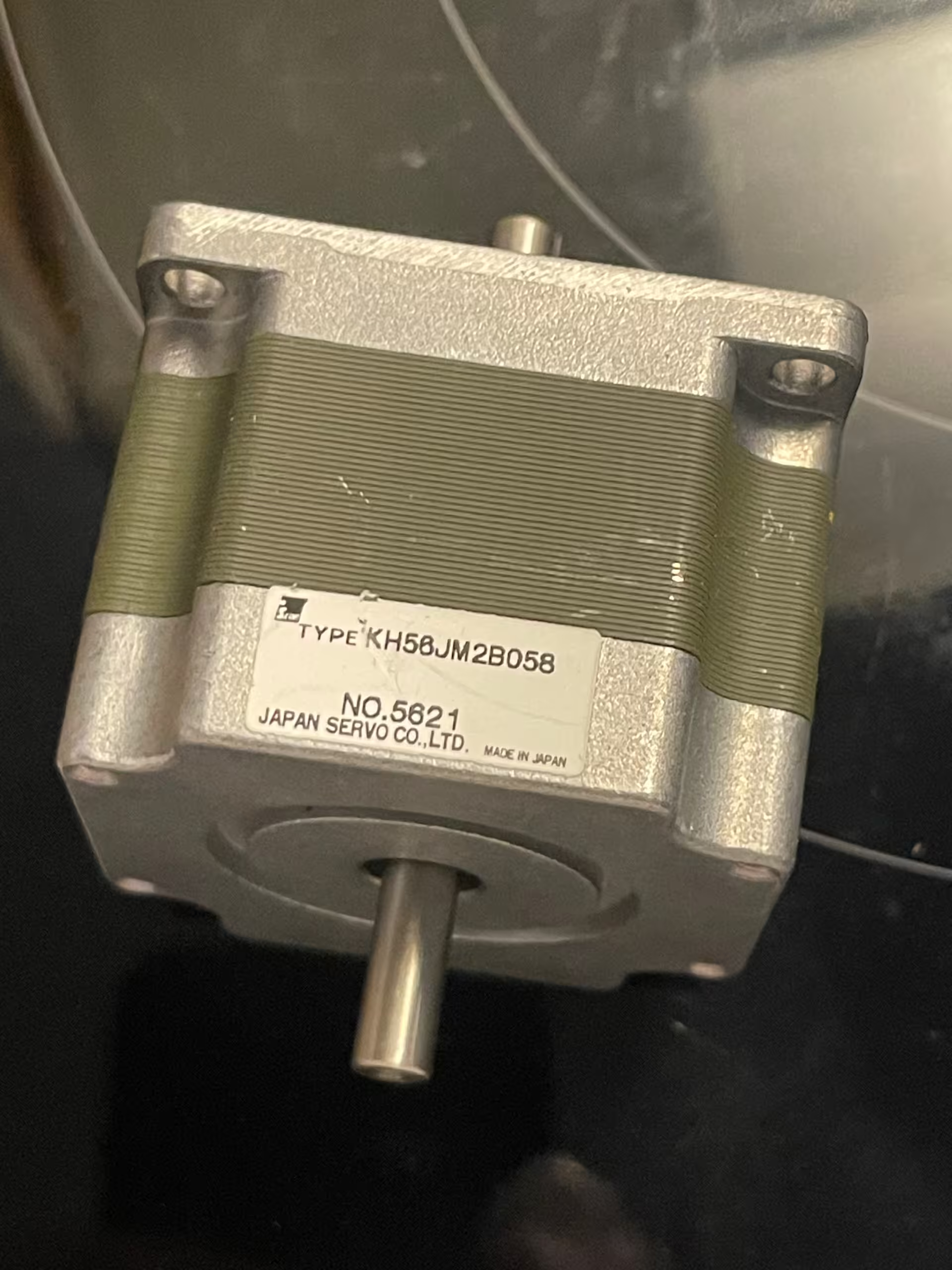
KH56JM2B058Japan Servo
$28.0012 in stockAsk for a quote
Drawer
Motors are the drawer where storage genuinely does damage, and where the damage is usually fixable if you know what you are looking at. Everything here is a rotating assembly with bearings, and a bearing that has not turned in twenty years has grease in it that has separated, stiffened or migrated off the races. That is the most common complaint about these motors and it is almost always a symptom rather than a fault.
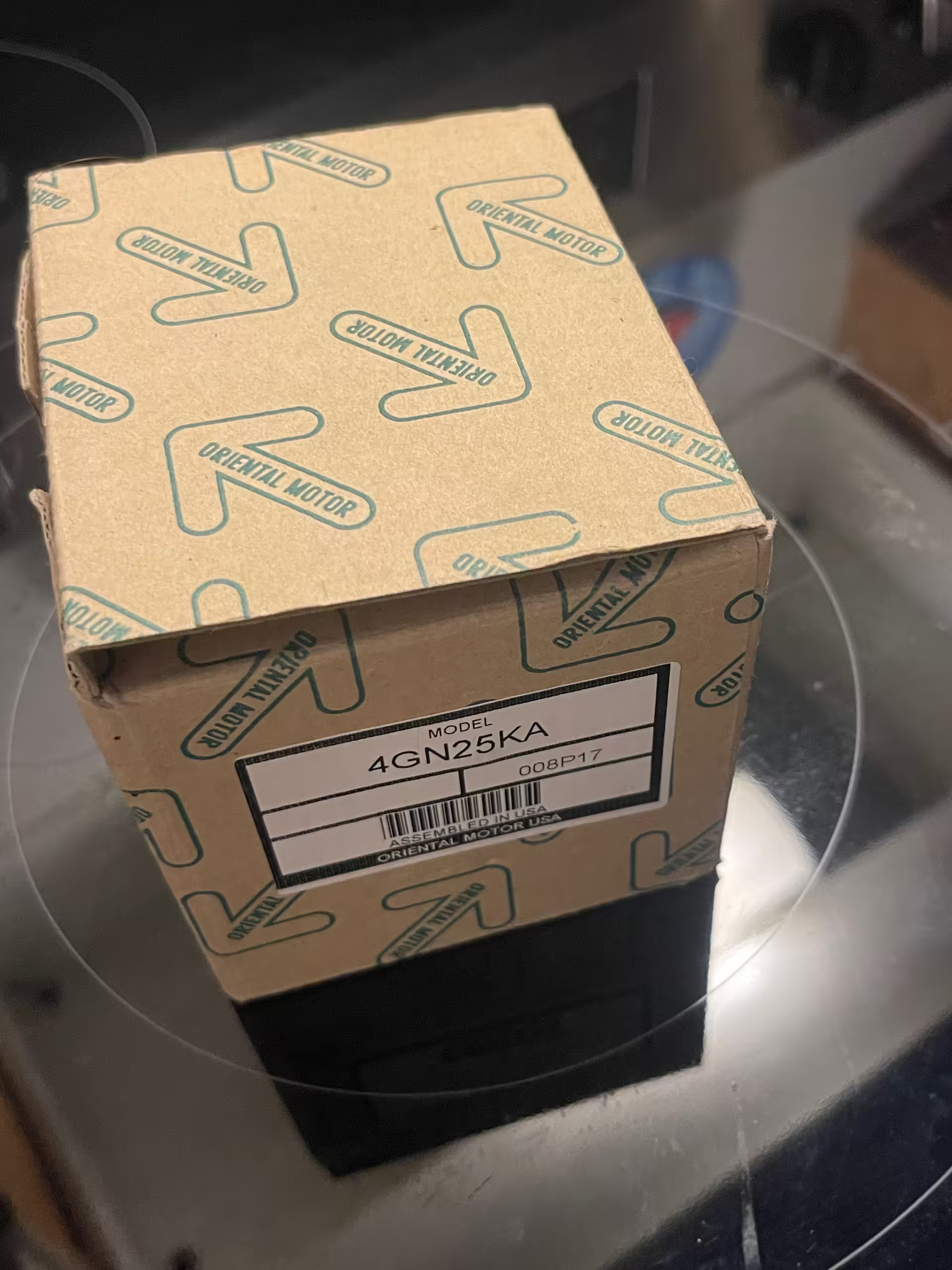
What is in this drawer. Stepper motors, gearmotors and small actuators, mostly in standard frames so they drop into a mount you already have. The Japan Servo KH56JM2B058 is a NEMA 23 two phase hybrid stepper, the workhorse frame of small machine building. The Oriental Motor Vexta PK264-03B is the same frame with a 4GN25KA gearhead at 25 to 1, trading speed for torque at the output shaft.
Grease, and what to do about it. A stepper that feels notchy by hand is normally a stiff bearing, not a failed one. Run it slowly under no load for a few minutes and the grease redistributes. Real bearing damage feels different: a rumble or scrape that does not improve, or radial play at the shaft. A gearhead suffers most, because grease in a sealed reduction stage separates and the oil escapes. One that turns stiffly but smoothly is fine, and worth repacking if the build has to be accurate.
Detent torque is not a fault. A hybrid stepper resists turning by hand with no power on it, because the rotor magnets pull on the stator teeth. That is a design feature, and it gets reported to us as a seized motor more often than anything else in this catalog.
Reading the number. Frame size comes first and it decides whether the motor fits: NEMA 23 is a 2.3 inch square face with a fixed bolt pattern. After that the maker scheme takes over. PK264-03B is the PK series, a body length code and a winding option, and the gearhead is a separate number, 4GN25KA, where 25 is the reduction ratio. Japan Servo KH56 gives the flange in millimetres, 56 mm, which is the metric way of saying the same frame. Where a motor carries a customer number too, as the Japan Servo unit does at No 5621, we list both.
On arrival, turn the shaft by hand and note whether the resistance is smooth and even. Measure winding resistance across each phase and check the two match, which catches a shorted or open coil in a minute. Look at the shaft for rust and the flange for impact damage. Then run it slow and unloaded before you couple it to anything.
Almost certainly not. Two normal things feel like that. A hybrid stepper has detent torque, so it steps and clicks against the magnets with no power applied, and that is by design. Stiff old bearing grease adds a drag on top of it. Run the motor slowly and unloaded for a few minutes and both settle. A rumble or a scrape that does not improve is different and worth telling us about.
For the motor bearings, usually not. For a gearhead, often worth doing if the application needs accuracy or runs continuously, because grease in a sealed reduction stage separates over decades and the oil escapes. A gearhead that turns stiffly but smoothly will work as it is. One that binds at a particular point in the rotation should be opened.
Measure resistance across each phase with a meter and compare the two: a two phase hybrid should read the same on both, within a few percent. Then check both phases to the case, which should read open. That takes a minute and it catches a shorted turn, an open coil and a winding that has gone to ground, which are the three faults that matter.
Twenty five times the torque at the output shaft and one twenty fifth of the speed, less the gearbox efficiency. It also multiplies the resolution, so a 1.8 degree step at the motor becomes 0.072 degrees at the output. What it adds is backlash, which is the reason a geared stepper is right for a lift or a feed and wrong for anything that has to reverse direction precisely.
The face and bolt pattern will, because NEMA 23 fixes them. What varies is body length, shaft diameter, shaft length, whether the shaft has a flat or a key, and the current and inductance the winding needs from your driver. We publish all of those in the spec table. Send us the driver you are running and we will tell you whether the winding suits it.
We turn every motor by hand and meter the windings, and the listing says so. Running a stepper properly means a driver, a supply and a bench, and where we have done that the condition is graded tested and the result is in the description. A motor graded new old stock and open stock has been checked mechanically and electrically at the terminals, not run under load.