
MTA100F35P. R. Mallory and Co.
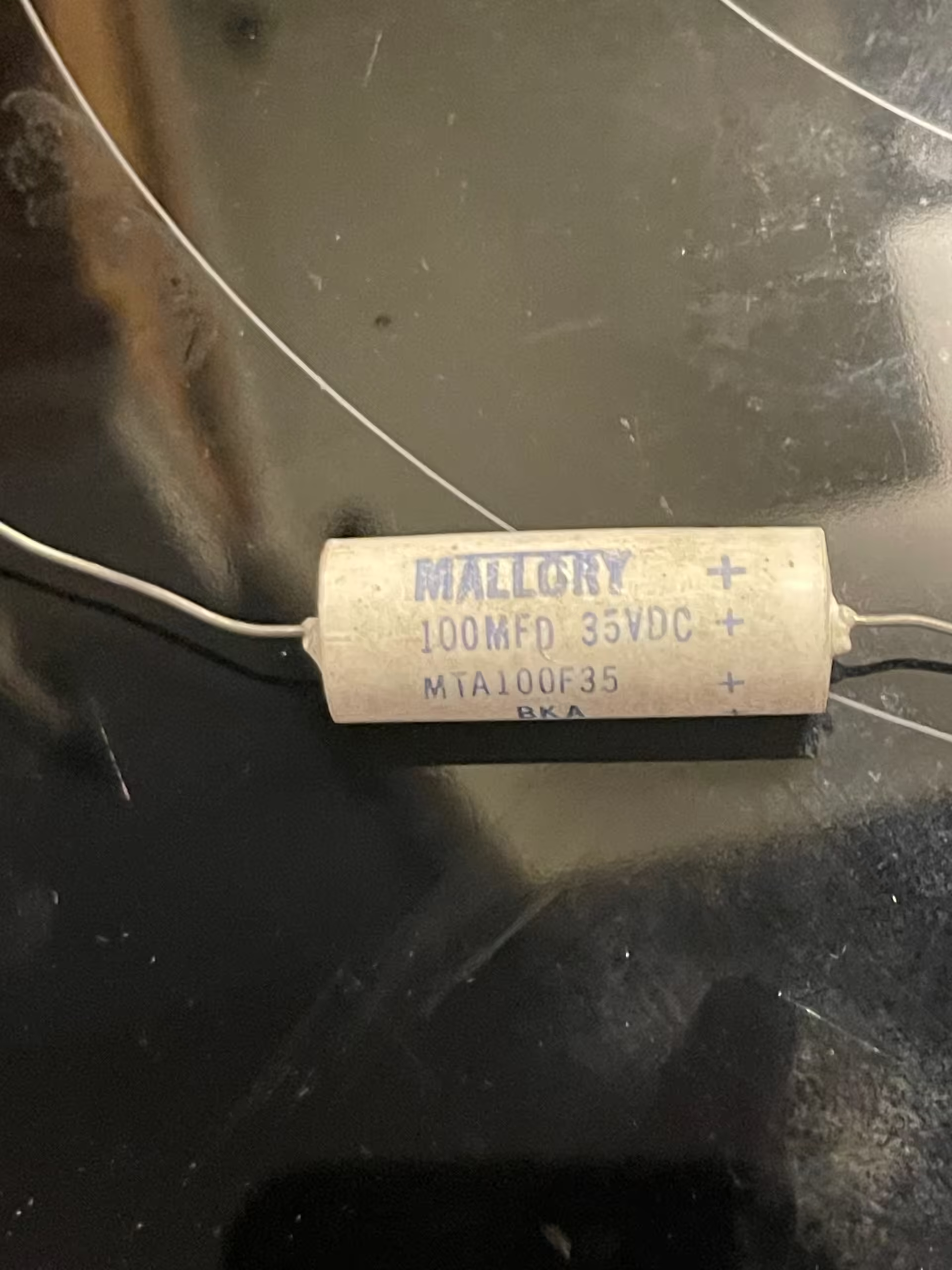
$2.002 in stockAsk for a quote
Manufacturer
P. R. Mallory and Company was founded by Philip Rogers Mallory in 1916 and built its business in Indianapolis, Indiana, where it became one of the broadest American component makers of the twentieth century. At various points it made capacitors, resistors, switches, vibrators, relays, timers, tungsten and molybdenum products, alarms and batteries, and it was very good at several of them at once, which is a harder trick than it sounds.
What they were known for. Two things above the rest. The first is capacitors, especially aluminium electrolytics: the axial and can types that went into radios, televisions, organs, industrial controls and almost anything else built in America between about 1940 and 1980. The MTA series axial on this page is a plain example of the type, a moulded tubular can with the value and voltage printed in the open rather than hidden in a code.
The second is batteries, and that story eventually swallowed the company. Working with the chemist Samuel Ruben, Mallory developed the mercury cell during the Second World War, a small, stable, high energy primary cell that the military needed and that later found its way into hearing aids, watches and cameras. The consumer battery line grew until it was the largest part of the business, and in 1978 the company was renamed after the brand it had created: Duracell. The component divisions went their separate ways over the following years, and the capacitor line eventually ended up inside Vishay, alongside Sprague.
The name that outlived all of it. Mallory Sonalert, the piezoelectric alarm that beeps at you from control panels, forklifts and medical equipment, is still made in Indianapolis. If you have heard an industrial alarm, you have probably heard a Mallory.
What this means for old stock. Mallory electrolytics are extremely common, well made, and old, and the third of those is the operative one. Everything in the capacitor drawer about reforming applies to them in full. They are worth buying when a restoration needs the original can size, the original printing or the original lead form, and they are worth reforming carefully before you trust one.
Not without reforming. Any aluminium electrolytic stored unpowered for decades has a thinned oxide layer and will draw high leakage the first time you apply voltage. Bring it up slowly through a series resistor over an hour and watch the leakage fall. Most recover completely. Ones that stay leaky or warm up are finished, and there is no way to know which is which without doing it.
Mallory generally printed the important facts in the open rather than encoding them, which is a kindness. In MTA100F35 the leading letters are the series and construction, 100 is the capacitance in microfarads, and 35 is the working voltage in DC volts. We put the marked value in the product name so a search finds it either way.
Yes, the same company. P. R. Mallory and Co. developed the mercury cell with Samuel Ruben during the Second World War, built the battery business into the largest part of the firm, and renamed itself Duracell International in 1978 after its own brand. The component divisions were separated out over the following years, which is why the name is on old capacitors and modern alkaline cells alike.
Mallory made a great deal of electromechanical hardware: vibrator power supplies, switches, relays and timers among them. Anything of that kind that comes through here is graded on the same six point scale and described mechanically as well as electrically, because a fifty year old relay is a set of contacts and a spring before it is a component.