
1U4Raytheon
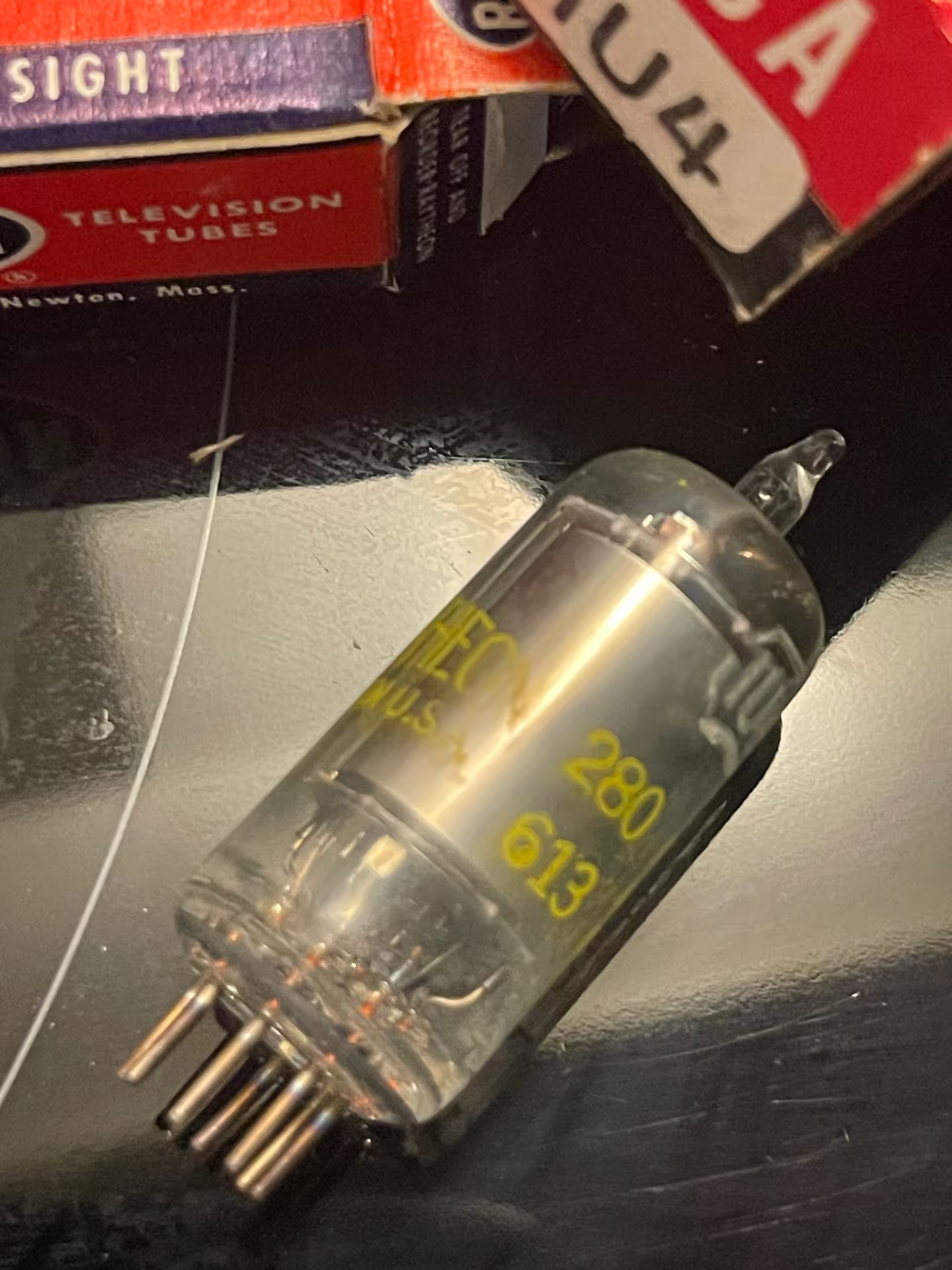
$4.501 in stockAsk for a quote
Drawer
A vacuum tube is the only part in this catalog that tells you about its own health from the outside. Look at the getter, the silvery mirror flashed onto the inside of the glass. Bright and even means the envelope has held its vacuum since it was sealed. White or chalky means air has been getting in and the tube is finished whatever a tester says. That one observation is worth more than most of what is written about old valves.
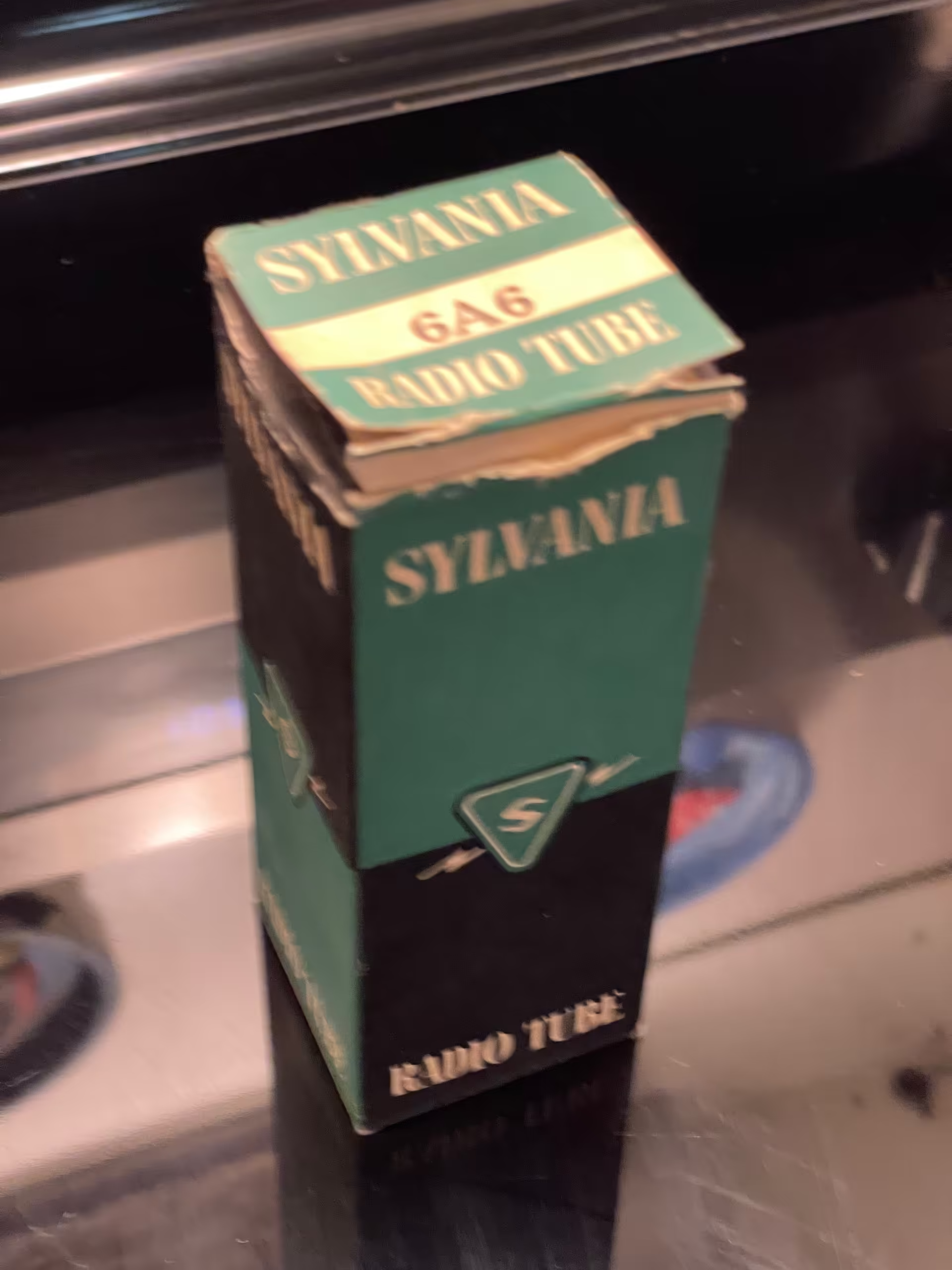
What is in this drawer. Receiving tubes, mostly small signal: seven pin miniatures, octals, and the odd unmarked piece we can describe but cannot name. The Raytheon 1U4 is typical, a B7G miniature RF pentode from the 1.4 volt filament family built for battery portables. There is also a seven pin twin triode in a Sylvania 6A6 carton whose glass carries no marking, listed as exactly that rather than as a 6A6: a carton is evidence and not proof.
How tubes age. An unused tube does not wear out its cathode, because emission is consumed by operating hours and heat, not by time. What time gives is the chance for a slow leak to work. So the failure mode of stored stock is a soft vacuum, announced by the getter, and after that mechanical damage: a cracked pin seal, a loose base, elements shaken out of line.
Reading the number. American tube numbers are a real system. The first figure is the nominal filament voltage, so a 1U4 runs 1.4 volts and a 6A6 runs 6.3. The middle letter is a sequence code and means nothing on its own. The final figure counts active elements including the filament, so a 1U4 has four. Base type is separate: B7G for a seven pin miniature, octal for the eight pin base. Same number, different maker, same electrical type, which is why the name on the glass moves the price and not the function.
Condition here. Sealed means still in the factory carton, unopened. Open stock means the carton is open or missing but the tube was never used, judged on pins with no solder and no socket wear. Tested means we ran it and recorded what the tester read. Pulled means it came out of working equipment, and pulled untested is priced as a gamble.
On arrival, hold the tube to a light and read the getter before anything else. Then check the pins for solder, oxide or bending and the base for a rotating seal, and shake it gently next to your ear. Something loose inside is a tube to send back. Only then put it in a socket, heater up before plate voltage if your equipment allows it.
Whether the vacuum has held. A bright silver or faintly gold mirror on the inside of the glass means the getter is still absorbing stray gas and the envelope is sound. White, milky or chalky means air has reached it and the tube is dead, whatever a tester reads. A getter that has simply thinned with long use looks different again, patchy rather than white. Check it in daylight and check it before you buy.
No. Cathode emission is used up by operating hours and heat. A tube that has never been powered has spent none of it. What storage risks is a slow vacuum leak, and the getter tells you whether that happened. This is why new old stock tubes are worth what they cost while old used tubes usually are not.
Because the glass carries no marking and the only evidence for the type is the Sylvania 6A6 carton it came in and the pin count and construction, which match. Cartons and tubes get separated and remixed in fifty years of storage. The listing says what we can see and what we are inferring, and it is priced as an unknown. If you need a guaranteed 6A6, this is not it.
First figure, nominal filament voltage: 1U4 is a 1.4 volt filament, 6A6 is 6.3 volts. Middle letters are a sequence code with no meaning of their own. Last figure, the count of active elements including the filament. The base style is separate information, so B7G, octal or loctal has to be stated rather than read out of the number.
Only the ones graded tested, and for those we say what the tester read. A sealed carton is not opened to test it, because the seal is part of what you are paying for. Ask before you order if you want a specific tube opened and tested, and we will do it and regrade the listing to open stock and tested rather than leaving the description saying something that is no longer true.
For the electrical type, no. A 1U4 is a 1U4 whoever made it, because the number is a registered type. For price and for collectors, yes: certain plants and certain eras command a premium, and a Raytheon or a Sylvania label sells for more than an unbranded house label of the same tube from the same factory. We list the marking we can see and leave the premium to the market.
Upright, in their cartons, somewhere dry and out of sunlight, and not in a hot loft. The risks in storage are mechanical shock and temperature cycling at the glass to base seal, so a box that stops them knocking together does most of the work. Keep the carton even when it is scruffy, because carton and tube together are provenance and separating them costs the tube value.