
Raytheon
Raytheon 1U4 Seven Pin Miniature RF Pentode, B7G Base
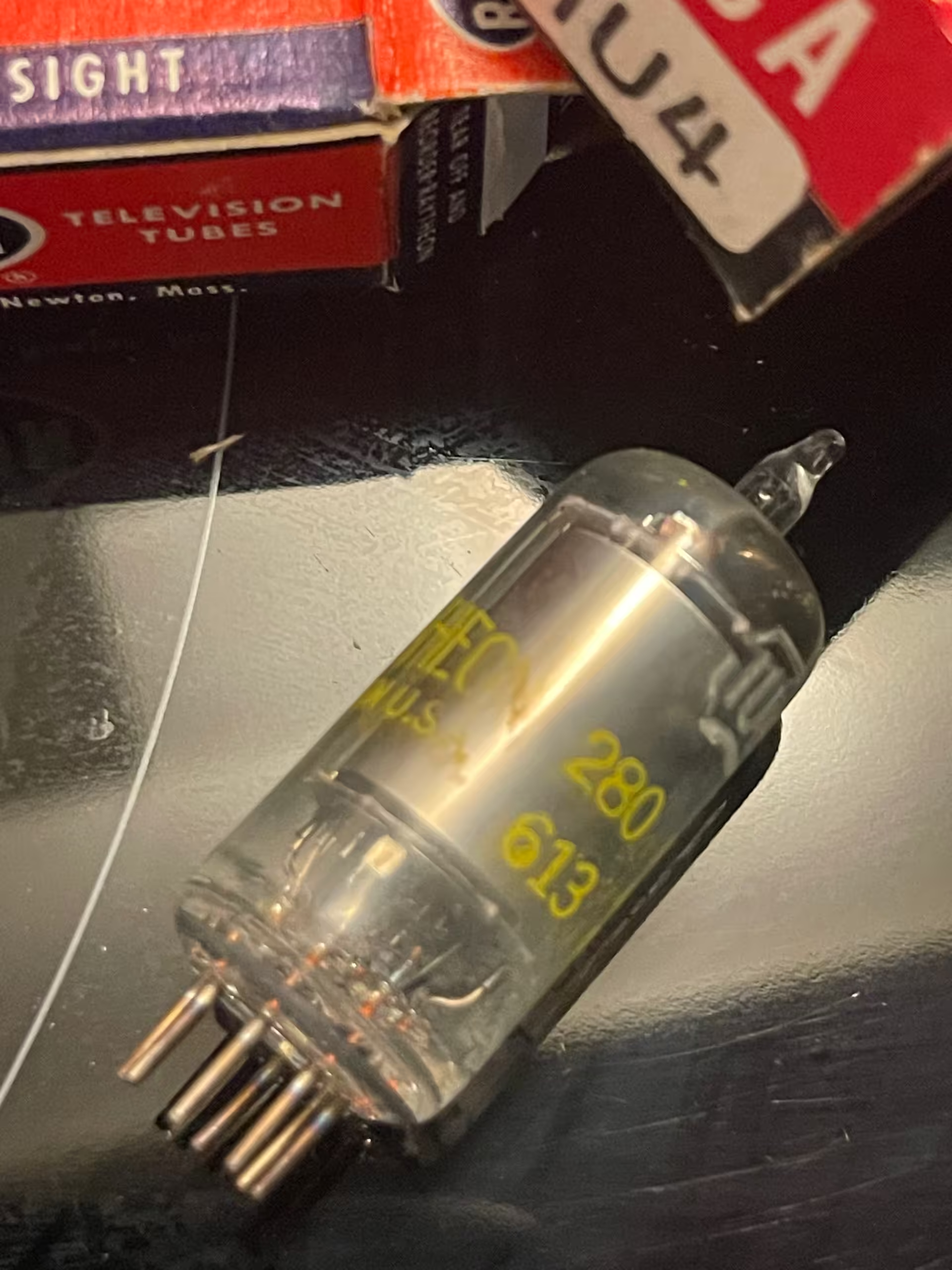
- 4 photos
Never used. The original pack has been opened, or the quantity was split off a full reel or tube. Leads are original and unclipped.
New old stock, open stock on the grading scaleSend the quantity you need. You get a quote back with shipping before anything is charged.
Videos
Filmed on the bench. Sound is stripped from product clips.
- 1:00
Opening frame of the clip: the large carton is Raytheon and the small individual boxes on top are RCA marked 1U4.
- 0:07
Frame from the clip looking into the pin circle, useful for checking pin count and spacing.
Specifications
| Specification | Value |
|---|---|
| Identification | |
| Part number | 1U4 |
| Manufacturer | Raytheon |
| Condition | New old stock, open stock |
| Date code | Not recorded |
| Package | B7G seven pin miniature |
| Country of origin | Not recorded |
| Family | Not recorded |
| Stock number | 9V4JS2MJ |
| Identification | |
| Brand marking | Raytheon |
| Type number | Not stated and not established |
| Class | Receiving tube |
| Type | 1U4, moulded into the glass envelope |
| Brand on the glass | RAYTHEON, MADE IN U.S.A., printed in yellow |
| Ink codes on the glass | 280 and 613 |
| Further glass marking | LICENSED AS STATED ON CARTON |
| Physical | |
| Base | B7G, seven pin miniature |
| Pin count | 7 |
| Pin circle diameter | 9.53mm |
| Pin arrangement | Eight positions at 45 degree spacing, one position left empty to key the tube |
| Envelope | All glass, pins sealed directly through the bottom of the envelope, no separate molded base |
About this part
A seven pin miniature receiving tube branded Raytheon, sold from assorted cartons. The type number is not recorded in the stock, and a mixed carton lot does not establish what is inside any one box.
Seven pin miniature means the B7G base: an all glass envelope with seven stiff wire pins passing directly through the bottom of the glass into the socket, with no separate molded base. The pins sit on a 9.53 mm circle at eight 45 degree positions with one position left empty, which keys the tube and sets its orientation. The base appeared in the late 1930s and went on to carry most of the small signal work in postwar radio and television: RF and IF pentodes, converters, detector and audio diode triodes, small signal triodes and low power output pentodes.
Raytheon ran a broad receiving line out of its Newton, Massachusetts operation and also supplied tubes branded for other names, so brand on the glass and brand on the carton are separate questions. Types you commonly meet in a B7G assortment include 6AU6, 6BA6, 6AT6, 6C4, 6AL5, 6AQ5, 6AK5 and the 1R5, 1T4, 1S5, 3S4 battery series. None of that identifies the tube in hand. Read the glass, then confirm on a tester before you fit it.
Questions about this part
What type is this tube?
Not established. The stock record says Raytheon and seven pin miniature, and nothing more. Any type number would be a guess, so none is given here. Ask for a photograph of the printing on the glass before you buy.
What does seven pin miniature mean?
It means the B7G base. The envelope is all glass, and seven stiff wire pins come straight through the bottom of the glass and plug into the socket. The pins occupy seven of eight positions spaced 45 degrees apart on a 9.53 mm circle, and the empty eighth position keys the tube.
How do I identify an unmarked or faded B7G tube?
Start with the printing on the glass, and try breathing on it or chilling the tube, since condensation sometimes brings a faded type number back for a moment. Failing that, internal construction narrows it: number of mica spacers, plate shape, getter type and where the getter flash sits.
Can I tell heater voltage from the base alone?
No. B7G covers 1.4 volt battery filaments, 6.3 volt heaters, 12.6 volt heaters and others. Base style says nothing about heater rating, which is why no heater figure is listed here.
Does a Raytheon carton guarantee Raytheon glass?
No. Raytheon both branded its own tubes and supplied tubes carrying other names, and old stock cartons get reused. Judge the glass by what is printed and etched on the glass.
Is there a datasheet for this?
Not for an unidentified type. The Raytheon Radio and Television Receiving Tube Data manual of 1957 covers the company's receiving line and is the right place to look once you have read a type number off the glass.
Will a B7G tube fit a nine pin socket?
No. B7G is seven pins on a 9.53 mm circle. Nine pin miniature, B9A, is a different and larger pattern. The two are not interchangeable and cannot be forced.