
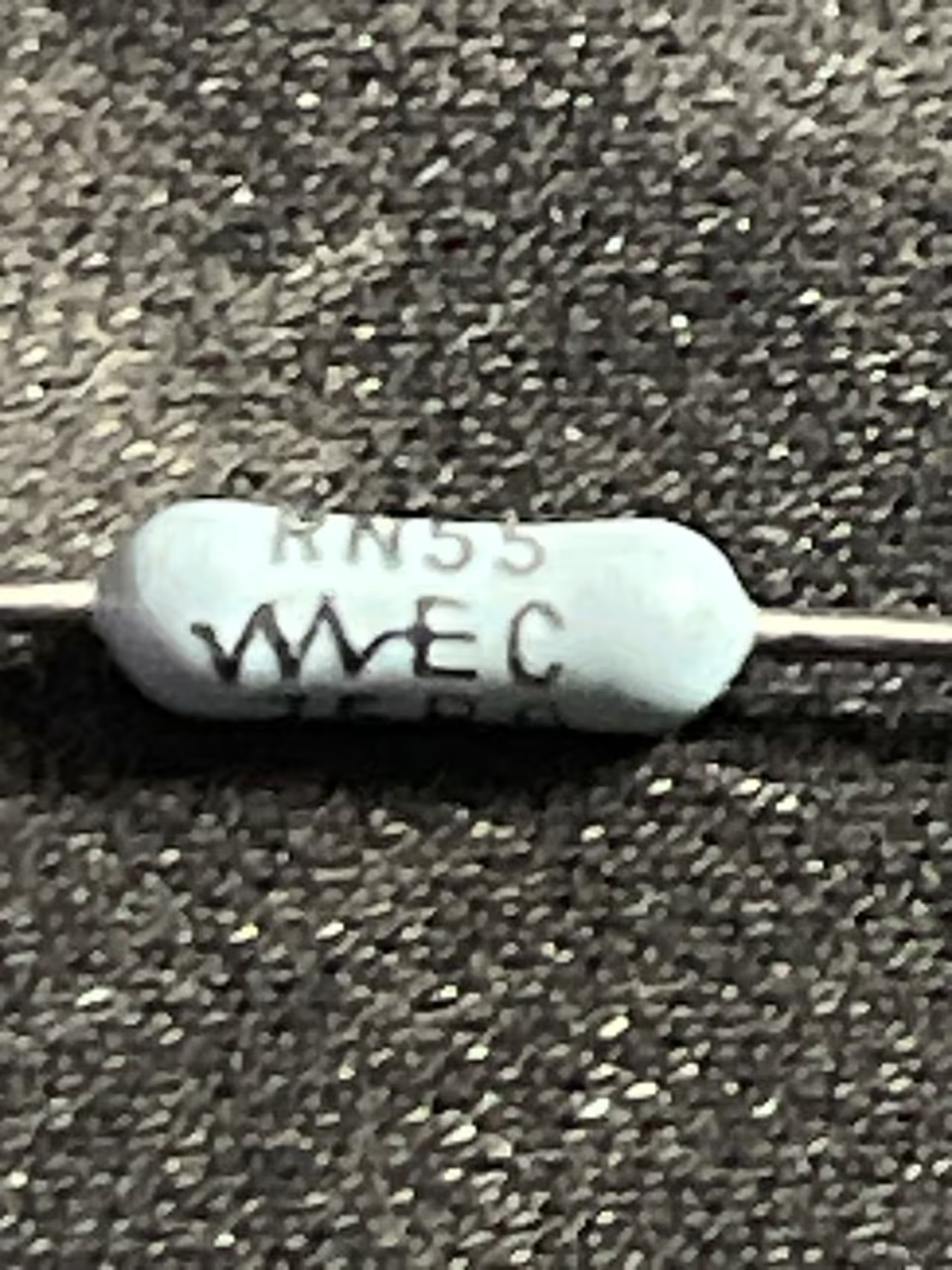
RN55Unbranded
$3.0015 in stockAsk for a quote
Drawer
Resistors are the parts people assume cannot go wrong, and mostly they are right. Nothing in a film resistor is chemically active at room temperature, so a sealed 1990s reel measures today what it measured on the day it was wound. The failures that do exist show up as drift, which is why they get missed.
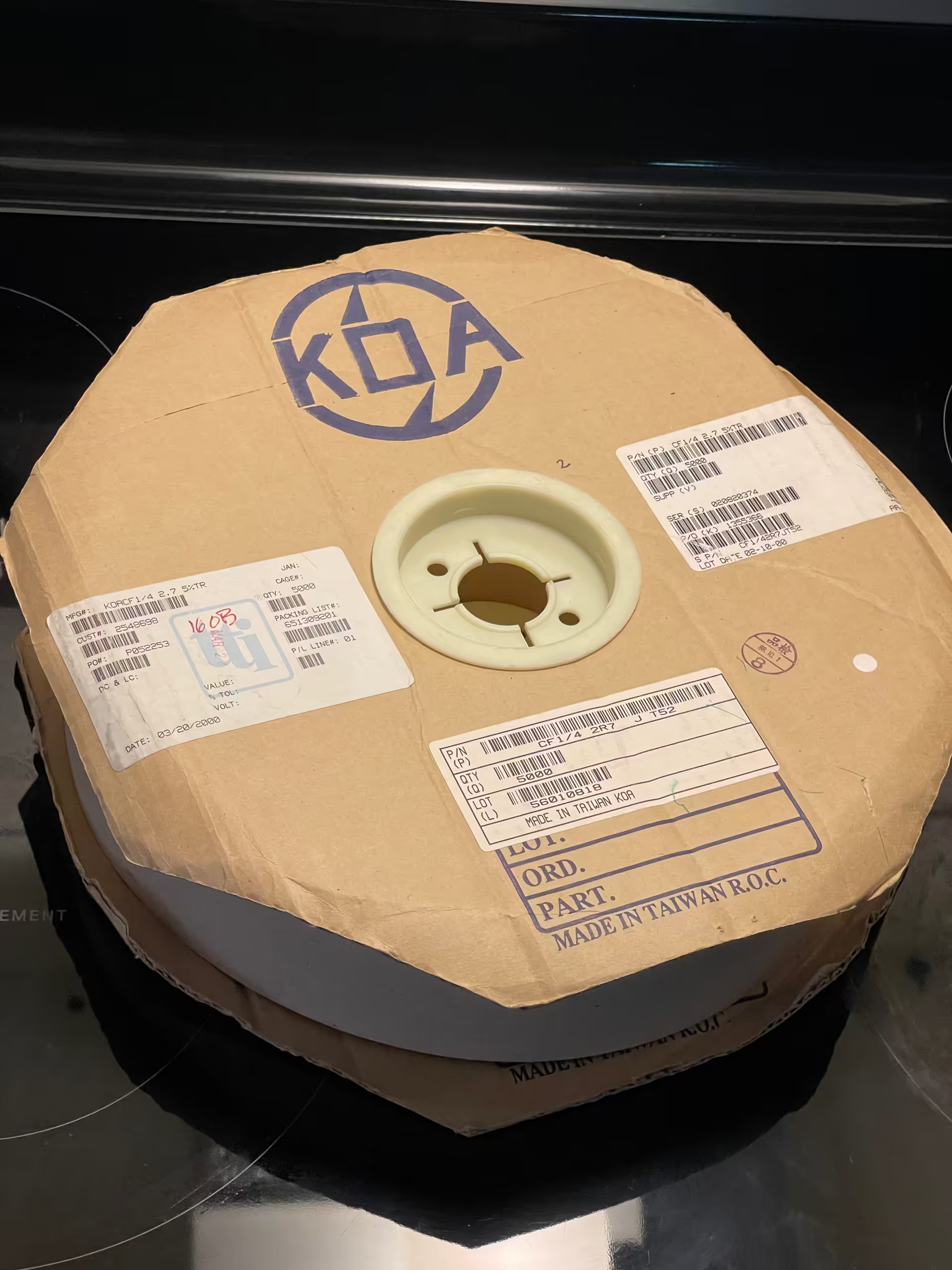
Carbon film, like the KOA Speer CF1/4 quarter watt parts here, is a spiral cut carbon layer on a ceramic rod under a lacquer coat. Cheap, stable enough for almost everything, and beaten by moisture and heat. A part stored in a humid shed creeps upward by a few percent as damp works past the coating, and one run hot in circuit drifts upward permanently. Neither applies to sealed stock kept dry, which is why we will not resell loose carbon film that arrived with no history attached.
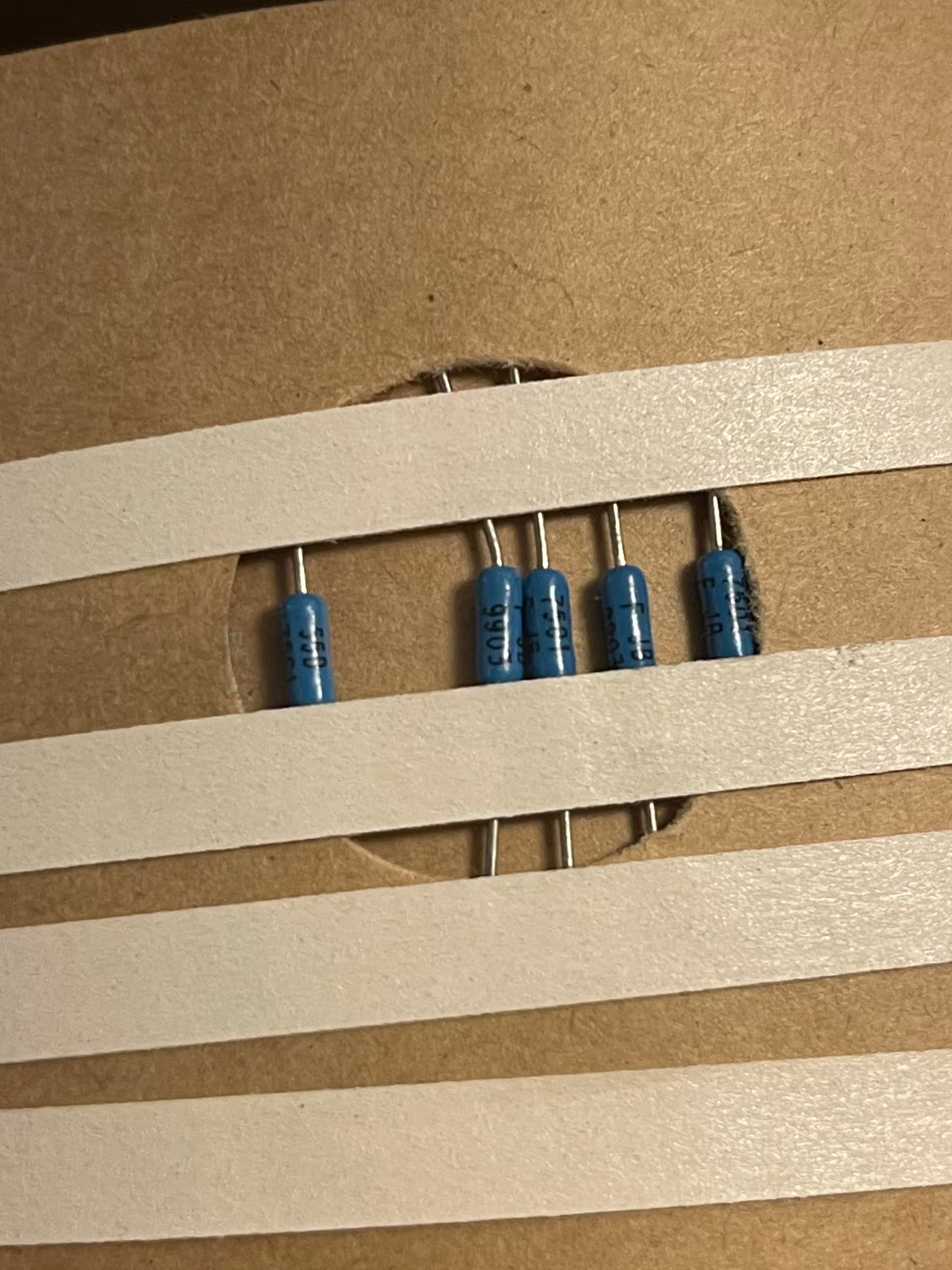
Metal film, like the Dale RN55D7501F, is a different animal. The RN55 body style is a MIL-R-10509 part: one percent tolerance, low temperature coefficient, built to hold a fraction of a percent over years. It is what you reach for anywhere you would otherwise be trimming. The 9903 date code on that lot puts it in early 1999, and a metal film resistor from 1999 is, for practical purposes, a new resistor.
Reading the number. RN55D7501F is worth learning once. RN55 is the military style and size, roughly a quarter watt in a small axial body. D is the temperature coefficient class. 7501 is three significant figures plus a multiplier, so 750 followed by one zero, which is 7.5 kilohms. F is one percent. KOA runs a different scheme: CF is the carbon film family, the fraction after it is the wattage, and the resistance is on the colour bands rather than in the number. Where a part number does not carry the value, the product name does.
Quantity and lots. These come in real counts, five thousand of the KOA 2.7 ohm parts and a thousand of the Dale 7.5K, and both are priced as the lot. Splitting a taped reel turns a sealed lot into open stock and there is no way back. If you need a hundred rather than a thousand, say so and we will tell you whether an open lot of the same part is on the shelf.
On arrival, meter a handful across the lot rather than one off the top of the reel. Look for a hairline crack in the coating, check the tape still grips the leads, and put the reel somewhere dry. A part that survived thirty years in a sealed bag will survive thirty more in a drawer, and will not survive a damp garage.
Metal film, effectively no. Carbon film, only if it was stored damp or was run hot in service before it was pulled. A sealed reel kept dry is the same part it was when it was wound. This is why we buy sealed lots and why we grade a loose handful of carbon film differently from a factory bag.
Year and week: 1999, week three. Four digit codes in that form are read as two digits of year and two of week, which is the common convention for passive components of that era. It is a manufacturing fact printed by the maker, not a grade or an expiry, and for a metal film resistor it has no bearing on whether the part is good.
Ask. The sealed lots are priced as lots because opening one changes what it is, and we would rather quote you from an open stock lot of the same part number if we have one. If we do not, we will tell you what we can split and what the split does to the condition grade.
RN55 is a MIL-R-10509 style, which fixes the body size, the lead diameter, the temperature coefficient class and the testing regime, not just the tolerance. Two parts can both be 1 percent and behave very differently over temperature. If a schematic calls for RN55 specifically, it usually cares about the stability and not only the accuracy at 25 degrees.
Sealed lots are not opened to test, because opening ends the seal and that is the thing you are buying. We check markings, packaging and storage. If you want a measured sample before you commit to a lot, ask and we will open one, meter it and grade the rest as open stock, with the price adjusted to match.
They measure differently in noise, which is the part of the claim with a number behind it: carbon composition and carbon film generate more excess noise under DC bias than metal film does. Whether that is audible in your circuit depends on where it sits and how much gain follows it. We list the construction so you can decide, and we do not make tonal claims for a resistor.