
Sprague
JAN M39006/02-1233 Wet Slug Tantalum Capacitor, 70 uF 25 V, Sprague, Lot 8414C
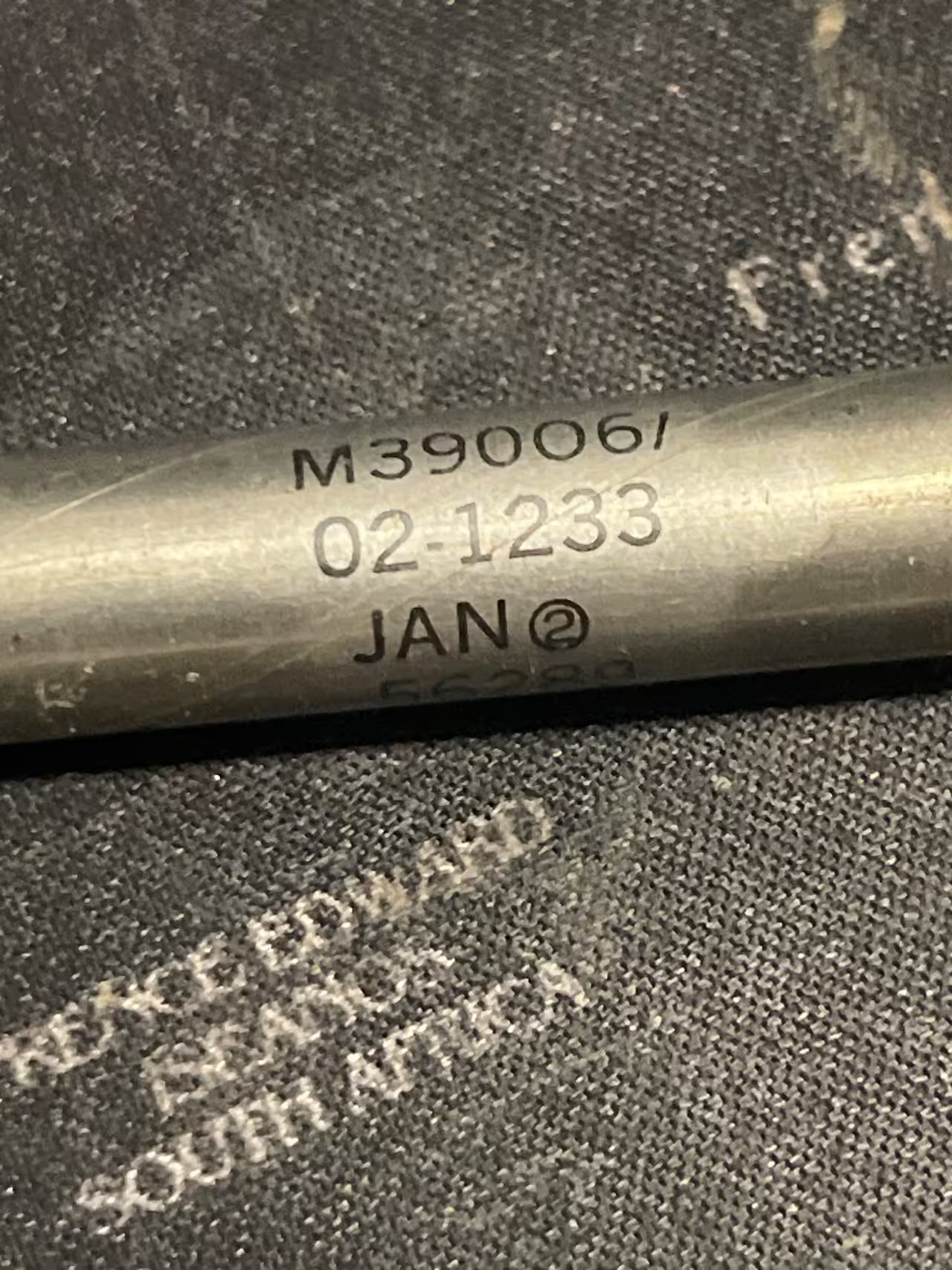
- 3 photos
Never used. The original pack has been opened, or the quantity was split off a full reel or tube. Leads are original and unclipped.
New old stock, open stock on the grading scaleSend the quantity you need. You get a quote back with shipping before anything is charged.
Video
Filmed on the bench. Sound is stripped from product clips.
- 0:11
Specifications
| Specification | Value |
|---|---|
| Identification | |
| Part number | M39006/02-1233 |
| Manufacturer | Sprague |
| Condition | New old stock, open stock |
| Date code | 8414C |
| Package | Hermetically sealed metal cylindrical case, axial wire leads |
| Country of origin | Not recorded |
| Family | M39006 |
| Stock number | SCVYJGFX |
| Overview | |
| Type | Wet slug tantalum, non solid electrolyte |
| Military part number | M39006/02-1233 |
| Specification | MIL-PRF-39006, established reliability wet tantalum |
| Suggested use | Low leakage bulk filtering and energy storage where volume is tight and reliability is specified |
| Compliance | |
| Qualification marking | JAN, printed on the case |
| Electrical | |
| Capacitance | 70 uF, printed on the case |
| DC voltage rating | 25 V, printed on the case |
| Polarity | Polarised, and far less reverse tolerant than a solid tantalum |
| Provenance | |
| CAGE code | 56289, which is Sprague Electric |
| Lot code | 8414C, which places manufacture in 1984 |
| Quantity offered | One piece |
| Condition | New old stock, unused, case clean and printing fully legible |
| Basis of identification | Every field above is printed on the case |
| Markings as read | |
| Additional case marking | 201901 |
| Physical | |
| Case | Hermetically sealed metal cylinder, welded, with sealed lead exits |
| Lead style | Axial, one wire lead from each end |
| Not established | |
| Tolerance | Not printed on the case |
About this part
A JAN qualified wet slug tantalum capacitor to M39006/02-1233, 70 uF at 25 volts, in a hermetically sealed metal case with axial leads. New old stock, never fitted. The case carries the CAGE code 56289, which is Sprague Electric, along with the lot code 8414C and the number 201901.
Wet slug is the distinction that matters here, and it is not the same animal as the solid tantalum most people picture. A solid tantalum uses a manganese dioxide cathode. A wet slug uses a liquid electrolyte held in a sealed silver or tantalum can, and that difference changes almost everything about how it behaves. Wet slugs offer far higher capacitance per unit volume, dramatically lower leakage, and self healing behaviour that a solid part does not have. In exchange they are intolerant of reverse voltage, they must be hermetically sealed to work at all, and they cost several times as much.
The JAN marking is not decoration. It means the part was manufactured on a qualified line and lot tested against the military specification, and the traceability markings on the case are part of that: the CAGE code identifies the maker, the 8414C lot code places it in 1984, and the remaining number ties it to a production record.
Reverse voltage is the one thing to be careful about. A wet slug tolerates almost none, far less than a solid tantalum, and a reversed one fails quickly. Fit it the right way round and derate it as you would any tantalum.
Questions about this part
What is a wet slug tantalum, and how is it different from an ordinary tantalum?
The everyday tantalum is a solid type, using manganese dioxide as the cathode. A wet slug uses a liquid electrolyte contained in a sealed can. The consequences are large: a wet slug gives much more capacitance for its volume, has dramatically lower leakage current, and can heal minor dielectric faults, which a solid part cannot. The cost is that it must be hermetically sealed to exist at all, and it is far less forgiving of reverse voltage.
How careful do I have to be about polarity?
Very. A wet slug tolerates only a fraction of a volt in reverse, considerably less than a solid tantalum will take, and reversing one degrades it quickly and permanently. Identify the positive end from the case marking before fitting it, and if the circuit can ever swing the capacitor negative, this is the wrong part for the job.
What does JAN actually certify?
It means the part was built on a line qualified against the military specification and lot tested to it, rather than simply being sold as meeting a datasheet. That is why the case carries traceability markings: a CAGE code identifying the manufacturer, a lot code, and a production reference. A commercial capacitor of the same value carries none of that, and the difference is what you are paying for.
Who made this one?
The CAGE code 56289 on the case is Sprague Electric. CAGE codes are the government commercial and government entity codes used to identify a supplier on a military part, and they are the reliable way to identify the maker of a JAN part, since the brand name is often not printed at all. The lot code 8414C places the manufacture in 1984.
Does a wet slug survive decades of storage?
Better than almost anything else in the capacitor world, because the case is genuinely hermetic. The electrolyte cannot evaporate, and the seals are metal and glass rather than rubber. Unlike an aluminium electrolytic, it does not need reforming after long storage. Check for any sign of a damaged seal or case corrosion before use, and this one shows neither.
Should I derate it?
Yes. Military practice for wet tantalum is to run well below the rated voltage, commonly around half, and to keep some series impedance in the supply feeding it. Derating is also normal at temperature extremes. Applied here, treat the 25 V rating as comfortable at around 12 volts in continuous service.
What condition is this one in?
New old stock, open stock, never installed. The metal case is clean with no dents, corrosion or seal damage, all the printed markings including the military part number, the CAGE code and the lot code are fully legible, and both leads are straight and unsoldered. The photographs show the actual capacitor.