
CS13BF156K Hermetically Sealed Axial Tantalum Capacitor, 15 uF 35 V, 10 Percent
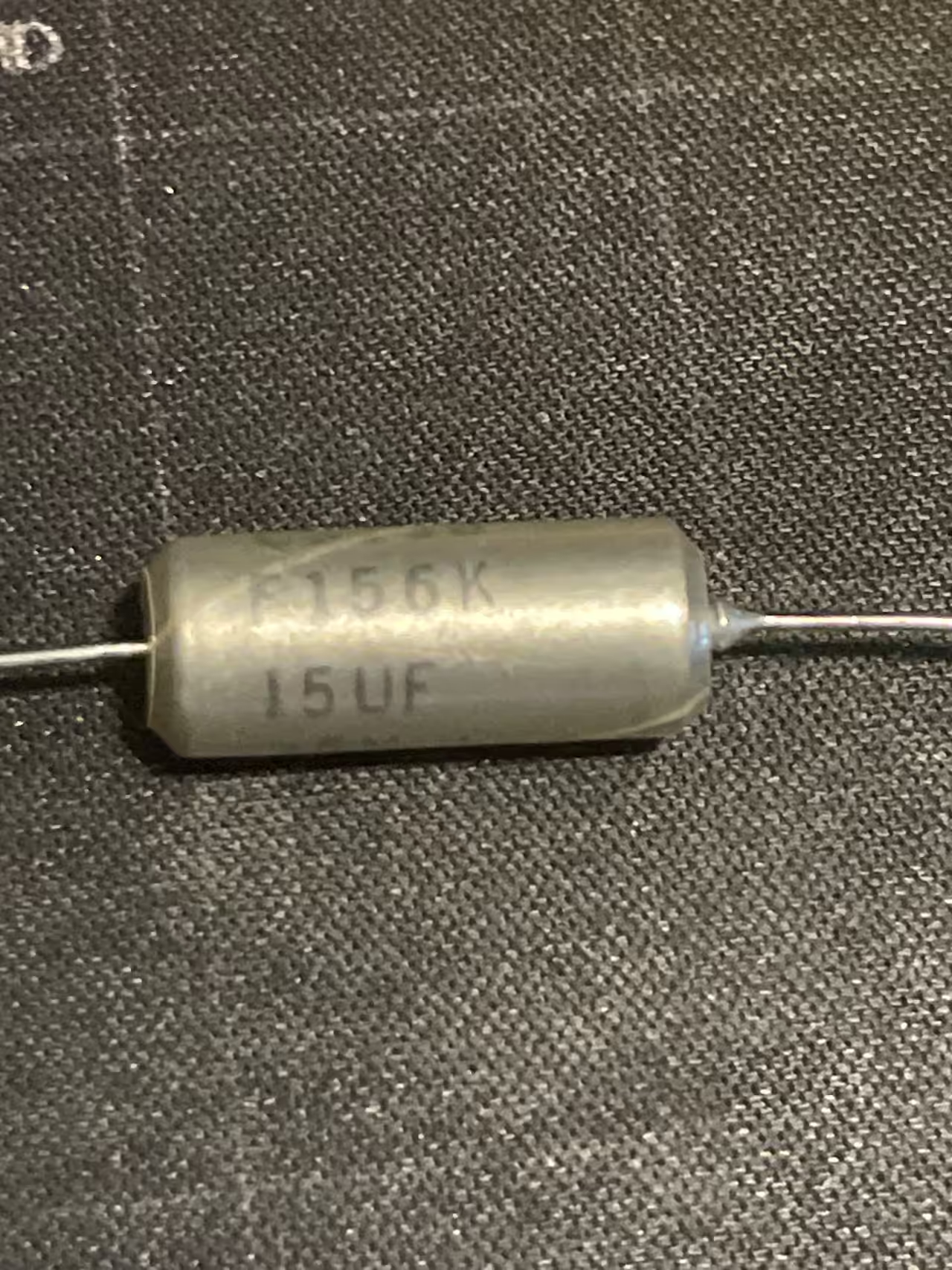
- 5 photos
Never used. The original pack has been opened, or the quantity was split off a full reel or tube. Leads are original and unclipped.
New old stock, open stock on the grading scaleSend the quantity you need. You get a quote back with shipping before anything is charged.
Video
Filmed on the bench. Sound is stripped from product clips.
- 0:14
Specifications
| Specification | Value |
|---|---|
| Identification | |
| Part number | CS13BF156K |
| Manufacturer | Not recorded |
| Condition | New old stock, open stock |
| Date code | 7111C |
| Package | Hermetically sealed metal cylindrical case, axial wire leads |
| Country of origin | Not recorded |
| Family | CS13 |
| Stock number | VNCQ5RPC |
| Overview | |
| Type | Solid tantalum in a hermetically sealed metal case |
| Part number | CS13BF156K, printed on the case |
| Style designation | CS13B |
| Electrical | |
| Capacitance | 15 uF, from the 156 code and printed as 15 UF on the case |
| Tolerance | Plus or minus 10 percent, printed on the case and confirmed by the K code |
| DC voltage rating | 35 V, printed on the case |
| Polarity | Polarised. Reverse voltage can cause a short circuit failure |
| Provenance | |
| Date code | 7111C, printed on the case |
| Quantity offered | One piece |
| Condition | New old stock, unused, case clean and leads unsoldered |
| Markings as read | |
| Marking, face 1 | F156K over 15 UF |
| Marking, face 2 | 15UF over 35V, with a plus sign |
| Marking, face 3 | plus or minus 10 percent, over 7111C |
| Marking, face 4 | CS13B, with a five digit inventory number |
| Not established | |
| Manufacturer | Not identified. CS13B is a style designation and no maker's name is on the case |
| Physical | |
| Case | Hermetically sealed metal cylinder with sealed lead exits |
| Lead style | Axial, one tinned wire lead from each end, full length |
About this part
A hermetically sealed axial tantalum capacitor to military style CS13B, part number CS13BF156K, 15 uF at 35 volts. New old stock, unused, leads full length. The case carries the date code 7111C.
THE TOLERANCE ON THIS ONE IS 10 PERCENT, NOT 20. The inventory paperwork that came with it says 20 percent, but the capacitor itself is printed plus or minus 10 percent on one face, and the K in CS13BF156K is the tolerance letter and also means 10 percent. Two independent readings off the part agree with each other and disagree with the note, so the part wins. It is worth saying because a 10 percent tantalum is a tighter and more useful component than a 20 percent one, and a buyer comparing listings should know which he is getting.
The rest decodes cleanly. F156K is the value and tolerance in the standard convention: 156 is 15 followed by six zeros in picofarads, which is 15 uF, and K is 10 percent. Fifteen microfarads is a proper working value, the sort that sits across a supply rail as bulk decoupling rather than doing anything delicate, and in a hermetic metal can it is the version specified where an aluminium electrolytic would not be trusted to survive.
It is polarised. A reversed tantalum can fail as a dead short rather than simply degrading, so identify the positive end before fitting it, and derate to roughly half the rated voltage as is normal practice.
The metal case is welded with sealed lead exits, so nothing has dried out and nothing needs reforming.
Questions about this part
Is it 10 percent or 20 percent?
Ten. The paperwork that came with this part says 20, but the capacitor is printed plus or minus 10 percent on one of its faces, and the K in CS13BF156K is the tolerance letter and independently means 10 percent. Two markings on the part agree with each other and disagree with the note, so we have gone with the part. Handwriting is always weaker evidence than a printed marking, and this is exactly the case that shows why.
What does F156K decode to?
156 is the three digit picofarad convention: 15 followed by six zeros, which is 15000000 pF, or 15 uF. The K is the tolerance letter for plus or minus 10 percent. The F ahead of it is part of the manufacturer's numbering rather than an electrical parameter. The CS13B in front is the military style code for a solid tantalum in a hermetically sealed metal case.
What is 15 uF at 35 V actually for?
Bulk work rather than anything delicate. Fifteen microfarads across a supply rail smooths and decouples, holds a rail up through a current step, and provides the low frequency energy store that a small ceramic cannot. In a hermetic tantalum it is the version specified where an aluminium electrolytic would not be trusted: sealed equipment, wide temperature swings, or a design life measured in decades.
How careful do I have to be about polarity?
Careful. A tantalum is polarised and, unlike an aluminium electrolytic that degrades and vents when reversed, a tantalum can fail as a dead short. On a low impedance supply the fault current is limited only by the supply, which means heat and sometimes flame. Identify the positive end from the case before soldering it in, and keep some series impedance in the feed if the supply is stiff.
Should I derate it?
Yes. Standard practice for solid tantalum is to run at roughly half the rated voltage, so treat this 35 V part as comfortable at about 17 volts in continuous service. Derate further if the equipment runs hot. That is not a comment on this capacitor's condition, it is how tantalums are used.
Does it need reforming after this long on a shelf?
No. Reforming is an aluminium electrolytic problem, caused by the oxide layer deteriorating while the part sits unpowered in a wet electrolyte. A solid tantalum has no liquid and its dielectric does not degrade in storage, and a hermetic metal case keeps humidity out as well. It can go into service directly, derated as any tantalum should be.
What condition is this one in?
New old stock, open stock, never installed. The metal case is clean with no dents or corrosion, both lead seals are intact, every printed face is legible and the leads are at full length, straight and unsoldered. The photographs show the actual capacitor you would receive.