
Sprague
Sprague 196D336X9010KA1 33uF 10V 10% Solid Tantalum Capacitor, Resin Coated Radial
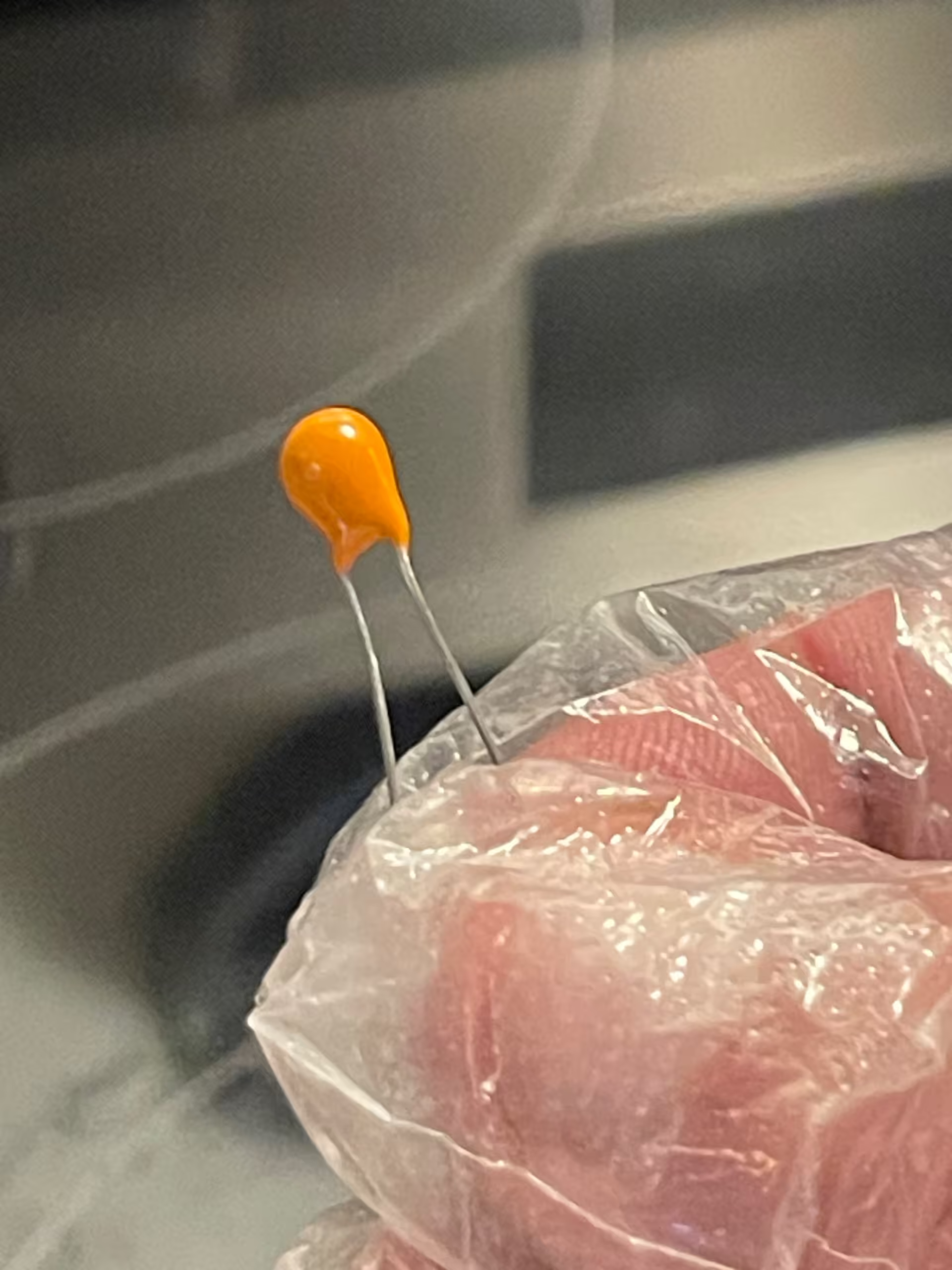
- 5 photos
Never used and never opened. Still in the factory tube, tray, reel or bag it shipped in, with the original date code intact.
New old stock, sealed on the grading scaleSend the quantity you need. You get a quote back with shipping before anything is charged.
Video
Filmed on the bench. Sound is stripped from product clips.
- 0:04
Video still framing the part against the workbench background.
Specifications
| Specification | Value |
|---|---|
| Identification | |
| Part number | 196D336X9010KA1 |
| Manufacturer | Sprague |
| Condition | New old stock, sealed |
| Date code | Not recorded |
| Package | Radial leaded |
| Country of origin | Not recorded |
| Family | Not recorded |
| Stock number | 9V4JS2MD |
| Electrical | |
| Capacitance | 33microfarad |
| Capacitance tolerance | 10% |
| DC voltage rating | 10VDC |
| Tolerance code | X9 |
| Operating temperature range | -55 to +85 C, to +125 C with voltage derating |
| Polarity | Polarized |
| Construction | |
| Dielectric | Solid electrolyte tantalum, sintered tantalum anode with manganese dioxide electrolyte |
| Encapsulation | Resin coated epoxy |
| Mechanical | |
| Case code | K |
| Ordering | |
| Series | 196D TANTALEX |
| Current replacement series | Vishay Sprague 199D |
| This lot | |
| Packet quantity | 1 EA, from the packaging label |
| National stock number | 5910000070803 |
| Contract number | DLA90085AA5020166 |
| Packaging date | A 4/85 |
About this part
196D336X9010KA1 is a Sprague TANTALEX solid electrolyte tantalum capacitor, 33 microfarads at 10 volts DC with a 10 percent tolerance, in a resin coated radial lead body. The number splits cleanly: 196D is the series, 336 is 33 followed by six zeros in picofarads for 33 microfarads, X9 is the 10 percent tolerance code, 010 is the 10 volt DC rating, and KA1 covers the case code and lead configuration.
The dielectric is an anodised oxide grown on a sintered tantalum anode with a manganese dioxide solid electrolyte, coated in epoxy resin rather than housed in a metal can. Vishay Sprague now lists the 199D series as carrying replacements for 196D ratings, so a 199D of the same value and voltage is the modern cross reference. Solid tantalum parts of this style were chosen for stable capacitance in a small volume with low leakage and low dissipation factor, typically for supply decoupling, timing and filtering on logic and analogue boards.
Two things matter when buying old stock. The part is polarized, and reverse voltage or a hard inrush is what kills tantalums, usually as a short rather than an open, so plan for series resistance and voltage headroom. Second, confirm the polarity stripe is still legible, because printed marking on resin coated bodies fades.
Questions about this part
How do I read 196D336X9010KA1?
196D is the series. 336 is capacitance in picofarads, 33 followed by six zeros, which is 33 microfarads. X9 is the 10 percent tolerance code. 010 is the DC voltage rating. KA1 is the case code and lead configuration.
What is the modern equivalent?
Vishay Sprague states that the 199D series standard ratings include replacements for type 196D. A 199D 33 microfarad 10 volt part at 10 percent tolerance is the direct cross reference, though case codes do not translate one for one.
Is this a wet or solid tantalum?
Solid. The electrolyte is manganese dioxide, not a liquid, and the body is coated in epoxy resin rather than sealed in a hermetic metal can.
How much derating should I apply?
Solid tantalums are conventionally run well below their voltage rating, commonly at half or less, because they fail short under transient overvoltage. On a 10 volt part a 5 volt rail is comfortable and a 10 volt rail is not.
Can these be used on AC or reverse voltage?
No. The part is polarized and tolerates only a very small reverse voltage. Reverse polarity or AC will destroy it, usually as a short circuit, and a shorted tantalum on a low impedance rail can smoke or catch fire.
How do tantalums age in storage?
Unlike aluminum electrolytics, solid tantalums do not dry out and do not generally need reforming. The failure modes that matter for stored stock are mechanical damage and lead solderability.
Which lead is positive?
The positive lead is identified by a printed marking on the body. On old resin coated stock the print can fade, so verify before installing. If the marking is unreadable, do not guess.