
Moulded Mica Capacitor, 300 pF 5 Percent, Maker Not Identified
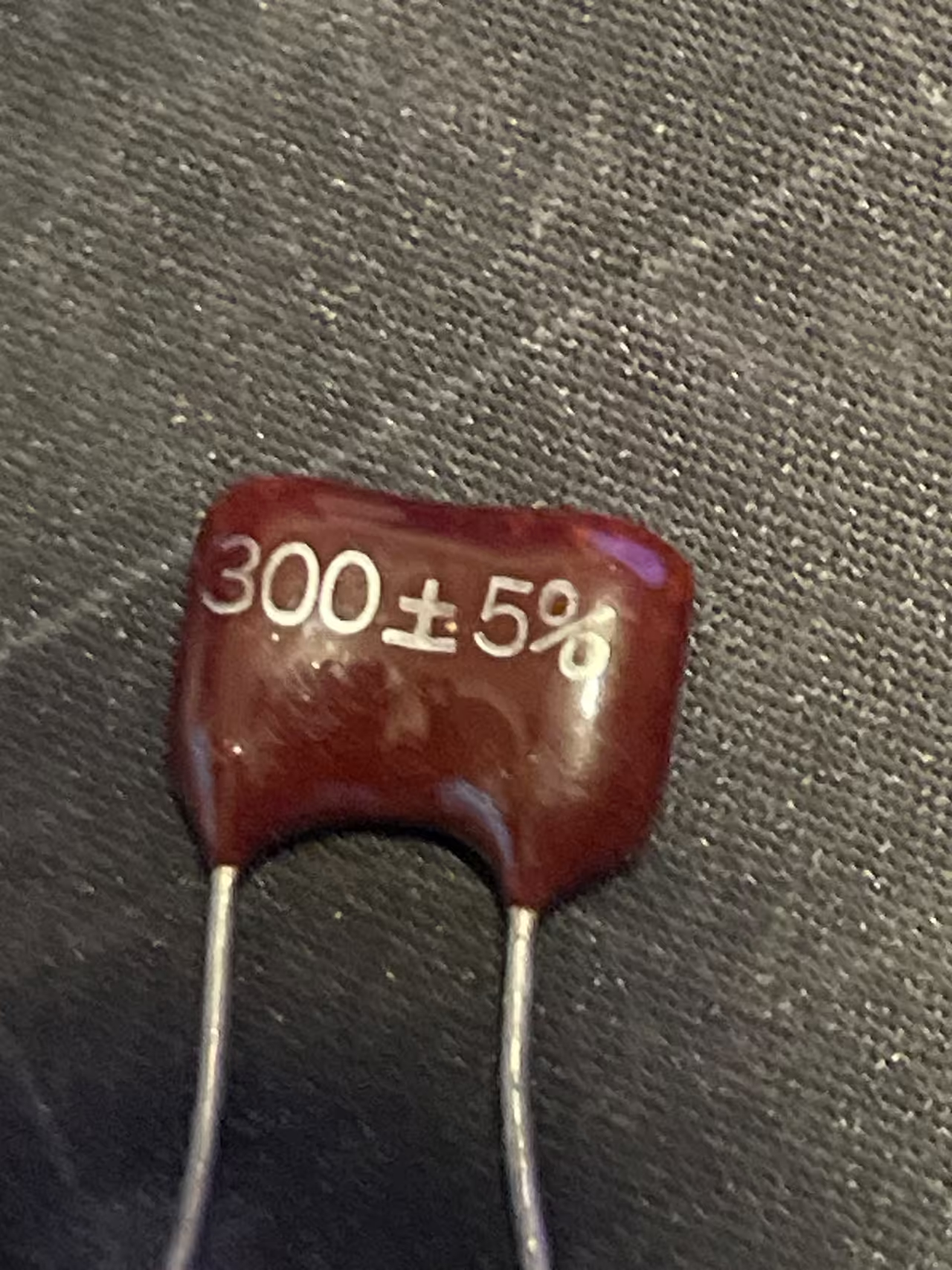
- 2 photos
Never used. The original pack has been opened, or the quantity was split off a full reel or tube. Leads are original and unclipped.
New old stock, open stock on the grading scaleSend the quantity you need. You get a quote back with shipping before anything is charged.
Video
Filmed on the bench. Sound is stripped from product clips.
- 0:20
Specifications
| Specification | Value |
|---|---|
| Identification | |
| Part number | SAJ8Z7VV |
| Manufacturer | Not recorded |
| Condition | New old stock, open stock |
| Date code | Not recorded |
| Package | Moulded rectangular mica case, radial leads |
| Country of origin | Not recorded |
| Family | Not recorded |
| Stock number | SAJ8Z7VV |
| Overview | |
| Type | Moulded mica capacitor |
| Value series note | 300 pF is not a standard preferred value, which suggests a part made to a specific design |
| Electrical | |
| Capacitance | 300 pF, printed on the body |
| Tolerance | Plus or minus 5 percent, printed on the body |
| Polarity | None. Mica capacitors are not polarised |
| Not established | |
| DC voltage rating | Not established. No voltage appears on either face |
| Manufacturer | Not identified. Neither face carries a maker's name or logo |
| Part number | Not established. No type number is printed |
| Characteristic | Not established. No characteristic letter is printed |
| Markings as read | |
| Marking, face 1 | 300 plus or minus 5 percent |
| Marking, face 2 | No printing |
| Physical | |
| Lead style | Radial, both leads from the same edge |
| Body | Moulded rectangular case, deep reddish brown, rounded corners |
| Provenance | |
| Quantity offered | One piece |
| Condition | New old stock, unused, case unchipped and leads unsoldered |
| Basis of identification | The printed value and tolerance only. No brand is claimed |
About this part
A moulded mica capacitor marked 300 plus or minus 5 percent, and nothing else at all. New old stock, unused, both leads straight.
Three hundred picofarads is a slightly unusual number to find on a part, and that is the most interesting thing about this one. The preferred value series that governs most components would give you 270 or 330, not 300. Round values like this turn up where somebody was building to a specific design rather than picking off a distributor's shelf: an intermediate frequency transformer that wanted a particular resonance, a timing network calculated rather than selected, or a set of matched parts made to a drawing. If you are restoring something that specifies 300 pF exactly, substituting the nearest preferred value will shift whatever it was setting.
The maker is not identified. Both faces have been examined and one carries the value and tolerance while the other is blank. That is common on smaller moulded micas, where the print area was limited and the maker's mark went on the face that happened to face outward in the machine. It costs the part nothing electrically and it costs it something in price, which is reflected here.
What can be said with confidence is what it is: a moulded mica in the classic rectangular case with radial leads, the same construction as the branded examples alongside it. Mica does not age in a drawer, so a capacitor like this should measure today exactly as it measured when it was made.
Questions about this part
Why is 300 pF an unusual value?
Because the preferred value series that governs most passive components does not contain it. That series gives 270 and 330 in this range, and those are the numbers you find in a distributor catalogue. A round 300 usually means the part was made to a specific design rather than chosen off a shelf, for an intermediate frequency transformer, a calculated timing network or a matched set built to a drawing.
Does that matter if I am replacing one?
It might. If the original circuit specifies 300 pF exactly, the designer probably had a reason, and dropping in a 330 shifts whatever that capacitor was setting by about ten percent. In a tuned circuit that is an alignment you will have to redo, and in some filters it is a response you cannot recover by adjustment. Match the value if the circuit was designed around it.
Why is the maker not listed?
Because it is not on the part. One face carries the value and tolerance and the other is blank. That was common on smaller moulded micas where the print area was limited, and it costs the capacitor nothing electrically. It does cost it something in price, and that is reflected in what this one is listed at compared with the branded examples of the same era alongside it.
How do I establish the voltage rating?
You cannot from the part, so work from the circuit instead. Moulded micas of this size were commonly rated at 300 or 500 volts DC, and mica has a high intrinsic breakdown strength, so a low voltage application is not a concern. If your circuit applies more than a hundred volts or so, use a capacitor whose rating you can read rather than assuming this one covers it.
Can I trust an unbranded part?
For a mica, more than you might expect. The construction is visible, the dielectric is a mineral that does not degrade, and the value and tolerance are printed and can be verified in thirty seconds with a meter. Unlike an electrolytic, there is no hidden chemistry that may have failed silently. What you lose without a brand is the documented voltage rating and characteristic, not the reliability.
How should I check it on arrival?
Measure the capacitance on any meter that reads picofarads, remembering that test lead capacitance of a few picofarads will be included and should be zeroed out first. A good one will sit inside its 5 percent window, so between 285 and 315 pF. Then check insulation resistance with a high resistance meter if you have one, where a healthy mica reads effectively open.
What condition is this one in?
New old stock, open stock, never fitted. The moulded case is intact with no chips or cracks, the printing is clear, and both leads are unsoldered and unkinked. The photographs show the actual capacitor you would receive.