
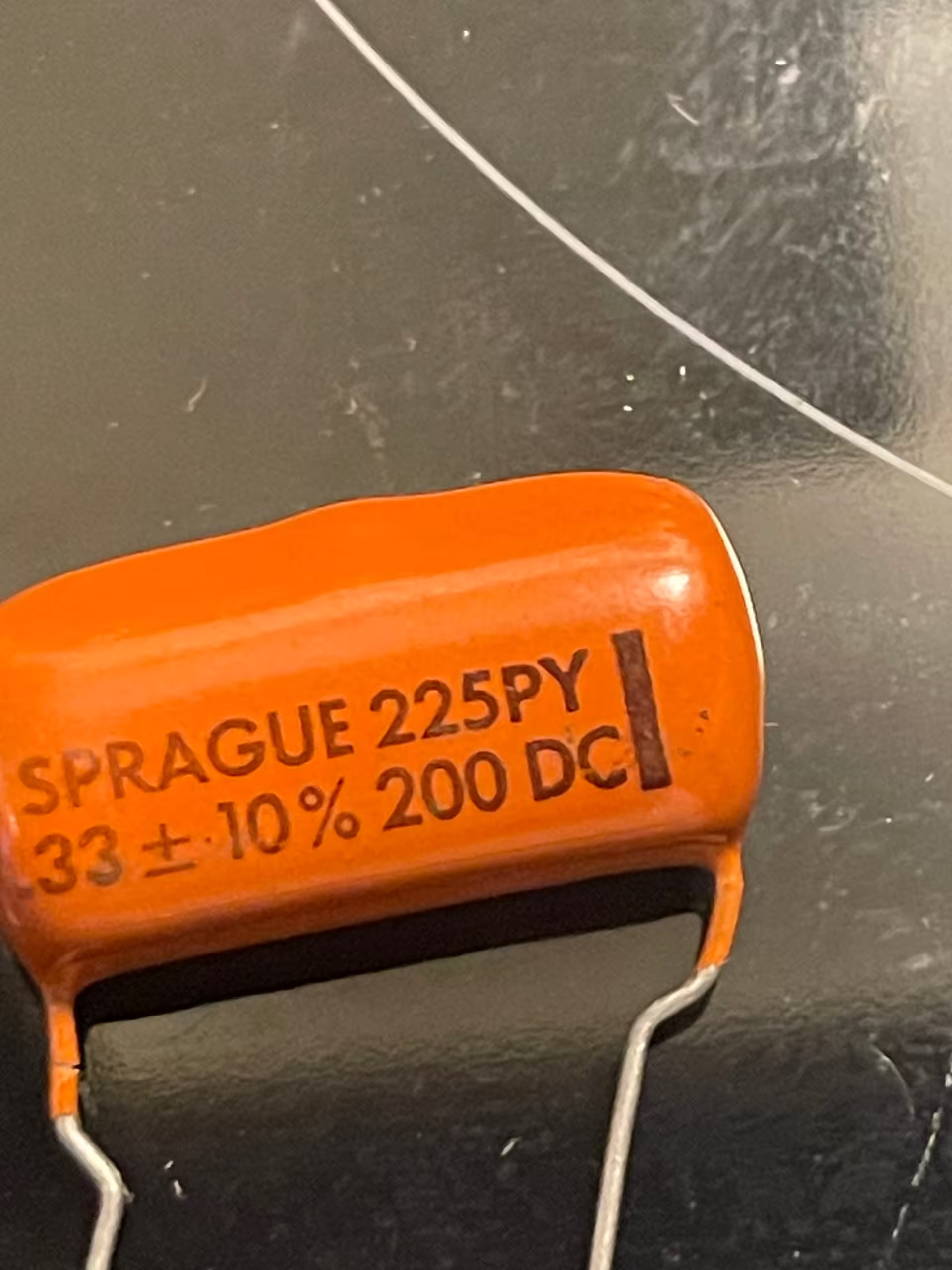
225P33492Sprague
$3.501 in stockAsk for a quote
Drawer
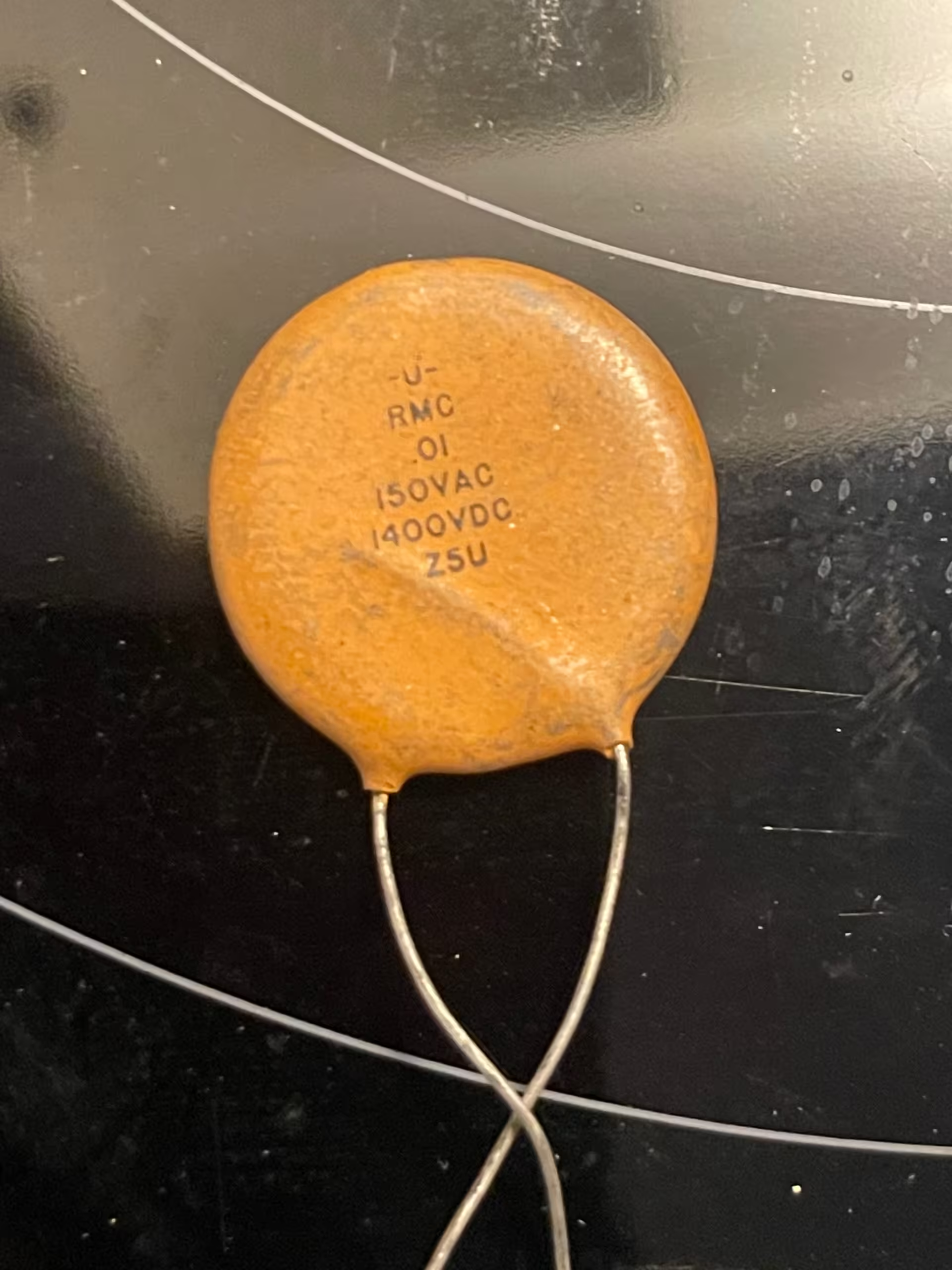
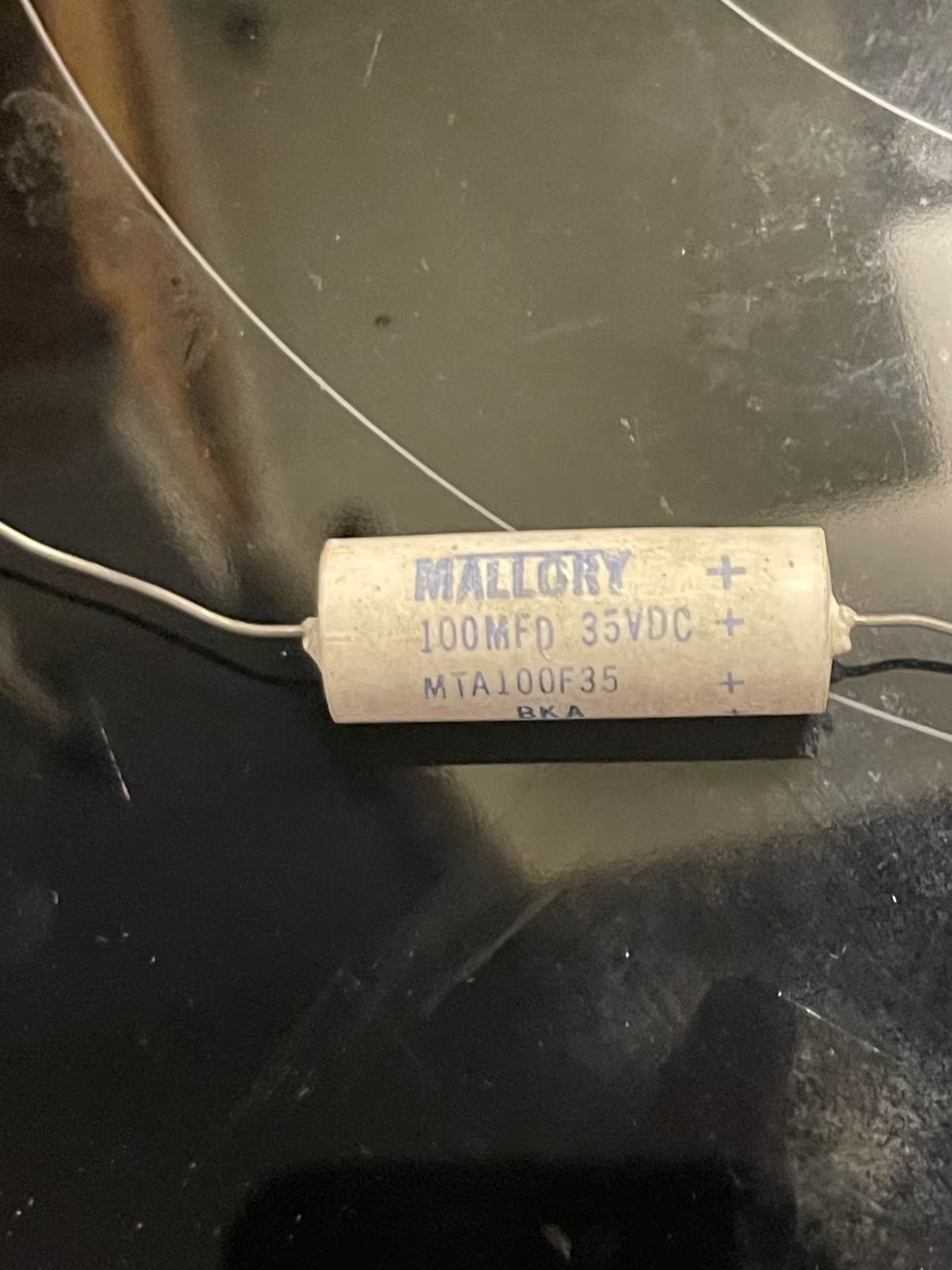
A capacitor is the one part in this catalog whose value is a claim about the future as much as the present. Two of the families in this drawer store charge across a chemical layer that keeps changing on a shelf, and two of them do not change at all. Knowing which one you are holding is most of buying old stock sensibly.
Aluminium electrolytics are the ones with a shelf life. The dielectric is an oxide layer grown on the anode foil at the factory, and it thins in storage. A 1970s axial like the Mallory MTA100F35 here will very likely read high in leakage the first time you apply voltage, and will very likely be fine after reforming: up to rated voltage slowly through a series resistor, over an hour, watching the leakage fall. If the current will not come down, or the can warms, the part is finished. Nobody can tell you which without doing it.
Solid tantalum, such as the Sprague 196D, has no wet electrolyte and needs no reforming. It fails short instead, fast enough to take a track with it, so derate the voltage by half and get the polarity right first time. Film and ceramic do not age either. The Sprague 225P Orange Drop is polyester film and foil, and a fifty year old one measures like a new one unless the case is cracked. The RMC ceramic disc is a Z5U dielectric, so it drifts with temperature and loses capacitance under bias by design, not with age.
Reading the number. There is no standard across makers, only a convention per series. Sprague 196D336X9010KA1 is series 196D, then 336 for 33 followed by six zeros in picofarads, so 33 microfarads, then a tolerance letter, 010 for 10 volts, then a lead form code. Mallory prints the value and the voltage in the open instead. We list the marked value in the spec table.
Condition here. Sealed means the factory pack has never been opened. Open stock means it was opened or split off a larger lot and the part was still never installed. Neither implies a measurement, because metering a capacitor properly takes a bridge, a bias supply and time. Ask and we will meter the exact piece going in the envelope.
On arrival, inspect before you power anything. Leads straight, unclipped, no green. Electrolytic cans with no bulge and no crust at the seal. Tantalum resin with no chip exposing the slug. Film cases with no crack where the lead leaves the body. Then measure cold, and ask us about anything more than twenty percent off its marking.
Assume yes for any aluminium electrolytic that has been sitting for decades, including the axial Mallory in this drawer. Bring it up to rated voltage slowly through a series resistor of a few kilohms, watch the leakage current, and give it an hour. Most come back. The ones that do not will stay leaky or get warm, and those you discard. Solid tantalum and film parts need none of this.
Film and ceramic parts usually are, because nothing in them changes with time alone. Electrolytics usually read high in capacitance and high in leakage until they are reformed, and after reforming most land back inside their original tolerance, which for the era was often 20 percent to begin with. We publish the marked value and say plainly whether we measured it.
Nothing by itself. The grade describes handling and packaging history: sealed means the factory pack was never opened, open stock means it was opened or split but the part was never installed. Neither is a measurement. If you need a measured part, ask and we will meter the specific piece before it ships.
Often, and sometimes you should. A modern low ESR electrolytic is a better part than a 1970s one in almost every way. People buy old stock here for restoration work where the original part number, the can size or the lead spacing matters, for equipment that was voiced around a particular dielectric, or because the value and voltage combination is no longer made.
The marked lead is positive on the Sprague 196D series, which is the opposite of the convention most people expect from aluminium cans, where the stripe marks the negative end. Read the body marking rather than the lead length, and check it twice. A reversed solid tantalum fails short, immediately, and usually takes something else with it.
Because it was sold for line filtering, where the stress is continuous AC and the failure mode is different from a DC application. The RMC disc here is marked 150 VAC and 1400 VDC. Use the AC figure for anything across the mains and treat the DC figure as the impulse rating it is. A Z5U dielectric also loses a large share of its capacitance at temperature and under bias, so it is a coupling and bypass part, not a timing part.
Yes. Every part in this drawer is new old stock with factory leads, unclipped and untinned by us. If a lot was split off a reel or a tube we say so in the condition, and we do not trim, straighten or retin anything before it ships. What arrives is what came out of the pack.