
A single VSQ0051-1 Threaded Coaxial Connectors, Made in Japan, Loose New Old Stock
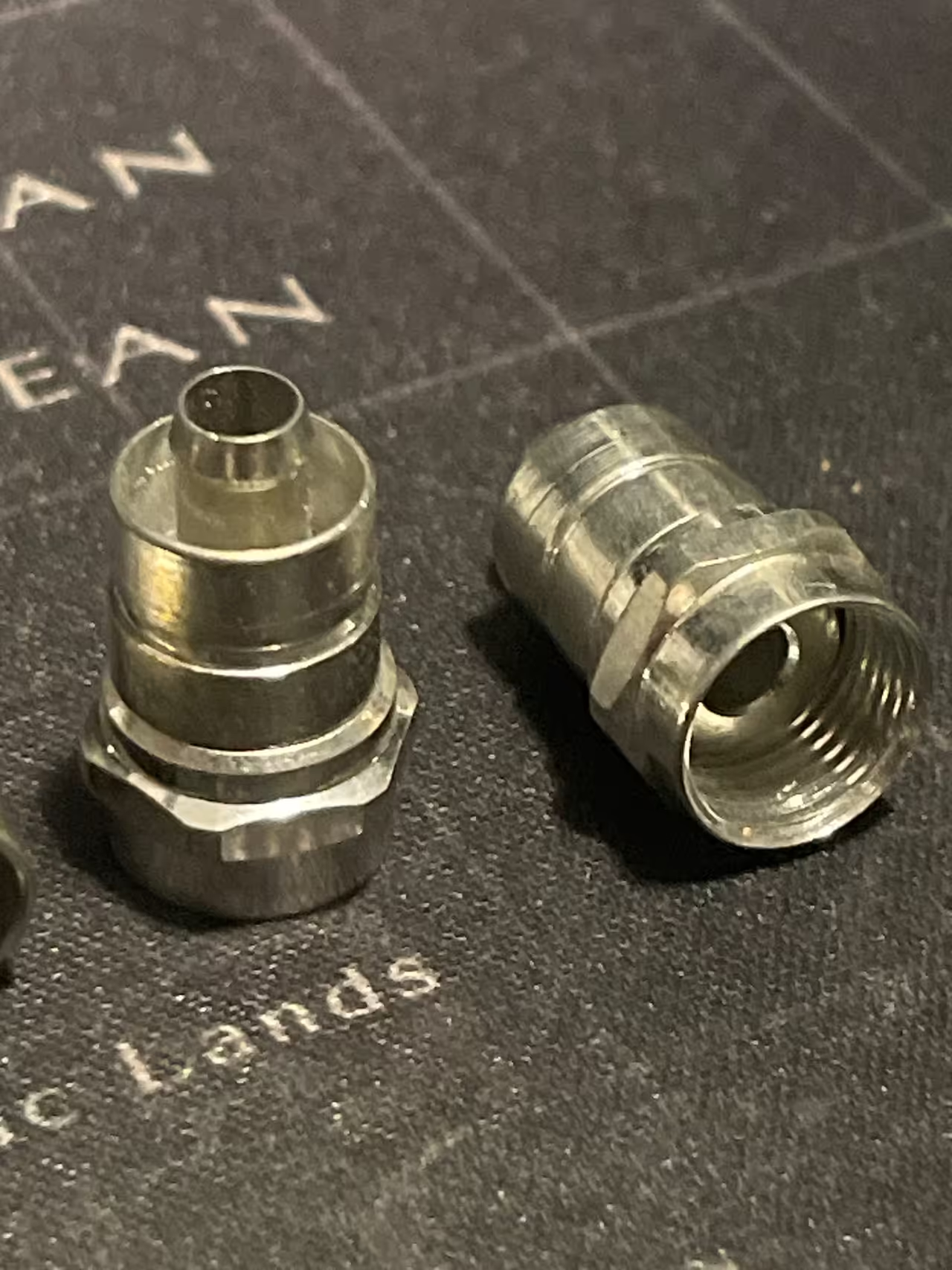
- 2 photos
Never used. The original pack has been opened, or the quantity was split off a full reel or tube. Leads are original and unclipped.
New old stock, open stock on the grading scale| 3 or more | $10.00 each |
|---|
Send the quantity you need. You get a quote back with shipping before anything is charged.
Video
Filmed on the bench. Sound is stripped from product clips.
- 0:12
Specifications
| Specification | Value |
|---|---|
| Identification | |
| Part number | VSQ0051-1 |
| Manufacturer | Not recorded |
| Condition | New old stock, open stock |
| Date code | Not recorded |
| Package | Machined metal coaxial connector, threaded coupling, supplied loose |
| Country of origin | Japan |
| Family | Not recorded |
| Stock number | SCJBJ29Z |
| Overview | |
| Type | Coaxial connector, threaded coupling |
| Part number | VSQ0051-1, from the sealed packaging of the same stock |
| What to inspect | Centre contact straightness, dielectric bead, and the coupling thread |
| Not a bayonet type | The coupling is threaded, so it is not a BNC |
| Related listing | The same connector is also listed factory sealed at a higher price |
| Not established | |
| Connector series | Not identified. VSQ0051-1 is a house number, not an industry designation |
| Coupling thread size | Not measured. This is the field that identifies the series |
| Impedance | Not established. Not marked on the connector |
| Manufacturer | Not identified. No maker's name appears on the connector or the packaging |
| Physical | |
| Coupling | Threaded, with a hexagonal flat for a spanner |
| Centre contact | Single centre contact carried in a dielectric bead |
| Body | Machined metal, stepped barrel behind the coupling |
| Provenance | |
| Country of origin | Japan, from the printed bag of the same stock |
| Packaging | None. Supplied loose |
| Condition | New old stock, open stock. Unused and never mated, with light bulk storage marks |
| Quantity offered | Four pieces, priced individually |
About this part
Machined coaxial connectors from the same VSQ0051-1 stock as the sealed listing, but supplied loose rather than in a factory bag. Unused, never fitted, priced per piece with four available.
Loose new old stock is worth understanding rather than worrying about. These have never been installed, never soldered and never mated, but they have been stored in bulk, which means they have touched each other. On a machined brass connector that produces exactly what you see in the photographs: bright metal with the occasional light handling mark on a flat or an edge, and none of it on a surface that does any work.
The parts of a coaxial connector that matter are the centre contact, the dielectric bead that holds it concentric, and the mating face of the outer conductor. Those are the surfaces that set the impedance and carry the current, and a scuff on a hexagonal flat or a spanner face has no effect on any of them. What would matter is a bent or spread centre contact, a cracked bead, or a damaged thread, and those are the three things to look at when yours arrives.
Same identification position as the sealed listing: VSQ0051-1 is a house number rather than an industry designation, and we have not identified the series. The coupling is threaded rather than bayonet, so it is not a BNC. Measuring the coupling thread is what will tell you what it mates with.
Four are available and they are photographed together so you can see the actual condition of the batch.
Questions about this part
What is the difference between these and the sealed one?
Provenance rather than part. Both come from the same VSQ0051-1 stock and both are unused. The sealed one has been in its factory bag since it was made, so its mating surfaces have never been touched by anything. These have been stored loose in bulk, so they have touched each other. For most jobs that difference is invisible, which is why these are cheaper.
Do storage marks affect how a coaxial connector performs?
It depends entirely on where they are. The surfaces that matter are the centre contact, the dielectric bead holding it concentric, and the mating face of the outer conductor, because those set the impedance and carry the signal. A scuff on a hexagonal spanner flat or along the barrel touches none of them and is purely cosmetic. That is the useful distinction when you are judging a loose connector.
What should I check when it arrives?
Three things, in about a minute. Look down the centre contact to see that it is straight and, if it is a socket, that it has not been spread open. Check the dielectric bead is intact, seated and not cracked or pushed back. Then run the coupling nut through its travel to feel for a damaged thread. If those three are good, the connector is good, whatever the outside looks like.
Why is the series not identified?
Because VSQ0051-1 is a house or customer part number rather than an industry designation, and nothing is catalogued under it. From the photographs we can say the coupling is threaded rather than bayonet, so it is not a BNC, and the proportions put it in the small threaded family. Naming a specific series from appearance alone would be a guess, and a wrong series is worse than an honest gap because it will not mate with anything.
How do I work out what it mates with?
Measure the coupling thread, major diameter and pitch. That is the field that separates the threaded coaxial series unambiguously, and a thread gauge and a caliper settle in a minute what no photograph can. Measure the centre contact and dielectric diameters while you are there, and you will have everything needed to match it against a connector reference table.
Can I buy more than one?
Yes. Four are available and the price shown is per piece. They are photographed together so you can see the actual condition of the batch rather than one flattering example, and they are consistent with each other.
What condition are they in?
New old stock, open stock. Never installed, never soldered, never mated, but stored loose in bulk so expect the light handling marks you can see in the photographs on the flats and edges. The threads are clean, the centre contacts are straight and the dielectric beads are intact and seated on all of them.