
Texas Instruments
Texas Instruments 2N1671 Silicon Unijunction Transistor, TO-5, TI Logo
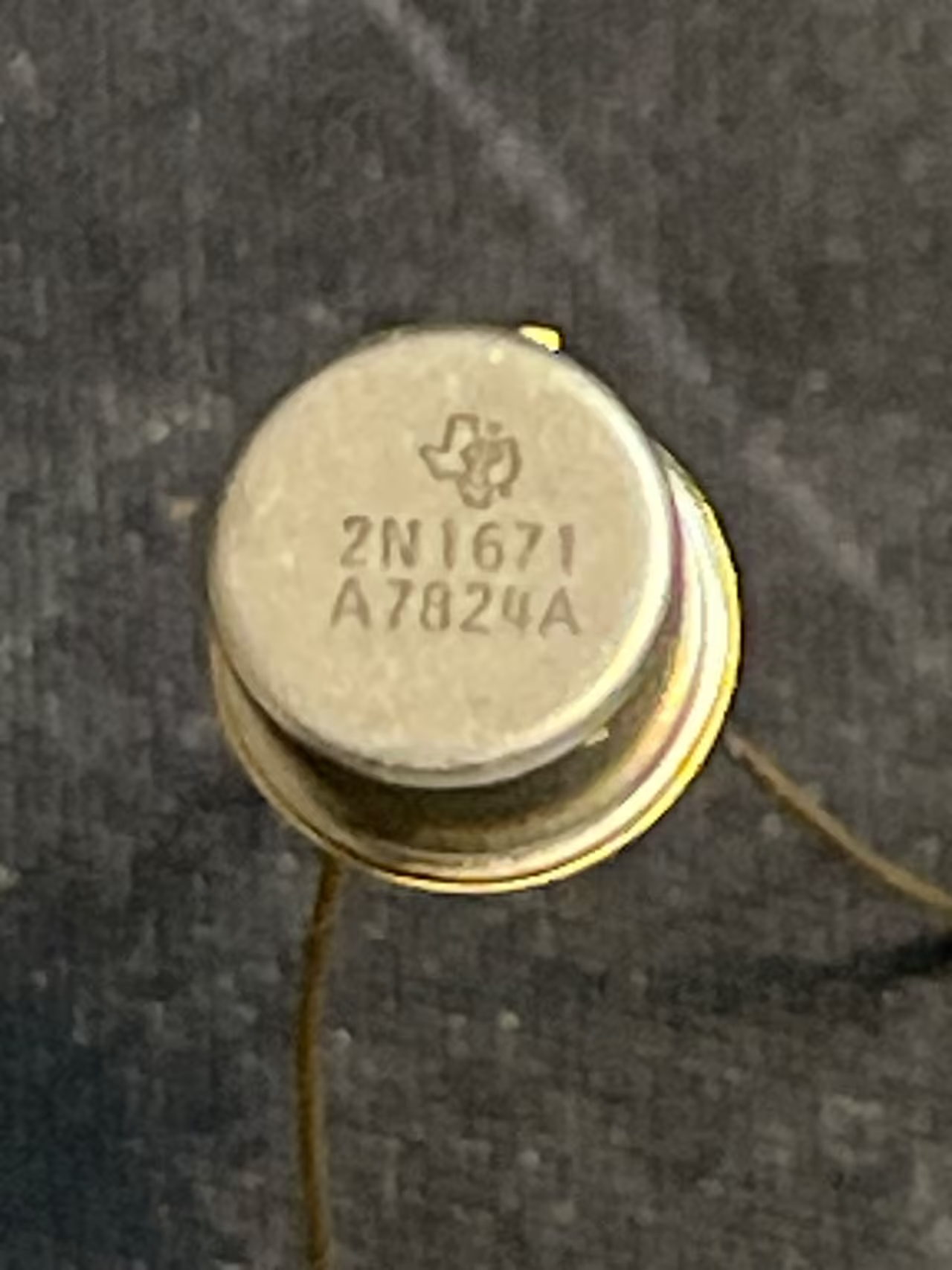
- 2 photos
Never used. The original pack has been opened, or the quantity was split off a full reel or tube. Leads are original and unclipped.
New old stock, open stock on the grading scaleSend the quantity you need. You get a quote back with shipping before anything is charged.
Video
Filmed on the bench. Sound is stripped from product clips.
- 0:10
Specifications
| Specification | Value |
|---|---|
| Identification | |
| Part number | 2N1671 |
| Manufacturer | Texas Instruments |
| Condition | New old stock, open stock |
| Date code | A7827A |
| Package | TO-5 metal can, three leads |
| Country of origin | Not recorded |
| Family | 2N1671 |
| Stock number | GRCABHV3 |
| Overview | |
| Manufacturer part number | 2N1671 |
| Manufacturer | Texas Instruments, logo on the case |
| Case marking | 2N1671 with A7827A beneath |
| Electrical | |
| Device type | Silicon unijunction transistor, UJT |
| Voltage | About 30 V |
| Dissipation | About 450 mW |
| Typical use | Thyristor triggering, timing, relaxation oscillators |
| Construction | |
| Package | TO-5 metal can, three leads |
| Condition | |
| Condition | Vintage old stock. Never installed, never soldered |
| Testing | Sold untested. Ask and the exact piece going in the envelope is metered first |
About this part
Texas Instruments made the first commercial silicon transistor, so a TI logo on a silicon device of this era is the maker's mark that belongs on it. This one is clearly stamped, with 2N1671 and A7827A beneath, and the markings have survived far better than most parts in this drawer.
The 2N1671 is a unijunction transistor, rated around 30 volts with about 450 mW of dissipation, which is a good deal more power than the small signal devices around it. That headroom is what lets a UJT drive a thyristor gate directly rather than through a buffer, and it is why these turn up in motor speed controls, lamp dimmers and welding equipment as well as in laboratory timebases.
Worth knowing how it relates to the other UJT in this drawer. The 2N1671A is the tightened grade of the same type, with the parameters that set the firing point held to a narrower range. In a relaxation oscillator where the timing simply has to happen the plain 2N1671 is fine. In one where the timing has to be repeatable across a batch, the A grade is the part that was specified, and this is not it.
The leads are long and original. Sold untested, as everything of this age here is: what determines whether a UJT suits a circuit is its standoff ratio, and that wants measuring on the individual piece rather than assuming from a type number.
Questions about this part
How does this differ from the 2N1671A in this drawer?
The A is the tightened grade of the same type, with the parameters that set the firing point held to a narrower range. For a relaxation oscillator where the timing simply has to happen, this plain 2N1671 is fine. Where the timing has to repeat across a batch of assemblies, the A grade is what was specified.
What can 450 mW do that a smaller UJT cannot?
Drive a thyristor gate directly rather than through a buffer stage. That is why these appear in motor speed controls, lamp dimmers and welding equipment, not only in laboratory timebases where the load is trivial.
What does A7827A mean?
It is Texas Instruments production coding stamped under the type number. We are not going to decode it into a date for you, because TI used more than one scheme over the years and a confident answer here would be a guess dressed up. It is quoted exactly as it reads on the case.
Why sell a UJT untested?
Because the number that decides whether one suits your circuit is the intrinsic standoff ratio, which sets the firing point and varies between individual devices. A type number does not tell you it. Ask before ordering and we will measure this exact piece.