
2N1671A Silicon Unijunction Transistor, TO-5, Gold Leads, Pair
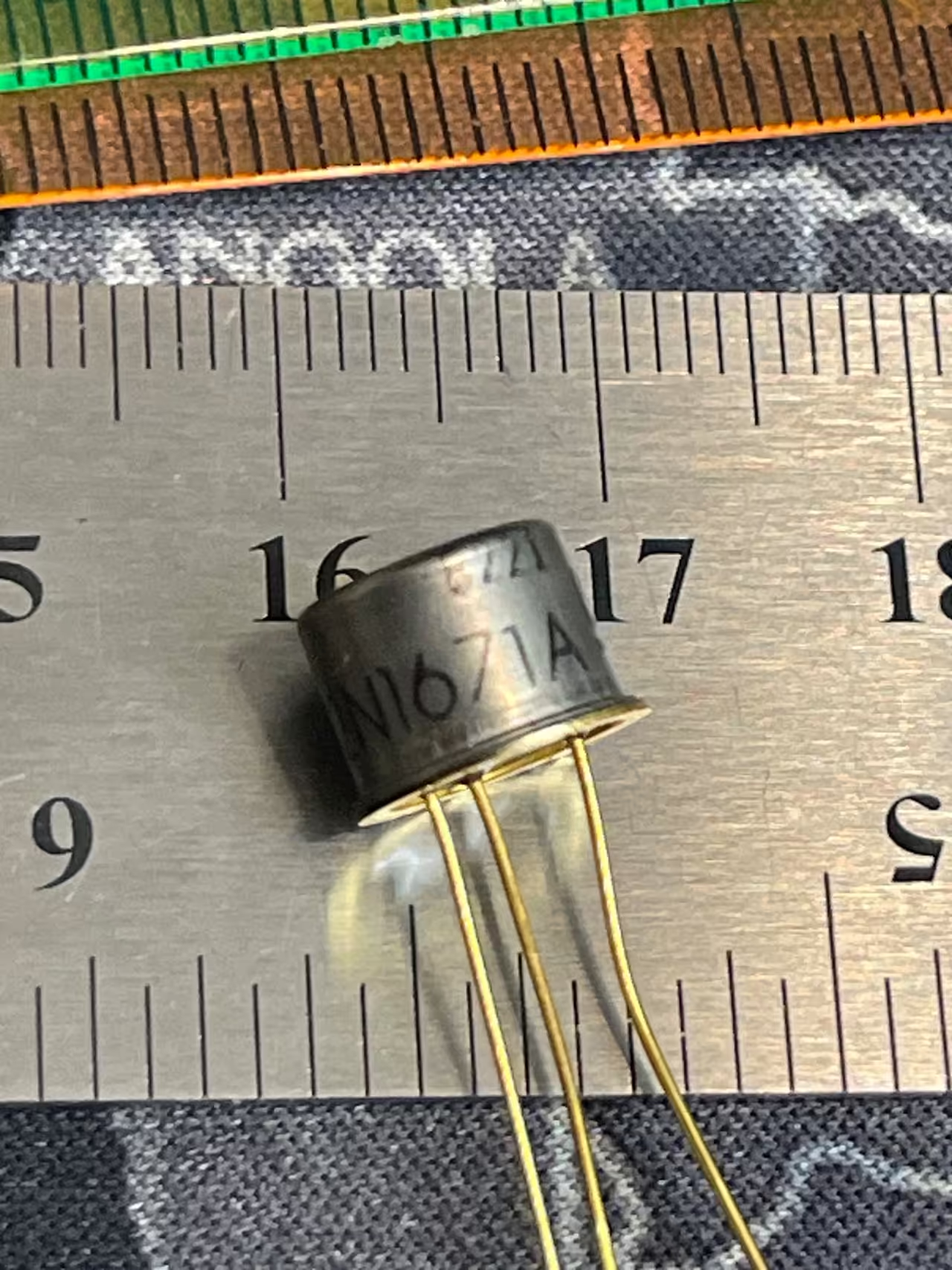
- 3 photos
Never used. The original pack has been opened, or the quantity was split off a full reel or tube. Leads are original and unclipped.
New old stock, open stock on the grading scaleSend the quantity you need. You get a quote back with shipping before anything is charged.
Video
Filmed on the bench. Sound is stripped from product clips.
- 0:10
Specifications
| Specification | Value |
|---|---|
| Identification | |
| Part number | 2N1671A |
| Manufacturer | Not recorded |
| Condition | New old stock, open stock |
| Date code | Not recorded |
| Package | TO-5 style metal can, three leads, gold plated |
| Country of origin | Not recorded |
| Family | 2N1671 |
| Stock number | GPA8QK42 |
| Overview | |
| Manufacturer part number | 2N1671A |
| Manufacturer | Unmarked. See the description |
| Electrical | |
| Device type | Silicon unijunction transistor, UJT |
| Terminals | Emitter, base one, base two |
| Typical use | Relaxation oscillators, timing, thyristor triggering, sensing |
| Construction | |
| Package | TO-5 style metal can, three leads |
| Lead finish | Gold plated |
| Condition | |
| Supplied as | Two pieces |
| Condition | Vintage old stock. Never installed, never soldered |
| Testing | Sold untested. Ask and the exact piece going in the envelope is metered first |
About this part
A unijunction transistor is not a transistor in the sense the rest of this drawer means it. It does not amplify. It has one junction, two bases and an emitter, and its useful property is negative resistance: past a trigger point set by the ratio of the two base resistances, it conducts hard and dumps whatever charge is sitting on a capacitor. Charge a capacitor through a resistor into the emitter and it fires, over and over, at a rate you set with two components. That is a relaxation oscillator, and for twenty years it was the cheapest reliable one available.
Where they turn up is timing, triggering and sensing: the gate drive for a thyristor in a motor controller or a lamp dimmer, the timebase in period test equipment, a simple tone generator. A circuit built around a UJT rarely has a modern drop in equivalent, because the part is doing something a conventional transistor cannot do at all, which is why they are still asked for.
Two are supplied here, which is worth having in this particular device: the intrinsic standoff ratio varies between pieces and sets the firing point, so a spare is what stops a marginal circuit becoming a rebuild. Both are TO-5 cans with gold plated leads. The markings have faded with age, though 2N1671A reads clearly in the photographs. Untested.
Questions about this part
What does a unijunction transistor actually do?
It switches, not amplifies. One junction, two bases and an emitter, with a negative resistance region: past a trigger point set by the ratio of the two base resistances it conducts hard and dumps the charge on a capacitor. Charge that capacitor through a resistor and it fires repeatedly, which is a relaxation oscillator built from two passive parts and this.
Can I substitute a normal transistor?
No. A UJT is doing something a bipolar transistor cannot do at all. You can synthesise the behaviour with two transistors in a programmable UJT arrangement, and people do, but it is a different circuit with different component values rather than a drop in swap.
Why does getting two matter?
The intrinsic standoff ratio varies from piece to piece and it is what sets the firing point, so a circuit sitting near the edge of its range behaves differently with a different device. Having a spare is what turns a marginal result into a swap rather than a redesign.
How legible are the markings?
Faded, which is normal for the age, but 2N1671A reads clearly and is visible in the close photographs. No manufacturer mark survives well enough to name, so none is claimed here.