
2N1516 PNP Germanium RF Transistor, TO-7, White Collar, Bare Leads
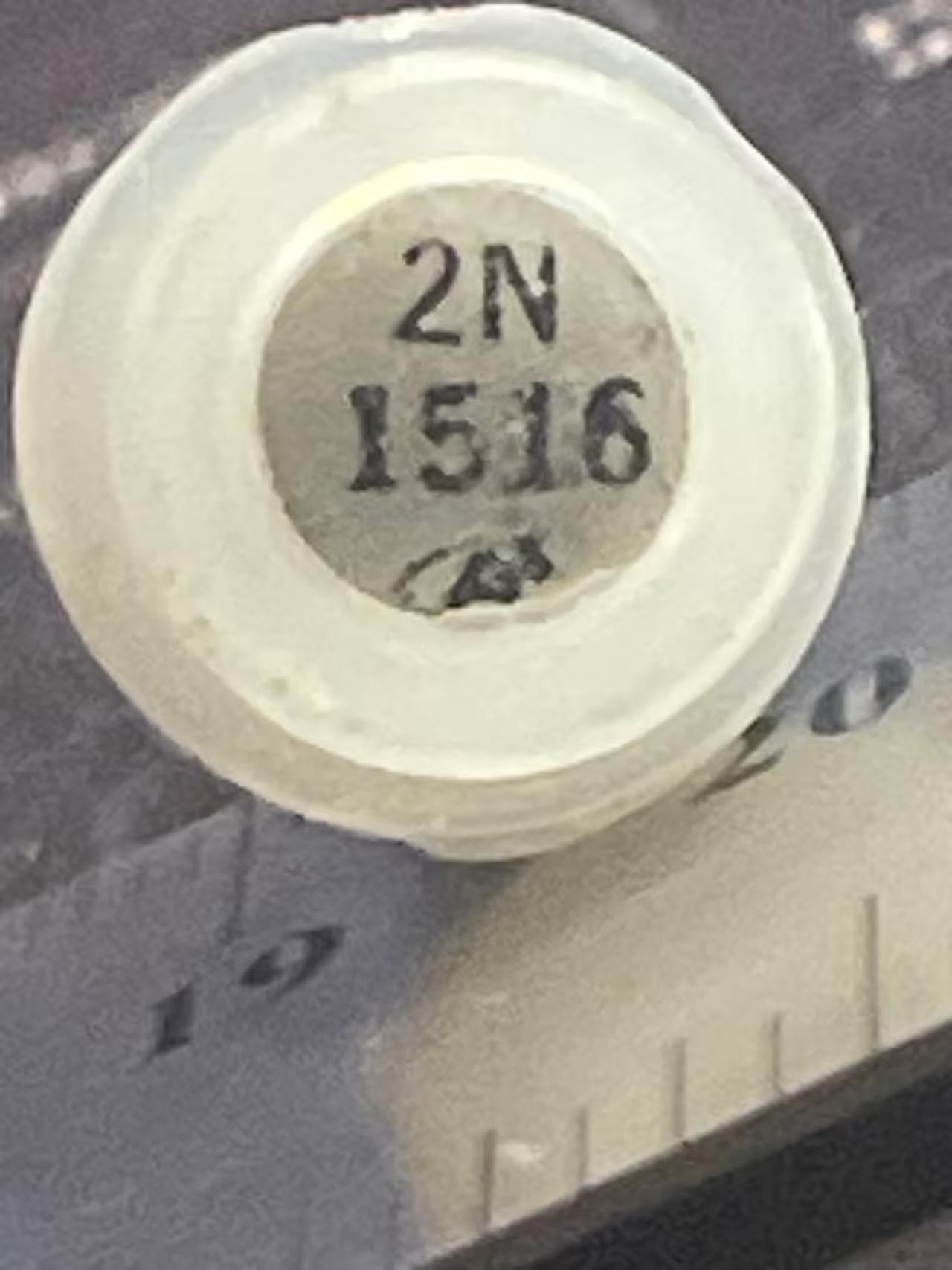
- 3 photos
Never used. The original pack has been opened, or the quantity was split off a full reel or tube. Leads are original and unclipped.
New old stock, open stock on the grading scaleSend the quantity you need. You get a quote back with shipping before anything is charged.
Specifications
| Specification | Value |
|---|---|
| Identification | |
| Part number | 2N1516 |
| Manufacturer | Not recorded |
| Condition | New old stock, open stock |
| Date code | Not recorded |
| Package | TO-7, four lead hermetic metal can, with white insulating collar |
| Country of origin | Not recorded |
| Family | 2N1516 |
| Stock number | MGYSFGED |
| Overview | |
| Manufacturer part number | 2N1516 |
| Tektronix reference | 151-0015-00 |
| Electrical | |
| Polarity and material | PNP germanium |
| Class | High frequency. Mixer and oscillator service |
| Construction | |
| Package | TO-7, four lead hermetic metal can |
| Fitted | White insulating collar. Leads are bare |
| Condition | |
| Condition | Vintage old stock. Never installed, never soldered |
| Testing | Sold untested. Ask and the exact piece going in the envelope is metered first |
About this part
Four leads on a small can is worth stopping at, because most people meet germanium as a three lead device. TO-7 is a four lead outline, and on a high frequency part the extra connection usually goes to the case so the metal can be tied down rather than left floating. A floating can beside an oscillator is a small antenna in the wrong place, which is why RF designs of this era cared about it and audio designs did not.
Germanium at high frequency was a narrow window in the history of this stuff. Silicon was not fast enough yet at the price, so the front ends of VHF receivers, FM mixers and a lot of laboratory equipment ran on parts like this one. They are hard to replace convincingly because the circuit around them was drawn for a germanium junction drop and a germanium temperature coefficient, and a modern device fitted in the same socket shifts the bias.
This piece carries the white insulating collar and bare, unsleeved leads. The sleeved version is listed separately and costs more, because somebody had already done the dressing on it. If you intend to cut and form the leads for your own board, that work would be wasted and this is the one to buy. Marked 2N1516, Tektronix 151-0015-00, untested.
Questions about this part
Why does a small germanium transistor have four leads?
TO-7 is a four lead outline, and on a high frequency device the extra connection normally goes to the case so the metal can be tied to a defined potential. A floating can next to an oscillator behaves like a small antenna in the wrong place. RF designs of this period cared about that; audio designs did not, which is why three lead cans are what most people picture.
Can I substitute a modern transistor?
Rarely well. The circuit was drawn around a germanium junction drop and a germanium temperature coefficient, so a silicon part in the same socket shifts the bias point and usually the performance with it. In a restoration the original device is normally less work than re engineering the stage.
Should I buy this or the sleeved one?
This one if you are going to cut and form the leads yourself, because the sleeving on the other would just come off. The sleeved one if you are fitting it into something crowded and want the lead dressing already done.
Has it been tested?
No. It is sold as untested old stock. Ask before ordering and we will meter the exact piece, which for germanium means leakage as well as gain, because leakage is what usually decides whether an old germanium device is still usable.