
Texas Instruments
Texas Instruments TIP3055 NPN Power Transistors, TO-218AA, Same Lot Pair
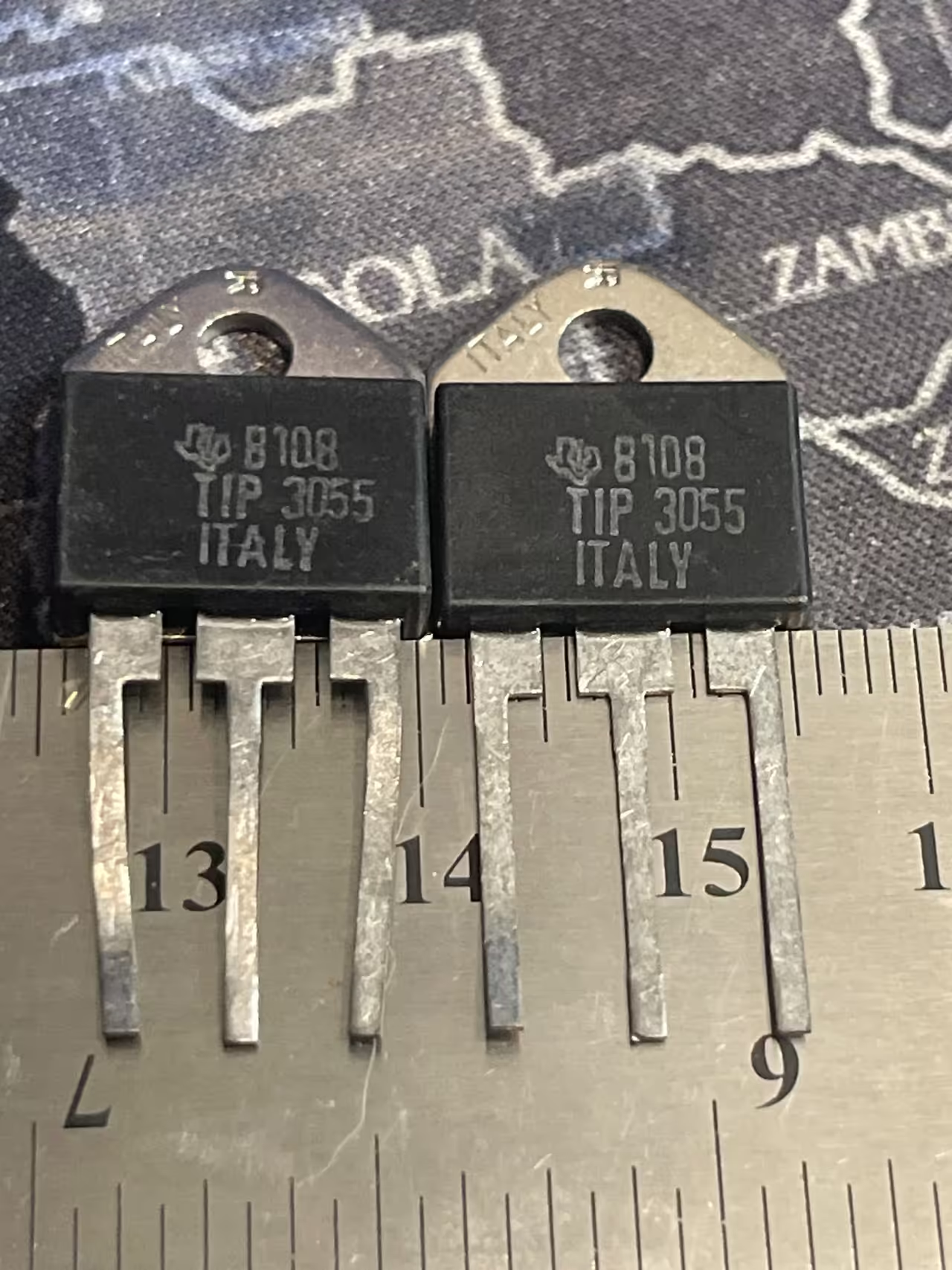
- 2 photos
Never used. The original pack has been opened, or the quantity was split off a full reel or tube. Leads are original and unclipped.
New old stock, open stock on the grading scaleSend the quantity you need. You get a quote back with shipping before anything is charged.
Video
Filmed on the bench. Sound is stripped from product clips.
- 0:12
Specifications
| Specification | Value |
|---|---|
| Identification | |
| Part number | TIP3055 |
| Manufacturer | Texas Instruments |
| Condition | New old stock, open stock |
| Date code | 8108 |
| Package | TO-218AA, two devices |
| Country of origin | Italy |
| Family | TIP3055 |
| Stock number | PP683QRD |
| Overview | |
| Manufacturer part number | TIP3055 |
| Manufacturer | Texas Instruments |
| Country marking | Italy |
| Production code | 8108, the same on both pieces |
| Electrical | |
| Polarity and material | NPN silicon |
| Collector emitter voltage | About 60 V |
| Collector current | 15 A |
| Dissipation | About 90 W, case mounted |
| Construction | |
| Package | TO-218AA, bolt down tab |
| Condition | |
| Supplied as | Two pieces from one lot. NOT electrically matched |
| Condition | Vintage old stock. Never installed, never soldered |
| Testing | Sold untested. Ask and the exact piece going in the envelope is metered first |
About this part
The 3055 is one of the genuinely famous numbers in power electronics. It has been the default NPN output device for supplies and amplifiers since the 1960s, second sourced by everybody, and it is still what a service manual of a certain age reaches for when it wants fifteen amps. The TIP prefix is the plastic packaged family; this pair is in TO-218AA, a large through hole outline with a bolt down tab.
Sixty volts collector to emitter, fifteen amps and around ninety watts with the tab properly sunk. That is a serious device, and the heatsinking is the part people underestimate: ninety watts is a specification about the case, not about the air around it, and a 3055 asked for real current on a token heatsink will not last.
Both of these carry the same manufacturer, the same part number, the same Italy country marking and the same 8108 production code, so they came off the same line at the same time. That is worth having for a push pull output stage or a pair of pass elements, where two devices from one lot behave more alike than two picked at random. They are NOT electrically matched, and nobody should describe a same lot pair as matched: matching is a measurement somebody made, and this is a coincidence of provenance.
Questions about this part
Are these a matched pair?
No, and the distinction matters. They are a SAME LOT pair: same maker, same part number, same country marking, same 8108 production code, so they came off one line at one time. Matching is a measurement somebody made on the individual devices, and nobody has made it here. Same lot devices do tend to behave more alike than two picked at random, which is why the pairing is worth having.
What does 8108 mean?
A production or date code, and on the usual convention it reads as the eighth week of 1981. That is an interpretation of a common pattern rather than something stamped in words, so treat it as a strong indication. What is certain is that both pieces carry the same one.
How much heatsink does it need?
More than people expect. The ninety watt figure is a statement about the case with the heat taken away from it, not about the device sitting in air. A 3055 asked for real current on a token heatsink runs into thermal limits and then fails, and the failure looks like a bad transistor rather than a bad installation.
Why is the 3055 so well known?
It has been the default NPN output device for power supplies and amplifiers since the 1960s and was second sourced by nearly every manufacturer. If you are restoring equipment of that period there is a good chance the original output devices were 3055s of one package or another.