
Texas Instruments
Texas Instruments SN72741P Operational Amplifier, DIP-8, 741 Family
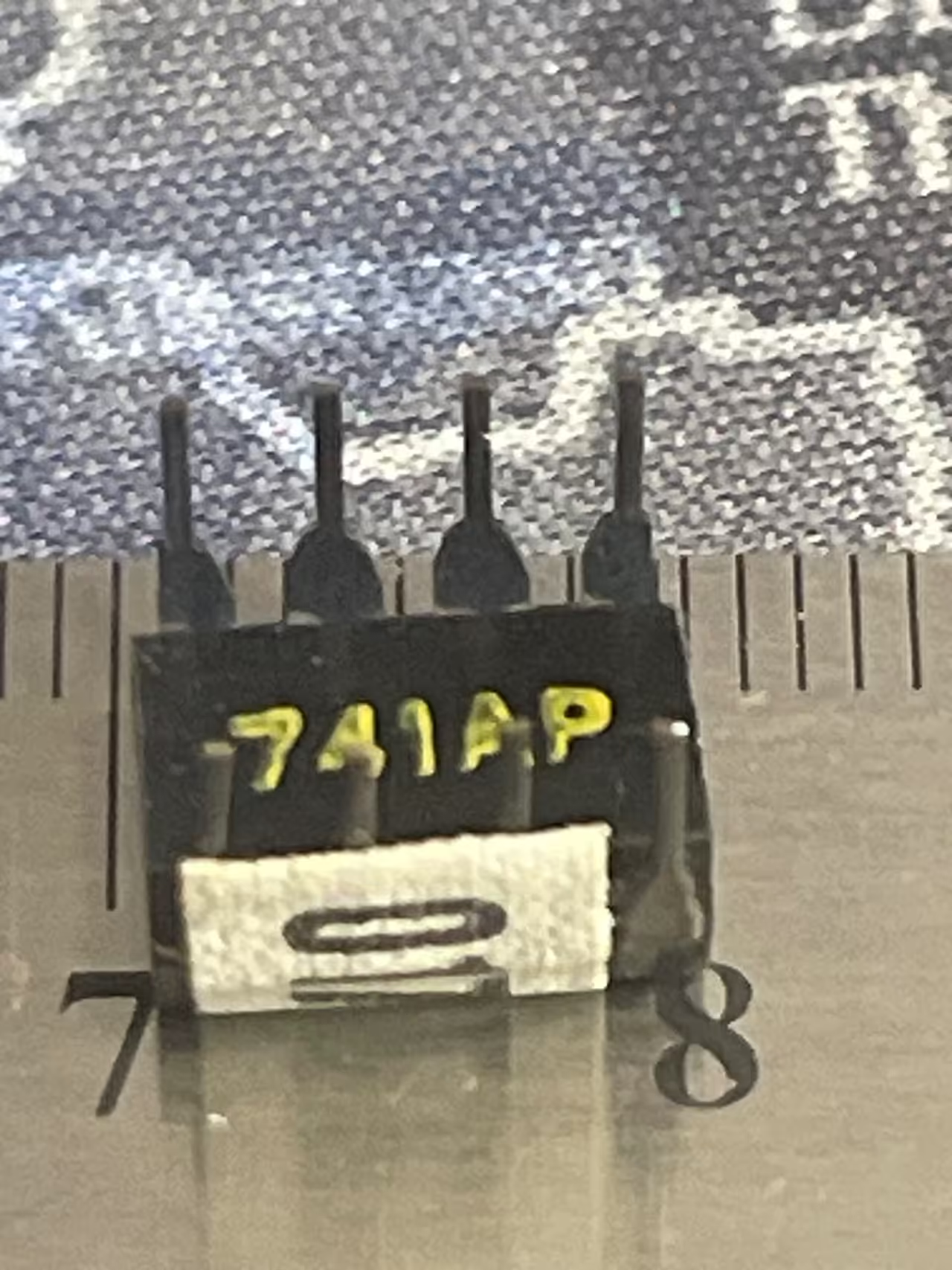
- 3 photos
Never used. The original pack has been opened, or the quantity was split off a full reel or tube. Leads are original and unclipped.
New old stock, open stock on the grading scaleSend the quantity you need. You get a quote back with shipping before anything is charged.
Video
Filmed on the bench. Sound is stripped from product clips.
- 0:10
Specifications
| Specification | Value |
|---|---|
| Identification | |
| Part number | SN72741P |
| Manufacturer | Texas Instruments |
| Condition | New old stock, open stock |
| Date code | Not recorded |
| Package | PDIP-8, eight pin plastic dual in line |
| Country of origin | Not recorded |
| Family | 741 |
| Stock number | R3AWENNP |
| Overview | |
| Manufacturer part number | SN72741P |
| Manufacturer | Texas Instruments |
| Device type | Single operational amplifier, bipolar |
| Family | 741, functionally the general 741 device |
| Electrical | |
| Supply | About plus and minus 15 V nominal, 18 V maximum |
| Slew rate | About 0.5 V per microsecond |
| Compensation | Internal. Stable at unity gain with nothing added |
| Construction | |
| Package | PDIP-8, eight pin plastic dual in line |
| Condition | |
| Condition | Vintage old stock. Never installed, never soldered |
| Testing | Sold untested. Ask and the exact piece going in the envelope is metered first |
About this part
The 741 is the most taught integrated circuit ever made. It is the op amp in the textbook, the one every electronics course builds an inverting amplifier with, and it has been in continuous production under a dozen part numbers since the late 1960s. This is Texas Instruments' early version of it, the SN72741P, in the eight pin plastic dual in line package.
What made it dominate was internal frequency compensation. Earlier op amps needed an external capacitor chosen for the gain you intended to run at, and getting it wrong gave you an oscillator instead of an amplifier. The 741 put the compensation inside, so it is stable at any gain down to unity with nothing added. The price of that is a slew rate around half a volt per microsecond, which is slow, and it is why nobody would choose one for a new audio design today.
For a restoration or a period correct build, that slowness is the point: a circuit voiced around a 741 behaves differently with a modern fast op amp dropped into the socket. It runs on plus and minus fifteen volts nominally, with about eighteen as the limit. The SN72741 is functionally the same device as the general 741 family. Untested old stock, sold individually.
Questions about this part
Is this the same as a 741?
Functionally yes. SN72741P is Texas Instruments' part number for its version of the general 741 operational amplifier, and the family has been made under a dozen numbers by as many manufacturers. If a schematic calls for a 741, this is one.
Why was the 741 so dominant?
Internal frequency compensation. Earlier op amps needed an external capacitor sized for the gain you intended, and choosing it wrong gave you an oscillator. The 741 put the compensation inside so it is stable at any gain down to unity with nothing added, which made it the part you could hand to a student.
Is it slow?
Yes, about half a volt per microsecond, and that is the cost of the internal compensation. Nobody would pick one for a new audio design. For a restoration it is the point: a circuit voiced around a 741 does not behave the same with a modern fast op amp in the socket.
What supply does it want?
Plus and minus fifteen volts is the nominal arrangement, with about eighteen as the limit. It will run on less, with less output swing, which is what most period circuits assumed anyway.