
Texas Instruments
Texas Instruments 2N2497 P Channel Silicon JFET, TO-5, Gold Leads
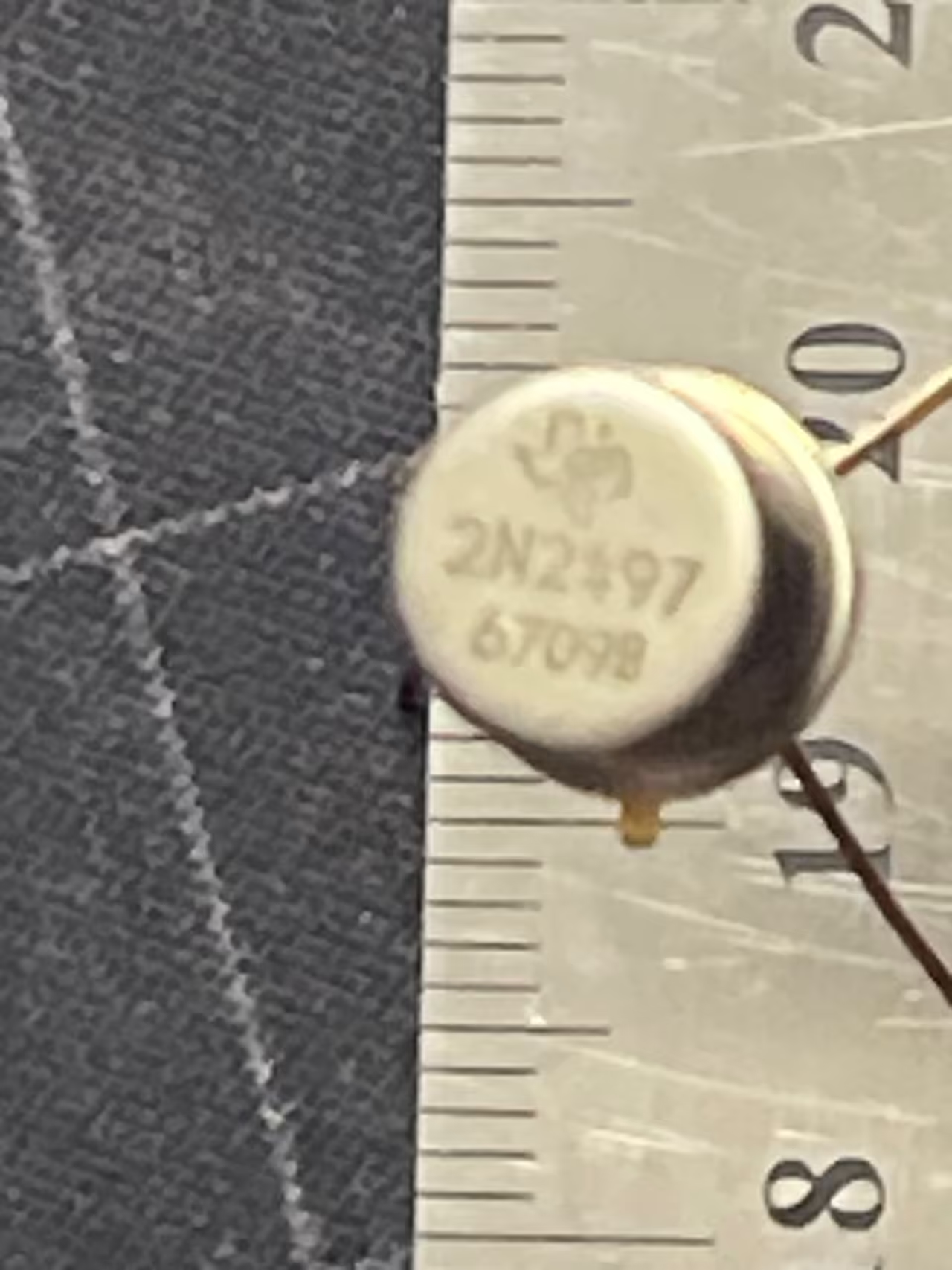
- 4 photos
Never used. The original pack has been opened, or the quantity was split off a full reel or tube. Leads are original and unclipped.
New old stock, open stock on the grading scaleSend the quantity you need. You get a quote back with shipping before anything is charged.
Video
Filmed on the bench. Sound is stripped from product clips.
- 0:16
Specifications
| Specification | Value |
|---|---|
| Identification | |
| Part number | 2N2497 |
| Manufacturer | Texas Instruments |
| Condition | New old stock, open stock |
| Date code | Not recorded |
| Package | TO-5 hermetic metal can, three leads, case connected to the gate |
| Country of origin | Not recorded |
| Family | 2N2497 |
| Stock number | NBWZ72DJ |
| Overview | |
| Manufacturer part number | 2N2497 |
| Manufacturer | Texas Instruments, logo on the can |
| Electrical | |
| Device type | P channel silicon junction FET |
| Drain gate breakdown | 20 V minimum |
| Zero gate drain current, IDSS | About 1 to 3 mA |
| Dissipation | 0.5 W in free air |
| Input capacitance | About 32 pF |
| Construction | |
| Pinout | Pin 1 source, pin 2 gate, pin 3 drain |
| Case | Connected to the gate |
| Package | TO-5 hermetic metal can, gold plated leads |
| Condition | |
| Condition | Vintage old stock. Never installed, never soldered |
| Testing | Sold untested. Ask and the exact piece going in the envelope is metered first |
About this part
A JFET is the quiet one. Where a bipolar transistor draws base current and adds shot noise doing it, a junction field effect transistor is controlled by voltage across a reverse biased junction and draws almost nothing. That gives it a very high input impedance and a low noise floor, which is why the first stage of a sensitive amplifier, an electrometer or a high impedance probe is so often a JFET and not a bipolar.
P channel is the less common half, and this one is a Texas Instruments part with the logo on the can. The published figures are a drain to gate breakdown of at least 20 V, a zero gate drain current in the region of one to three milliamps, half a watt of dissipation and an input capacitance around 32 pF. Pin one is the source, pin two the gate and pin three the drain, and the case is tied to the gate.
That last detail deserves attention. On most metal can devices the case is a shield or a collector; here it is the gate, which is the highest impedance node in the circuit. Anything that touches the can is connected to the gate, so a mounting clip, a stray lead or a finger will do things to the bias that are hard to explain if you do not know. The long gold leads are original and uncut. Untested.
Questions about this part
Why use a JFET instead of a transistor?
Input impedance and noise. A bipolar transistor needs base current and adds shot noise producing it; a JFET is controlled by voltage across a reverse biased junction and draws almost nothing. That is why the first stage of a sensitive amplifier, an electrometer or a high impedance probe is so often a JFET.
The case is connected to the gate. Does that matter?
A great deal. On most metal can devices the case is a shield or a collector. Here it is the gate, the highest impedance node in the circuit, so a mounting clip, a stray lead or a fingertip on the can does things to the bias that are very hard to diagnose if you do not know to look.
What is the marking under the part number?
A manufacturing, date or lot code rather than a second model number. It is quoted as it reads and not decoded, because Texas Instruments used more than one scheme over the years and a confident date here would be a guess.
Is P channel harder to find than N channel?
Generally yes, in this era and in this package. N channel devices dominated, so a P channel JFET in a hermetic metal can with a maker's logo is the scarcer half of the pair, which is usually why somebody is looking for this number in particular.