
Sylvania
Sylvania ECG289AMP Matched Pair NPN Silicon Transistors, TO-92, Sealed
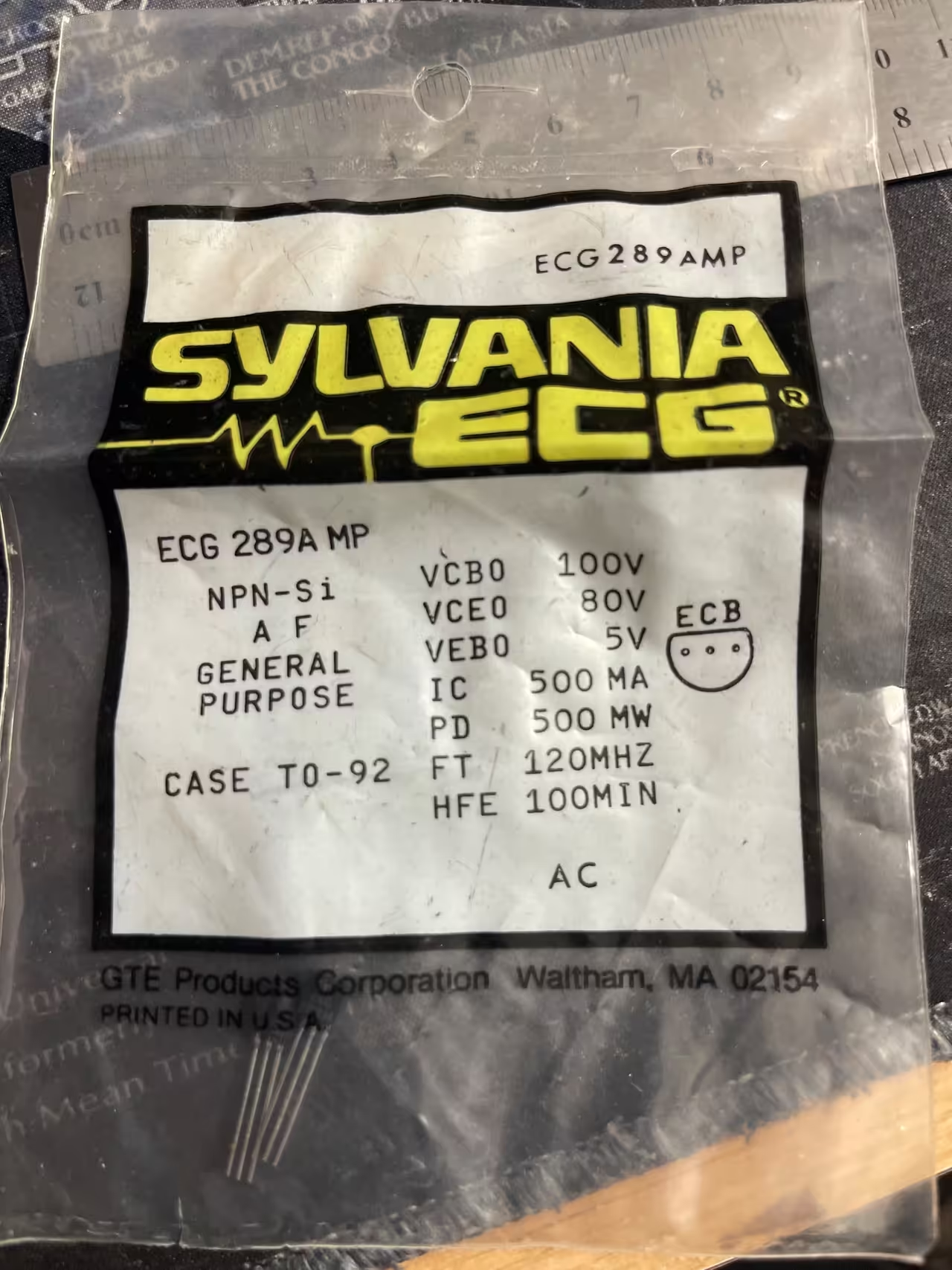
- 2 photos
Never used and never opened. Still in the factory tube, tray, reel or bag it shipped in, with the original date code intact.
New old stock, sealed on the grading scaleSend the quantity you need. You get a quote back with shipping before anything is charged.
Video
Filmed on the bench. Sound is stripped from product clips.
- 0:11
Specifications
| Specification | Value |
|---|---|
| Identification | |
| Part number | ECG289AMP |
| Manufacturer | Sylvania |
| Condition | New old stock, sealed |
| Date code | Not recorded |
| Package | TO-92, two devices in the original sealed Sylvania ECG pack |
| Country of origin | Not recorded |
| Family | ECG289A |
| Stock number | NDAZQM3J |
| Overview | |
| Manufacturer part number | ECG289AMP |
| Manufacturer | Sylvania ECG |
| Cross reference | NTE289AMP |
| Supplied as | Two electrically matched ECG289A transistors |
| Electrical | |
| Polarity and material | NPN silicon |
| Collector base voltage | 100 V |
| Collector emitter voltage | 80 V |
| Emitter base voltage | 5 V |
| Collector current | 500 mA |
| Dissipation | 500 mW |
| Transition frequency | 120 MHz |
| Minimum DC gain | hFE 100 |
| Construction | |
| Package and pinout | TO-92, emitter collector base |
| Condition | |
| Condition | Factory sealed. Never opened, so never tested |
About this part
The MP on the end of the part number is the whole point: matched pair. Two ECG289A transistors selected at the factory to have closely similar characteristics, packed together and sold as one item. Matching matters wherever two devices are supposed to behave identically and the circuit has no way to correct for the difference: the input pair of a differential amplifier, a current mirror, the two halves of a push pull output stage. An unmatched pair in those places shows up as offset, as drift with temperature, or as distortion that no amount of adjustment removes.
The specifications printed on the pack are 100 V collector to base, 80 V collector to emitter, 5 V emitter to base, 500 mA collector current, 500 mW dissipation, a transition frequency of 120 MHz and a minimum DC gain of 100. Pinout is emitter, collector, base, which is worth reading twice, because it is not the order most TO-92 devices use and fitting one the wrong way round is the obvious mistake here.
The pack has never been opened. That is the reason to buy this rather than two loose transistors: once the seal is broken the pairing is only as good as whoever kept them together, and the value of a matched pair is entirely in the provenance. It also means nobody has tested them, and we are not going to open it to do so. The modern cross reference is NTE289AMP.
Questions about this part
What does matched actually mean here?
Two devices selected at the factory to have closely similar characteristics and packed together. It matters where two transistors are supposed to behave identically and the circuit cannot correct for the difference: a differential input pair, a current mirror, the halves of a push pull stage. Unmatched, the symptom is offset, drift with temperature, or distortion that no adjustment removes.
Why does the pack being sealed matter so much?
Because the pairing is the product. Once the seal is broken you are trusting whoever kept the two together afterwards, and a matched pair that has been separated and reunited is just two transistors. Sealed is the only state in which the factory's claim still means something.
Will you open it to test them?
No, and it is the one case here where we will not. Opening the pack destroys the thing that makes it worth buying. If you need tested devices rather than a sealed matched pair, buy loose transistors and match them yourself on a curve tracer.
What is the pinout?
Emitter, collector, base, as printed on the pack. Read that twice: it is not the order most TO-92 devices use, and fitting one the wrong way round is the mistake this package invites.