
Sanyo
Sanyo D348 NPN Horizontal Deflection Output Transistor, TO-3, 1500 V
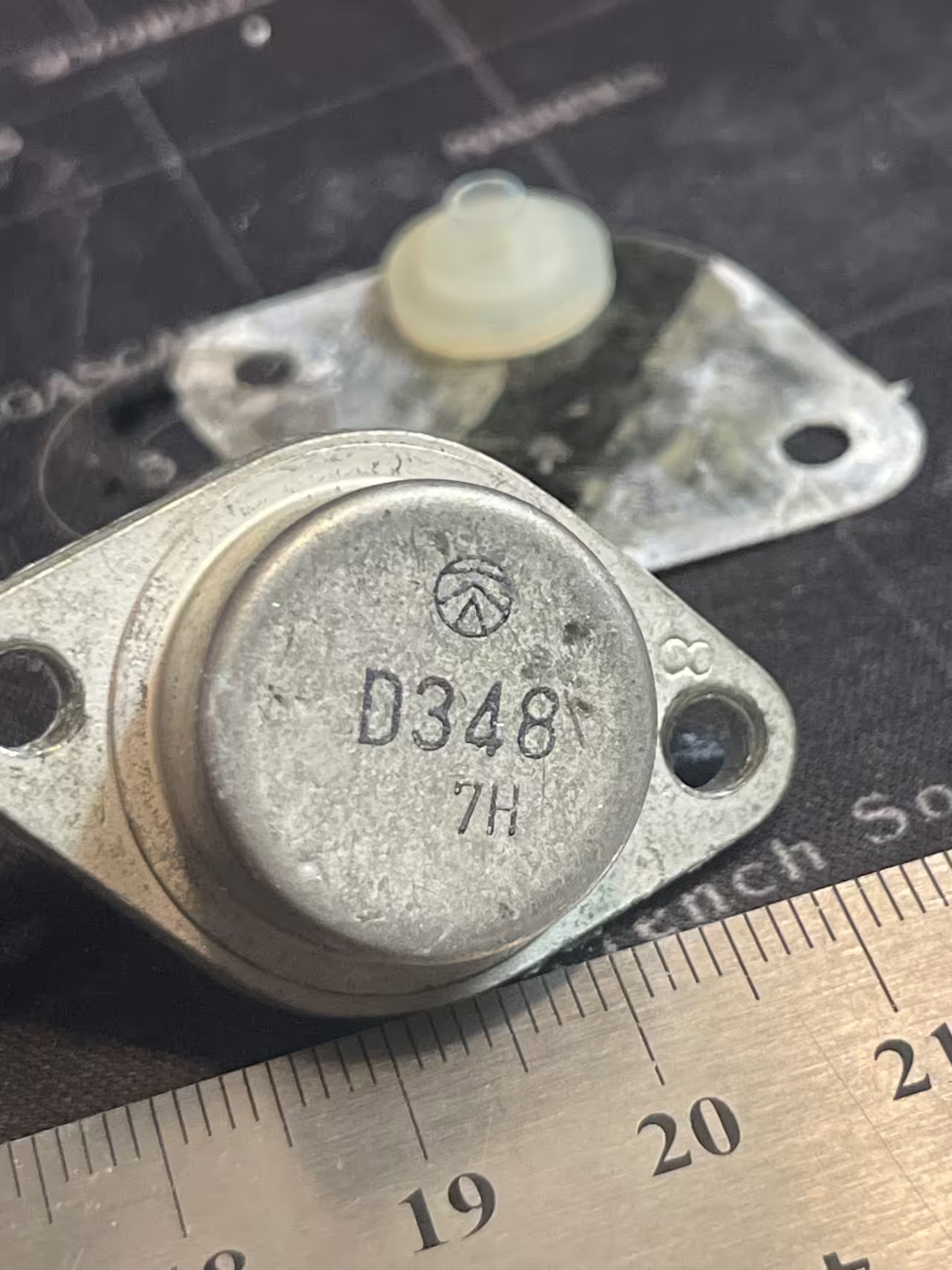
- 3 photos
Never used. The original pack has been opened, or the quantity was split off a full reel or tube. Leads are original and unclipped.
New old stock, open stock on the grading scaleSend the quantity you need. You get a quote back with shipping before anything is charged.
Video
Filmed on the bench. Sound is stripped from product clips.
- 0:09
Specifications
| Specification | Value |
|---|---|
| Identification | |
| Part number | D348 |
| Manufacturer | Sanyo |
| Condition | New old stock, open stock |
| Date code | Not recorded |
| Package | TO-3, two lead metal can with the case as collector |
| Country of origin | Not recorded |
| Family | D348 |
| Stock number | MJG7K4TC |
| Overview | |
| Manufacturer part number | D348 |
| Manufacturer | Sanyo |
| Electrical | |
| Polarity and material | NPN silicon |
| Collector base voltage | About 1500 V |
| Collector emitter voltage | About 400 V |
| Collector current | About 7 A |
| Dissipation | About 50 W |
| Specified use | 20 inch, 110 degree television horizontal deflection output |
| Construction | |
| Package | TO-3 metal can. The case is the collector |
| Condition | |
| Condition | Vintage old stock. Never installed, never soldered |
| Testing | Sold untested. Ask and the exact piece going in the envelope is metered first |
About this part
Sanyo's own reference lists the D348 for a specific job: the horizontal deflection output stage of a twenty inch, one hundred and ten degree television. That number, the deflection angle, is how wide the electron beam has to be swung to fill the corners of the tube, and a wider angle means a harder job for the output stage. A hundred and ten degrees was about as far as it went, and parts specified for it sit at the demanding end of what these devices did.
The ratings say the same thing. Around 1500 V collector to base and 400 V collector to emitter, with 7 A of collector current and 50 W of dissipation. The gap between those two voltage figures is the interesting part: the collector to base rating is what survives the flyback spike with the base held, and the lower collector to emitter figure is what it can take with the base open. Circuits of this kind depend on that distinction, which is why substituting on the headline number alone goes wrong.
TO-3 with the case as the collector, so an insulating washer is needed against a grounded heatsink. Marked D348 with a production code beside it. Never mounted, sold untested.
Questions about this part
What does 110 degrees refer to?
The deflection angle: how far the electron beam has to be swung to reach the corners of the tube. A wider angle needs more energy moved through the yoke in the same time, so it is a harder job for the output stage. A hundred and ten degrees was about the limit, and parts specified for it sit at the demanding end of the range.
Why are there two different voltage ratings?
They describe different conditions. The collector to base figure, about 1500 V, is what the device withstands with the base held. The collector to emitter figure, about 400 V, is what it takes with the base open. Horizontal output circuits depend on that distinction, which is why choosing a substitute on the headline number alone tends to go wrong.
Can I use it as a general purpose power transistor?
You can, within its ratings, but it is not the economical way to buy 7 A of switching. What you are paying for here is the voltage capability and the switching speed, and if your circuit does not need those a modern part will be cheaper and easier to source.
Does it need an insulating washer?
On a grounded heatsink, yes. TO-3 puts the collector on the case, so whatever it bolts to joins the circuit. Use an insulating washer and a shouldered bush unless the design deliberately puts the heatsink at collector potential.