
RCA
RCA 2N1184 PNP Germanium Power Transistor, TO-8, RCA Logo
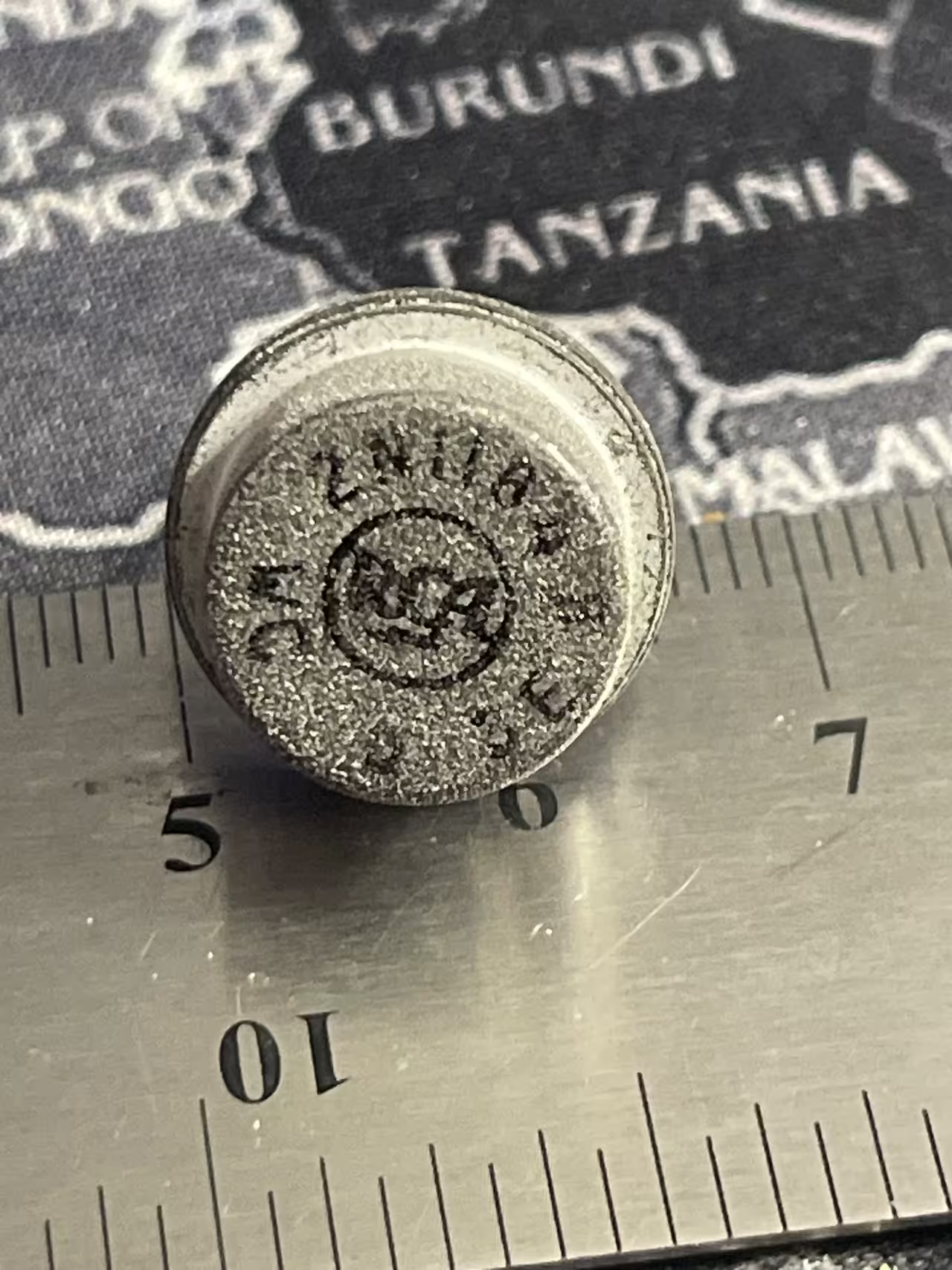
- 3 photos
Never used. The original pack has been opened, or the quantity was split off a full reel or tube. Leads are original and unclipped.
New old stock, open stock on the grading scaleSend the quantity you need. You get a quote back with shipping before anything is charged.
Video
Filmed on the bench. Sound is stripped from product clips.
- 0:14
Specifications
| Specification | Value |
|---|---|
| Identification | |
| Part number | 2N1184 |
| Manufacturer | RCA |
| Condition | New old stock, open stock |
| Date code | Not recorded |
| Package | TO-8 metal package |
| Country of origin | Not recorded |
| Family | 2N1184 |
| Stock number | NCA4E9J4 |
| Overview | |
| Manufacturer part number | 2N1184 |
| Manufacturer | RCA, logo on the case |
| Electrical | |
| Polarity and material | PNP germanium |
| Collector current | About 3 A |
| Dissipation | About 7.5 W |
| Collector emitter voltage | About 20 V |
| Class | Intermediate power switching and low frequency amplifier |
| Construction | |
| Package | TO-8 metal |
| Condition | |
| Condition | Vintage old stock. Never installed, never soldered |
| Testing | Sold untested. Ask and the exact piece going in the envelope is metered first |
About this part
Germanium power transistors are a different animal from the small signal germanium elsewhere in this drawer, and the difference is heat. Every germanium device leaks, the leakage roughly doubles for every ten degrees the junction rises, and the leakage itself produces heat. In a small signal part that is a nuisance. In a power part it is a feedback loop with a name, thermal runaway, and the circuits around these devices were built with emitter resistors and bias compensation specifically to stop it.
Which is why fitting one properly matters more than the ratings suggest. About 3 A of collector current, 7.5 W of dissipation and 20 V collector to emitter is a modest envelope by modern standards, and the heatsinking that keeps a germanium part inside it is not modest at all.
It was built for intermediate power switching and low frequency amplification: industrial and military control gear, communications equipment, and audio output stages of the period. The audio restorers are most of the demand now, because a germanium output stage sounds the way it does for reasons no silicon substitute reproduces. TO-8 package, RCA logo and the original factory marking on the case, ordinary storage oxidation, never fitted, untested.
Questions about this part
What is thermal runaway and why does it matter here?
Germanium leaks, the leakage roughly doubles for every ten degrees the junction rises, and the leakage itself makes heat. In a power device that closes into a feedback loop which can destroy the part. Circuits built around these use emitter resistors and bias compensation to break the loop, which is why the heatsinking and the surrounding components matter more than the headline ratings suggest.
Is 7.5 watts a lot?
Not by modern standards, and that is the point. A silicon device in a similar package would be rated far higher. What you are buying is a germanium power device for a circuit that was designed around one, not the cheapest way to switch three amps.
Why do people still want germanium output transistors?
Mostly audio restoration. A germanium output stage behaves differently through crossover and its gain moves with temperature, and the amplifiers of that era were voiced around exactly those properties. A silicon replacement measures better and does not sound the same.
Is the RCA marking clear?
Yes, the RCA logo and the original factory part marking are both legible on the case. There is ordinary oxidation and fading from storage, which is described here rather than polished out, and the piece has never been mounted.