
Panasonic
Panasonic ERZ-V14D330 Metal Oxide Varistors, 14 mm 33 V, Sealed Pack of Five
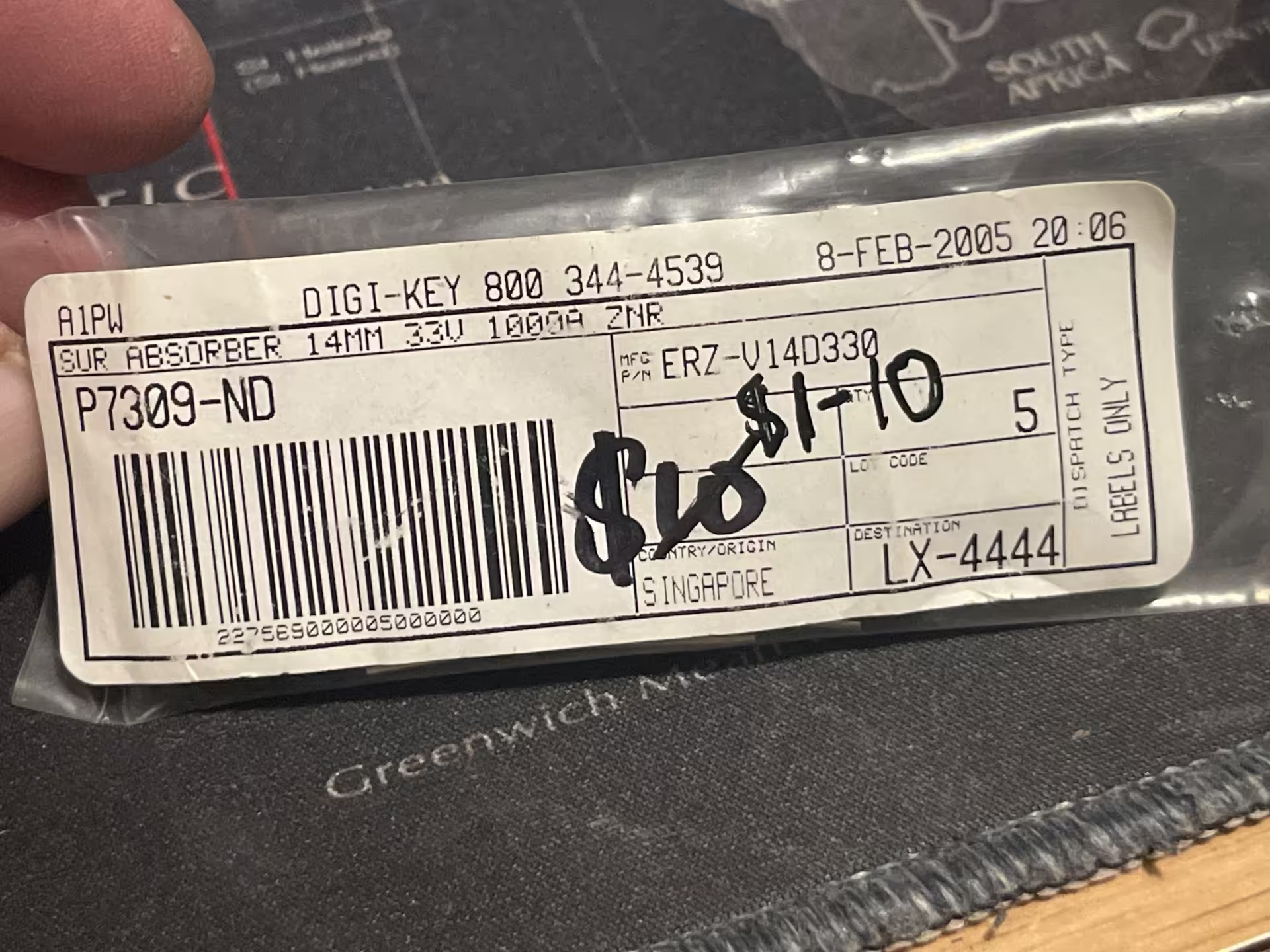
- 3 photos
Never used and never opened. Still in the factory tube, tray, reel or bag it shipped in, with the original date code intact.
New old stock, sealed on the grading scaleSend the quantity you need. You get a quote back with shipping before anything is charged.
Video
Filmed on the bench. Sound is stripped from product clips.
- 0:10
Specifications
| Specification | Value |
|---|---|
| Identification | |
| Part number | ERZ-V14D330 |
| Manufacturer | Panasonic |
| Condition | New old stock, sealed |
| Date code | Not recorded |
| Package | Radial disc, epoxy coated, in the original sealed distributor bag |
| Country of origin | Singapore |
| Family | ERZ-V14D |
| Stock number | SDH36FKE |
| Overview | |
| Type | Metal oxide varistor, surge absorber |
| Manufacturer part number | ERZ-V14D330 |
| Distributor part number | P7309-ND, printed on the bag label |
| Suggested use | Transient protection on low voltage supply rails, vehicle systems and signal inputs |
| Electrical | |
| Varistor voltage | 33 V, printed on the bag label |
| Surge current, as labelled | 1000 A |
| Polarity | None. A varistor is bidirectional and works the same either way round |
| Physical | |
| Disc diameter | 14 mm, printed on the bag label |
| Lead style | Radial, two leads from one edge of the disc |
| Body | Epoxy coated disc, dark blue |
| Provenance | |
| Quantity in the pack | Five pieces, sold together |
| Country of origin | Singapore, printed on the bag label |
| Label date | 8 February 2005 |
| Condition | New old stock, bag never opened |
| Basis of identification | The original distributor label on the sealed bag |
| Not established | |
| Energy rating | Not established from the label. Consult the Panasonic datasheet for the joule rating |
About this part
Five Panasonic ERZ-V14D330 metal oxide varistors in their original sealed distributor bag, unopened. The label reads SUR ABSORBER 14MM 33V 1000A, Panasonic part ERZ-V14D330, distributor part P7309-ND, country of origin Singapore, dated 8 February 2005. Sold as the sealed pack of five.
A varistor is not a capacitor and not a diode. It is a voltage dependent resistor: at normal working voltage it is effectively an open circuit and does nothing at all, and above its clamping voltage its resistance collapses and it conducts hard, dumping the energy of a transient before that transient reaches whatever sits downstream. They are the standard first line of defence against surges on a supply.
The 33 volt rating is the thing to notice about these, because it is unusual. Most varistors people meet are mains parts rated somewhere between 130 and 470 volts, sitting across a line to swallow lightning induced surges. A 33 volt device is not a mains part at all. It belongs on a low voltage supply rail, a 24 volt industrial line, a vehicle electrical system or a signal input, protecting semiconductors that would not survive a spike a fraction of the size a mains varistor ignores.
The 14 mm figure is the disc diameter, and it matters because it sets the energy the device can absorb. A 14 mm disc is a substantial varistor, well up the range from the small 5 and 7 mm parts.
The bag has never been opened.
Questions about this part
What does a varistor actually do?
It is a voltage dependent resistor. Below its clamping voltage it behaves as an open circuit and has no effect on the circuit at all. Above it, its resistance falls dramatically and it conducts hard, shunting the energy of a transient to ground or across the supply before it reaches the semiconductors downstream. It is a sacrificial part that absorbs a surge so something more expensive does not have to.
Why is 33 volts unusual?
Because most varistors are mains parts, rated somewhere between 130 and 470 volts and fitted across a supply line to deal with lightning induced surges. A 33 volt device is a different job entirely. It belongs on a low voltage rail, a 24 volt industrial supply, a vehicle electrical system or a signal input, where the things being protected fail at voltages a mains varistor would not even notice.
What does the 14 mm figure mean?
It is the diameter of the ceramic disc inside, and it is effectively the size of the tank. Energy absorption scales with the volume of material, so a 14 mm varistor will survive a considerably larger surge than a 5 or 7 mm part at the same voltage. If you are replacing a varistor, match both the voltage and the diameter, because a physically smaller device at the right voltage will clamp correctly and then fail on the first serious event.
Does it matter which way round I fit it?
No. A metal oxide varistor is bidirectional and behaves identically for either polarity, which is exactly what you want for something that has to clamp transients of either sign. There is no polarity mark on the body and none is needed.
Do varistors wear out?
Yes, and this is the argument for buying unused ones. Every surge a varistor absorbs degrades it slightly, lowering its clamping voltage and increasing its standing leakage. A varistor that has been in service for years has an unknown history of exactly that, and a badly degraded one can end up conducting continuously and overheating. These have absorbed nothing at all.
Can I use these on mains?
No. At 33 volts these would conduct hard and immediately on any mains supply, which would destroy them and quite possibly start a fire. Mains protection needs a varistor rated above the peak of the supply, typically 275 volts or more for a 230 volt line. These are low voltage devices and must be used as such.
What condition are they in?
New old stock in the original distributor bag, which has never been opened. The printed label is fully legible including the manufacturer part number, the ratings, the country of origin and the packing date. The photographs show the actual sealed bag and the five varistors visible inside it.