
Motorola
Motorola 2N4351 N Channel Enhancement MOSFET, TO-72, Pair, One Sealed
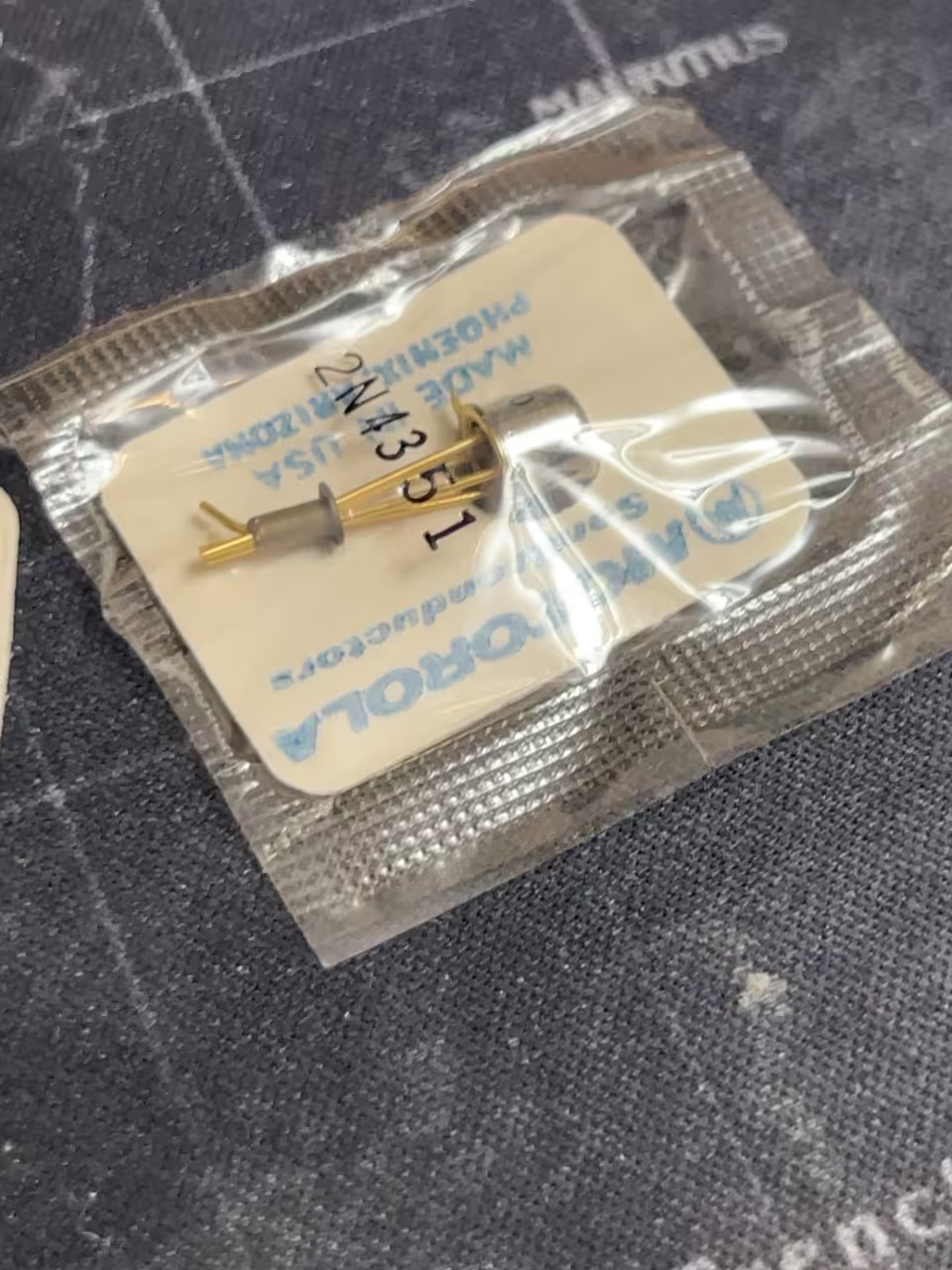
- 3 photos
Never used. The original pack has been opened, or the quantity was split off a full reel or tube. Leads are original and unclipped.
New old stock, open stock on the grading scaleSend the quantity you need. You get a quote back with shipping before anything is charged.
Video
Filmed on the bench. Sound is stripped from product clips.
- 0:11
Specifications
| Specification | Value |
|---|---|
| Identification | |
| Part number | 2N4351 |
| Manufacturer | Motorola |
| Condition | New old stock, open stock |
| Date code | Not recorded |
| Package | TO-72, four lead metal can, gold plated leads |
| Country of origin | Not recorded |
| Family | 2N4351 |
| Stock number | GNJ4KNDV |
| Overview | |
| Manufacturer part number | 2N4351 |
| Manufacturer | Motorola |
| Electrical | |
| Device type | N channel enhancement mode MOSFET |
| Operation | Voltage operated. Off with no gate voltage |
| Construction | |
| Package | TO-72, four lead metal can |
| Fourth lead | Substrate or case, usually tied to source in circuit |
| Lead finish | Gold plated |
| Condition | |
| Supplied as | Two pieces. One sealed in the original Motorola package, one opened and loose |
| Handling | Static sensitive. Treat as ESD critical |
| Testing | Sold untested. Ask and the exact piece going in the envelope is metered first |
About this part
The odd one out in this drawer, and worth understanding before you buy it. Almost everything else here is a bipolar transistor, which is a current operated device: you push current into the base and it controls a larger current. The 2N4351 is a MOSFET, which is voltage operated, and enhancement mode, which means it is OFF with nothing on the gate and turns on as the gate voltage rises. That is the behaviour modern logic is built on, and in 1970 it was the new thing.
The four leads matter too. Three are source, drain and gate; the fourth is the substrate or the case, and on a TO-72 it is usually tied to the source in circuit. Check the pinout against your diagram rather than assuming, because a MOSFET wired with the substrate floating behaves in ways that will waste an afternoon.
Handle it as static sensitive. A MOS gate is a capacitor with an insulator a few hundred atoms thick, and the charge you pick up walking across a carpet is enough to punch through it permanently, with no outward sign. Wrist strap, grounded iron, and leave it in the conductive packaging until the moment it goes in.
Two are supplied as a pair. One is still sealed in its original Motorola Semiconductor Products package and has never been opened; the other was opened and is loose. The loose one looks clean and probably unused, but nobody can prove that from the outside, so it is described as opened rather than as new. Neither has been tested.
Questions about this part
How is a MOSFET different from the other transistors here?
Almost everything else in this drawer is bipolar, which is current operated: you push current into the base to control a larger current. A MOSFET is voltage operated, and this one is enhancement mode, so it is off with nothing on the gate and turns on as the gate voltage rises. It is also far higher impedance at the input, which is often exactly why a circuit specified one.
What is the fourth lead for?
Source, drain and gate are three of them. The fourth is the substrate, brought out separately on a TO-72 so the designer can decide what to do with it, and in most circuits it is tied to the source. Check your diagram rather than assuming, because a MOSFET running with its substrate floating misbehaves in ways that look like a fault elsewhere.
How careful do I need to be with static?
Very. The gate insulator is a few hundred atoms thick and the charge from walking across a carpet will punch through it permanently, with nothing visible afterwards. Wrist strap, grounded iron, and leave it in the conductive packaging until it is going into the board.
Is the opened one used?
Probably not, and we will not claim it. It looks clean and shows no sign of having been fitted, but the packet was opened by somebody before us and the outside of a part cannot prove what happened to it. The other one is still factory sealed. Both are untested.