
General Electric
General Electric C145P Silicon Controlled Rectifier, 1000 V, 55 A, Stud
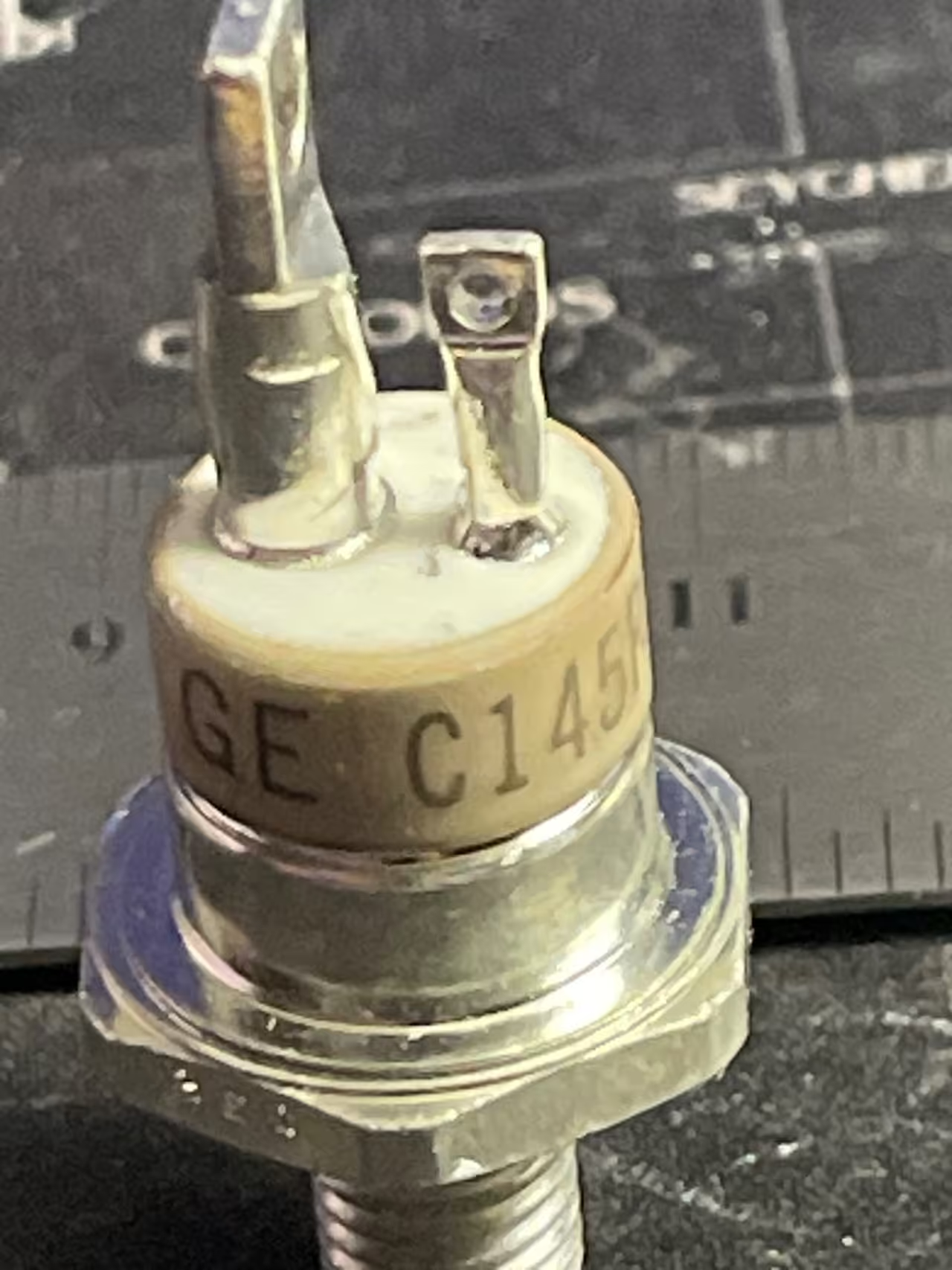
- 3 photos
Never used. The original pack has been opened, or the quantity was split off a full reel or tube. Leads are original and unclipped.
New old stock, open stock on the grading scaleSend the quantity you need. You get a quote back with shipping before anything is charged.
Video
Filmed on the bench. Sound is stripped from product clips.
- 0:06
Specifications
| Specification | Value |
|---|---|
| Identification | |
| Part number | C145P |
| Manufacturer | General Electric |
| Condition | New old stock, open stock |
| Date code | Not recorded |
| Package | Threaded stud mount with ceramic insulation and solder lug terminals |
| Country of origin | Not recorded |
| Family | C145 series |
| Stock number | NCM6J8JZ |
| Overview | |
| Manufacturer part number | C145P |
| Manufacturer | General Electric |
| NATO stock number | 5961-00-435-6608 |
| Electrical | |
| Device type | Silicon controlled rectifier, thyristor |
| Peak voltage | 1000 V |
| Current | 55 A |
| Construction | |
| Package | Threaded stud mount with ceramic insulation |
| Terminals | Solder lugs |
| Condition | |
| Condition | Vintage old stock. Never installed, never soldered |
| Testing | Sold untested. Ask and the exact piece going in the envelope is metered first |
About this part
A thyristor is a latching switch, and that one word explains most of what is different about it. A transistor conducts while you hold the base on. An SCR conducts the moment its gate is triggered and then stays on, gate or no gate, until the current through it falls to nearly nothing. On alternating current that happens by itself at every zero crossing, which is why these run motors, heaters and lamp dimmers: trigger later in each half cycle and less energy gets through.
This is a big one. A thousand volts and fifty five amps in a threaded stud package with ceramic insulation and solder lug terminals, which is industrial power control hardware rather than anything that belongs on a circuit board. The ceramic is doing real work at that voltage, holding the terminals off the stud and the chassis.
General Electric effectively invented the commercial SCR and their C series is the family most of the period literature is written around, so a GE part is what an old industrial schematic usually names. This one also carries NSN 5961-00-435-6608, which closes the loop if you are working from a military parts list rather than a manufacturer number.
Age related oxidation and scratches on the metal, never installed, sold untested.
Questions about this part
How is an SCR different from a transistor?
It latches. A transistor conducts while you hold the base on; an SCR conducts from the moment the gate is triggered and stays on regardless of the gate until the current through it falls to almost nothing. On AC that happens by itself at every zero crossing, which is what makes phase control possible.
What would this have been used for?
Industrial power control at scale: motor drives, heating elements, large lamp dimming, controlled rectification. A thousand volts and fifty five amps is switchgear territory, not board level electronics.
What is the ceramic for?
Insulation, and at this voltage it is doing real work. It holds the terminals clear of the stud and the chassis the stud is bolted to. Treat any chip or crack in it as disqualifying rather than cosmetic.
Can you test it before it ships?
Not meaningfully. Proving a thousand volt thyristor needs a supply and a load that are not on this bench, and a handheld tester tells you almost nothing useful about one. What can be confirmed is the physical condition, the markings and that the stud has never been torqued into anything.