
General Electric
General Electric 2N404 Germanium PNP Transistor, GE Logo, NOS
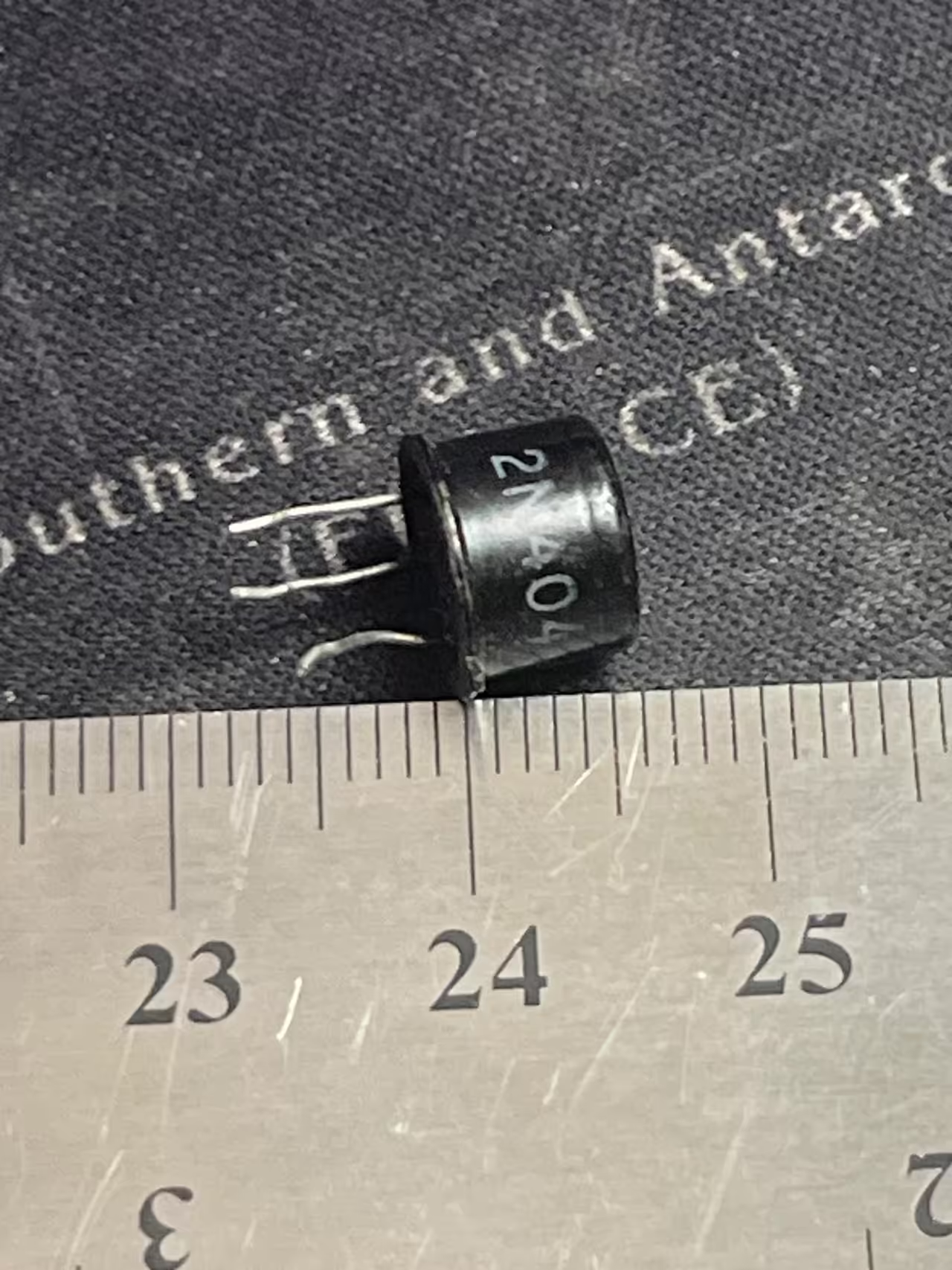
- 3 photos
Never used. The original pack has been opened, or the quantity was split off a full reel or tube. Leads are original and unclipped.
New old stock, open stock on the grading scaleSend the quantity you need. You get a quote back with shipping before anything is charged.
Video
Filmed on the bench. Sound is stripped from product clips.
- 0:06
Specifications
| Specification | Value |
|---|---|
| Identification | |
| Part number | 2N404 |
| Manufacturer | General Electric |
| Condition | New old stock, open stock |
| Date code | Not recorded |
| Package | Early style three lead metal case |
| Country of origin | Not recorded |
| Family | 2N404 |
| Stock number | DM2TJNZ3 |
| Overview | |
| Manufacturer part number | 2N404 |
| Manufacturer | General Electric, logo stamped on the base |
| Electrical | |
| Polarity and material | PNP germanium, alloy junction |
| Class | Switching, early computer and industrial use |
| Construction | |
| Package | Early style three lead metal case |
| Condition | |
| Leads | Intact and original |
| Condition | New old stock, open stock. Never installed, never soldered |
| Testing | Sold untested. Ask and the exact piece going in the envelope is metered first |
About this part
Marked 2N404 on the body with the General Electric logo stamped on the bottom of the case, so both the type and the maker are established from the object rather than from the bag it came in. That combination is the difference between this and the faded example elsewhere in this drawer, and it is most of the difference in price.
Where the 2N404 sits historically is worth a sentence, because it explains the demand. It arrived at the end of the 1950s as a germanium PNP alloy junction device aimed at switching, and it became one of the parts the first transistorised computers and industrial controllers were assembled from. Machines of that generation used them in quantity, so a working restoration of period equipment tends to need several rather than one, and the supply is finite in a way that silicon parts of the same age are not.
Look at where the logo is before you assume a part is unmarked, incidentally. GE stamped the bottom of the case on plenty of these, so a device that looks anonymous from the side is often identifiable the moment you turn it over. One is on the shelf here, unused, in the original early style metal case with its leads intact.
Questions about this part
Where is the GE logo on these?
Stamped on the bottom of the case rather than the side. It is worth knowing generally: plenty of parts that look unmarked from the side turn out to be identifiable the moment you turn them over, and a lot of anonymous listings are simply devices nobody flipped.
Why is the 2N404 in demand?
It was one of the parts the first transistorised computers and industrial controllers were built from, in quantity. Restoring equipment of that generation usually needs several rather than one, and germanium stock is finite in a way that silicon parts of the same age are not.
How is this different from the other 2N404 in this drawer?
That one has faded markings and no identifiable maker, and it is priced lower for exactly that reason. This one carries both the 2N404 number and the GE logo, so its identity comes from the object rather than from paperwork.
Will it work in a fuzz pedal?
Germanium PNP devices of this era are widely used that way, and whether a particular piece suits a particular circuit comes down to its gain and leakage. Ask before ordering and we will meter this exact transistor, because those two numbers decide it and no published typical figure will.