
General Electric
General Electric 2N1175A PNP Germanium Low Noise Transistor, Black Case, NOS
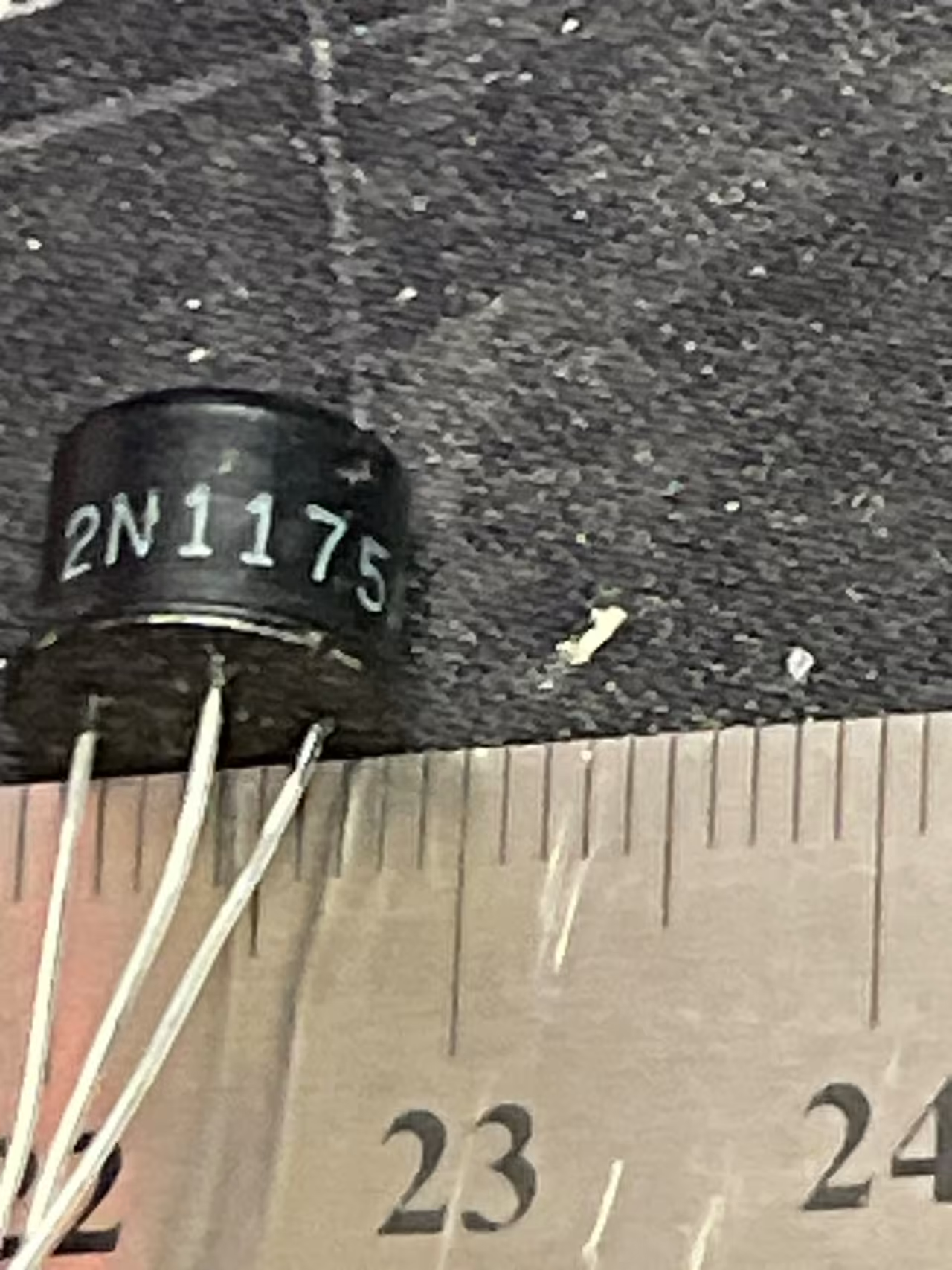
- 3 photos
Never used. The original pack has been opened, or the quantity was split off a full reel or tube. Leads are original and unclipped.
New old stock, open stock on the grading scaleSend the quantity you need. You get a quote back with shipping before anything is charged.
Video
Filmed on the bench. Sound is stripped from product clips.
- 0:06
Specifications
| Specification | Value |
|---|---|
| Identification | |
| Part number | 2N1175A |
| Manufacturer | General Electric |
| Condition | New old stock, open stock |
| Date code | Not recorded |
| Package | Hermetically sealed metal case, black finish |
| Country of origin | Not recorded |
| Family | 2N1175 |
| Stock number | DPK4BSWD |
| Overview | |
| Manufacturer part number | 2N1175A |
| Manufacturer | General Electric |
| Electrical | |
| Polarity and material | PNP germanium |
| Class | Low noise, high gain, for input stages |
| Collector base voltage | About 30 V maximum |
| Construction | |
| Package | Hermetically sealed metal case, black finish |
| Note | Black finish is a production style. The silver finish part is the same type |
| Condition | |
| Condition | New old stock, open stock. Never installed, never soldered |
| Testing | Sold untested. Ask and the exact piece going in the envelope is metered first |
About this part
A low noise germanium PNP, which is a narrower thing than a general purpose one. The 2N1175A was developed for the first stage of sensitive amplifiers, where the noise the transistor itself adds sets the floor for everything downstream and no amount of gain later recovers what was lost at the input. Period documentation puts it in low level audio and instrumentation work, with a collector to base rating around 30 volts.
The black case is the unusual part. General Electric produced the 2N1175A in the ordinary bright metal finish and also in this black one, and the difference is in the production style rather than the electrical specification. We have not established which run this came from and we are not going to assign it a year on the strength of the colour, so it is identified by what it visibly is: a black finish hermetically sealed case, less commonly seen than the silver.
One is on the shelf. If you are restoring a preamplifier input stage or an instrumentation front end of the era, this is the sort of part that is genuinely hard to substitute, because a modern low noise device has different bias requirements and a different noise signature and the circuit around it was drawn for germanium. Sold untested, and worth metering first for exactly the reason the part exists: leakage on an input stage device is what will spoil the result.
Questions about this part
What makes a low noise transistor different?
It is selected and constructed so the noise it adds is as small as possible, which matters only in the first stage of an amplifier. There, the noise the input device contributes sets the floor for the whole chain and nothing downstream can recover it. Later stages can use ordinary parts.
Does the black case mean anything electrically?
No. General Electric made the 2N1175A in both the usual bright metal finish and this black one, and the difference is production style. We describe it by what it visibly is rather than assigning it a date, because the colour alone does not establish which run it came from.
Can I substitute a modern low noise part?
In a period circuit, usually not well. A modern low noise device has different bias requirements and a different noise signature, and the circuit around it was drawn for a germanium PNP. Restorations of preamplifier and instrumentation front ends are the main reason these still sell.
Why does metering matter more on this one?
Because leakage on an input stage device is what spoils the result, and it is the parameter that varies most across surviving germanium. Ask before ordering and we will measure this exact transistor rather than quote a typical figure that may not describe it.