
2N709 NPN Silicon High Speed Switching Transistor, TO-18, NOS
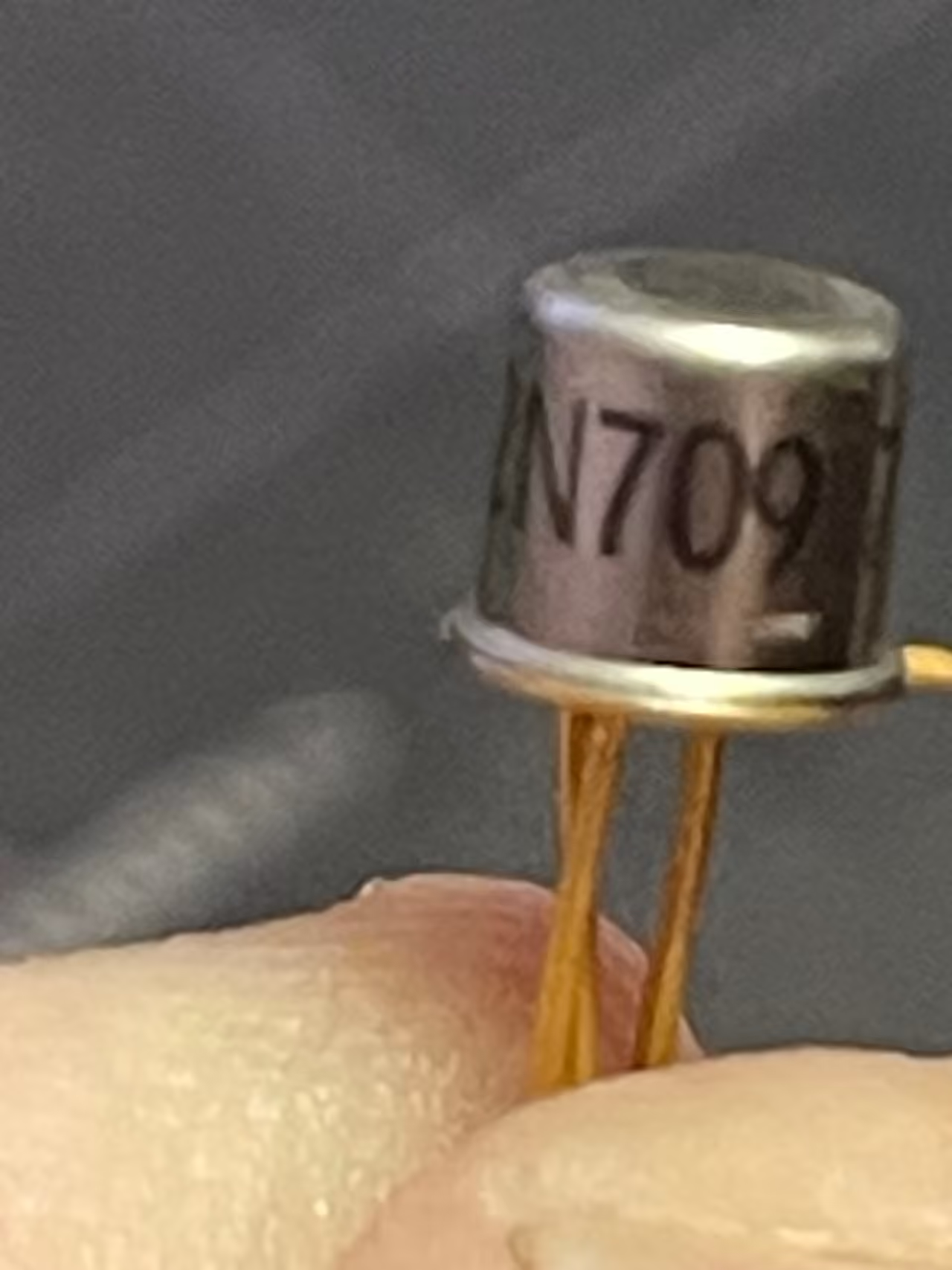
- 3 photos
Never used. The original pack has been opened, or the quantity was split off a full reel or tube. Leads are original and unclipped.
New old stock, open stock on the grading scaleSend the quantity you need. You get a quote back with shipping before anything is charged.
Video
Filmed on the bench. Sound is stripped from product clips.
- 0:24
Specifications
| Specification | Value |
|---|---|
| Identification | |
| Part number | 2N709 |
| Manufacturer | Not recorded |
| Condition | New old stock, open stock |
| Date code | Not recorded |
| Package | TO-18 hermetic metal can, three leads |
| Country of origin | Not recorded |
| Family | 2N709 |
| Stock number | DP5C6MW9 |
| Overview | |
| Manufacturer part number | 2N709 |
| Electrical | |
| Polarity and material | NPN silicon |
| Collector base voltage | About 15 V |
| Collector emitter voltage | About 6 V |
| Dissipation | About 300 mW |
| Transition frequency | 600 MHz minimum |
| Construction | |
| Package | TO-18 hermetic metal can, three leads |
| Condition | |
| Condition | New old stock, open stock. Never installed, never soldered |
| Testing | Sold untested. Ask and the exact piece going in the envelope is metered first |
About this part
This is the fast one. The 2N709 was built for switching speed above everything else, and the numbers show where the compromises went: around 15 volts collector to base, 6 volts collector to emitter, 300 milliwatts of dissipation, and a transition frequency specified at a minimum of 600 MHz. Low voltage, little power, enormous speed. Fairchild introduced its version in 1961 and it became one of the parts that made very high speed computer logic practical.
That history is why it is the highest priced transistor in this batch. Parts associated with the beginning of fast digital logic are collected as objects as well as used as components, and the supply does not improve. It is also a reason to think before soldering one into something: at 6 volts collector to emitter it will not survive being treated like a general purpose device, and there are cheaper ways to switch something quickly today.
One is on the shelf, in the TO-18 hermetic can, leads intact. Sold untested. If you want it for a circuit rather than a shelf, ask and we will meter it first, because at these voltages a partial breakdown that a curve tracer would show immediately is not something you want to discover by fitting it.
Questions about this part
Why is this the most expensive transistor in the batch?
Because of what it is rather than what it does. The 2N709 is one of the parts that made very high speed computer logic practical, Fairchild's version arriving in 1961, and devices tied to that moment are collected as well as used. The supply only goes one way.
Can I use it as a general purpose switch?
Not safely. Six volts collector to emitter and 300 milliwatts is a narrow envelope, and it will not tolerate being treated like an ordinary small signal transistor. If you want speed today there are modern parts that are faster, cheaper and far more forgiving.
What does a 600 MHz transition frequency mean in practice?
It is the frequency at which current gain falls to one, so it sets the ceiling on how fast the device can usefully switch. 600 MHz minimum in 1961 was extraordinary, and it is why this part turns up in the fastest logic of its day.
Should I have it tested before it ships?
If it is going into a circuit, yes, and ask. At these voltages a partial breakdown shows up immediately on a curve tracer and not at all from the outside. If it is for a collection, the physical condition is what matters and that is in the photographs.