
2N2405 NPN Silicon Transistor, TO-39, 90 V and 1 A, Gold Leads
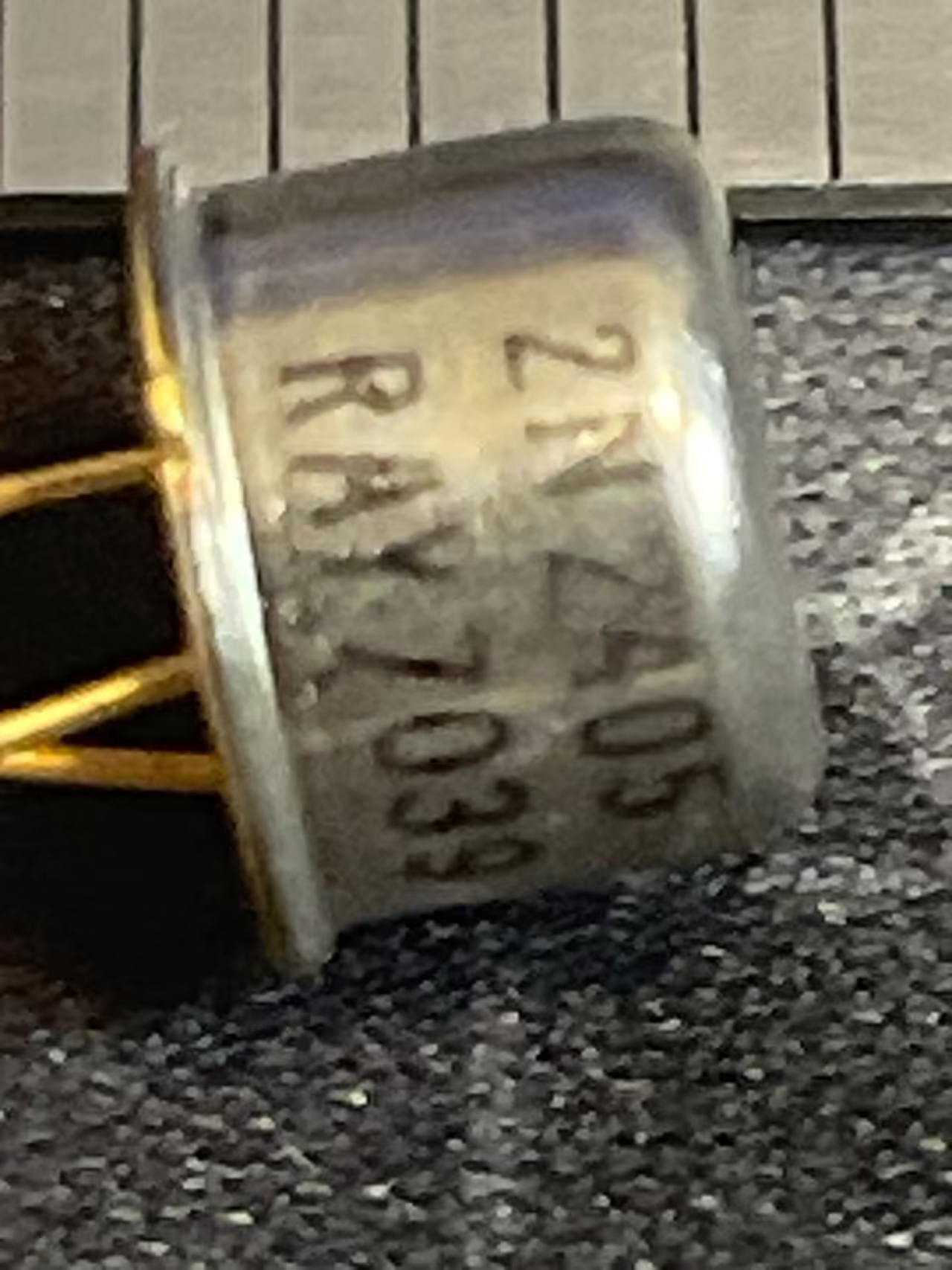
- 3 photos
Never used. The original pack has been opened, or the quantity was split off a full reel or tube. Leads are original and unclipped.
New old stock, open stock on the grading scaleSend the quantity you need. You get a quote back with shipping before anything is charged.
Video
Filmed on the bench. Sound is stripped from product clips.
- 0:09
Specifications
| Specification | Value |
|---|---|
| Identification | |
| Part number | 2N2405 |
| Manufacturer | Not recorded |
| Condition | New old stock, open stock |
| Date code | Not recorded |
| Package | TO-39, also catalogued as TO-205AD, three lead hermetic metal can |
| Country of origin | Not recorded |
| Family | 2N2405 |
| Stock number | R4K5Z3H7 |
| Overview | |
| Manufacturer part number | 2N2405 |
| Manufacturer | Unmarked. See the description |
| Electrical | |
| Polarity and material | NPN silicon |
| Collector emitter voltage | About 90 V |
| Collector base voltage | About 120 V |
| Collector current | 1 A |
| Dissipation | 1 W in free air, up to 5 W case mounted |
| Gain bandwidth | About 120 MHz minimum |
| Gain | hFE about 60 to 200 |
| Junction temperature | Up to about 200 degrees |
| Construction | |
| Package | TO-39, also catalogued as TO-205AD |
| Condition | |
| Condition | Vintage old stock. Never installed, never soldered |
| Testing | Sold untested. Ask and the exact piece going in the envelope is metered first |
About this part
This one sits in a useful gap. Ninety volts collector to emitter with a full amp of collector current and a gain bandwidth product around 120 MHz is a combination that is neither small signal nor properly power: it is the driver stage, the part that sits between a logic level and something that actually moves. A small signal transistor breaks down at that voltage and a power device is too slow and too large for the job.
The dissipation figures show how much the mounting matters. One watt in free air, up to five watts with the case properly sunk. That is a five to one difference decided entirely by whether the TO-39 can is clipped to something, and it is the number people skip when they wonder why a device ran hot.
Two are on the shelf. The part number is clearly readable on the can and the secondary markings look like production coding rather than separate numbers. Long gold plated leads, ordinary oxidation and fading from storage. The junction rating runs to about two hundred degrees, which is a high reliability figure and consistent with the hermetic construction. Sold individually and untested.
Questions about this part
What sort of device is this, exactly?
A driver. Ninety volts and an amp with 120 MHz of gain bandwidth is neither small signal nor properly power: it is the stage between a logic level and something that moves. A small signal part breaks down at that voltage and a power device is too slow and too big for the job.
Why are there two dissipation figures?
Because the mounting decides it. One watt is what the device can do sitting in air; up to five watts is what it can do with the TO-39 can clipped to something that takes the heat away. A five to one difference, and it is the figure people skip when they wonder why a part ran hot.
Is TO-39 the same as TO-205AD?
Yes. TO-205AD is the later designation for the same outline. Both are given because a parts search will often recognise only one of them and reject the other as unknown.
Are the extra markings a different part number?
They read as production coding rather than a second number. The 2N2405 itself is clearly legible on the can, which is what the listing is built on.