
2N2369 NPN High Speed Switching Transistor, TO-18, Gold Leads
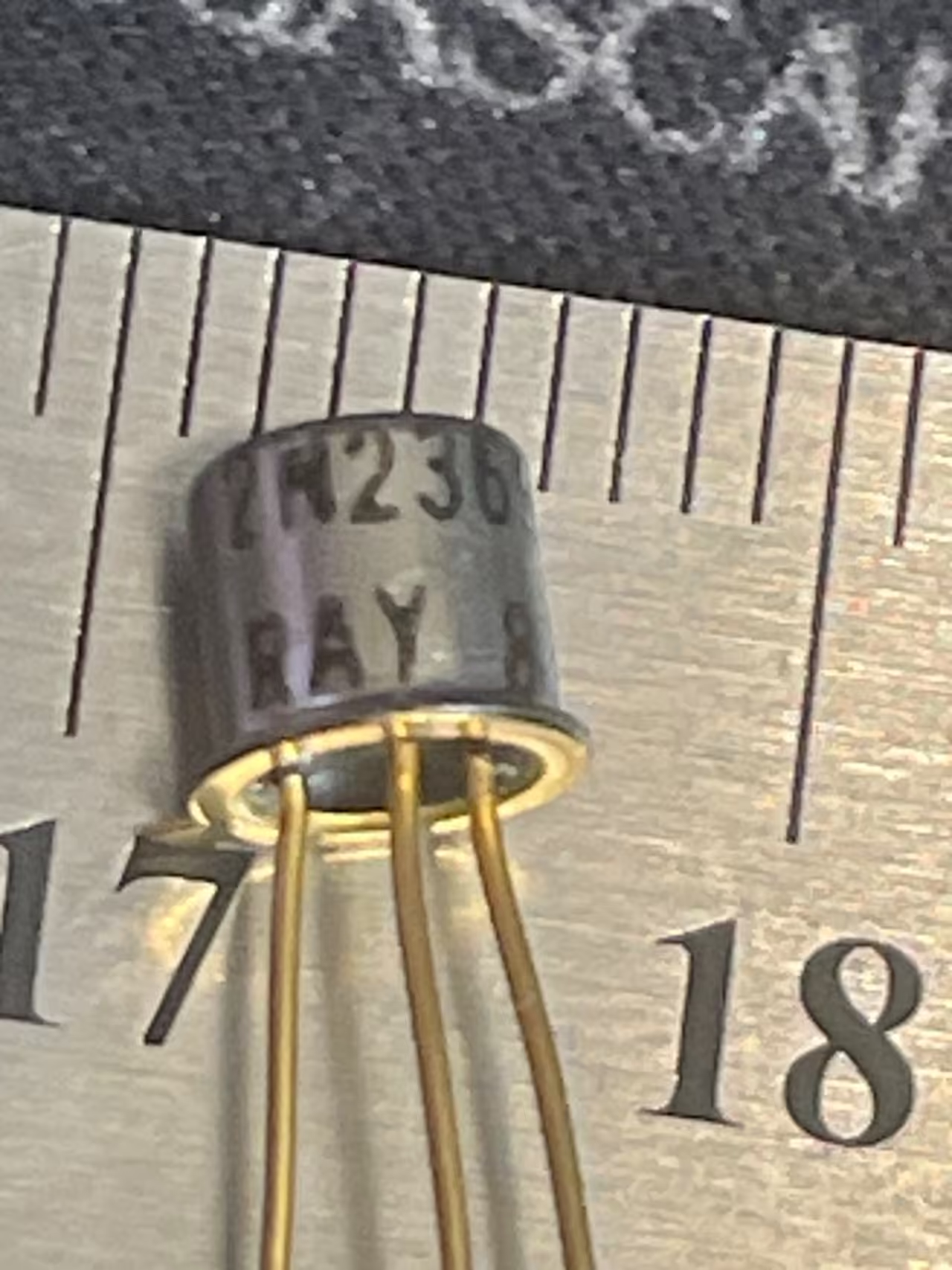
- 3 photos
Never used. The original pack has been opened, or the quantity was split off a full reel or tube. Leads are original and unclipped.
New old stock, open stock on the grading scaleSend the quantity you need. You get a quote back with shipping before anything is charged.
Video
Filmed on the bench. Sound is stripped from product clips.
- 0:06
Specifications
| Specification | Value |
|---|---|
| Identification | |
| Part number | 2N2369 |
| Manufacturer | Not recorded |
| Condition | New old stock, open stock |
| Date code | Not recorded |
| Package | TO-18, also catalogued as TO-206AA, three lead hermetic metal can |
| Country of origin | Not recorded |
| Family | 2N2369 |
| Stock number | R4A4H6XB |
| Overview | |
| Case marking | 2N2369. NOT the 2N2369A grade |
| Manufacturer | Unmarked. See the description |
| Electrical | |
| Polarity and material | NPN silicon |
| Class | Fast saturated switching |
| Collector emitter voltage | About 15 V |
| Collector current | Up to 200 mA |
| Minimum gain | hFE 40 at the specified operating point |
| Construction | |
| Package | TO-18, also catalogued as TO-206AA |
| Lead finish | Gold plated, long |
| Condition | |
| Condition | Vintage old stock. Never installed, never soldered |
| Testing | Sold untested. Ask and the exact piece going in the envelope is metered first |
About this part
Saturated switching is the specific thing this device was built for, and the word saturated is carrying weight. A transistor driven hard into saturation turns fully on and drops very little across itself, which is what you want in a logic gate, but the stored charge in the base then has to be removed before it will turn off again. That storage time is what limits how fast an ordinary transistor can switch, and the 2N2369 was designed around minimising it.
Which is why it turns up in early computer logic, pulse generators and instrumentation timing rather than in amplifiers. The envelope is small and deliberate: about 15 volts collector to emitter, up to 200 milliamps, a minimum gain of 40 at the specified operating point. Fifteen volts is not much headroom, and this is not a part to press into general purpose service.
One thing to check before you order. This is a 2N2369, not a 2N2369A. The A is a tightened grade and a circuit that specifies it may or may not be happy with the plain part, depending on which parameter it was leaning on. If the device you have in front of you is marked with the A suffix and this one is not, they are not the same purchase.
Hermetic can, long gold plated leads, the usual discolouration and oxidation from storage. Untested.
Questions about this part
What does saturated switching mean?
Driving the transistor fully on so it drops very little across itself, which is what a logic gate wants. The cost is that charge stored in the base has to be removed before it turns off again, and that storage time is what limits switching speed. The 2N2369 was designed around minimising it.
Is this the same as a 2N2369A?
No, and it matters. The A is a tightened grade of the same type. Whether a circuit that specifies the A will accept the plain part depends on which parameter it was relying on, so check what your equipment actually calls for. This listing is the plain 2N2369 unless a piece is individually marked otherwise.
Can I use it as a general purpose transistor?
Not comfortably. Fifteen volts collector to emitter is a narrow envelope, and the part is specialised for speed rather than for tolerance. There are far better and cheaper choices for general work, and pressing this one into it is how it gets destroyed.
Where would it have been fitted?
Early computer logic, pulse and timing circuits, communications and instrumentation. Anywhere the question was how fast a switch could turn off rather than how much it could carry.