
2N2270 PNP Germanium Transistor, Early Hermetic Metal Can, NOS
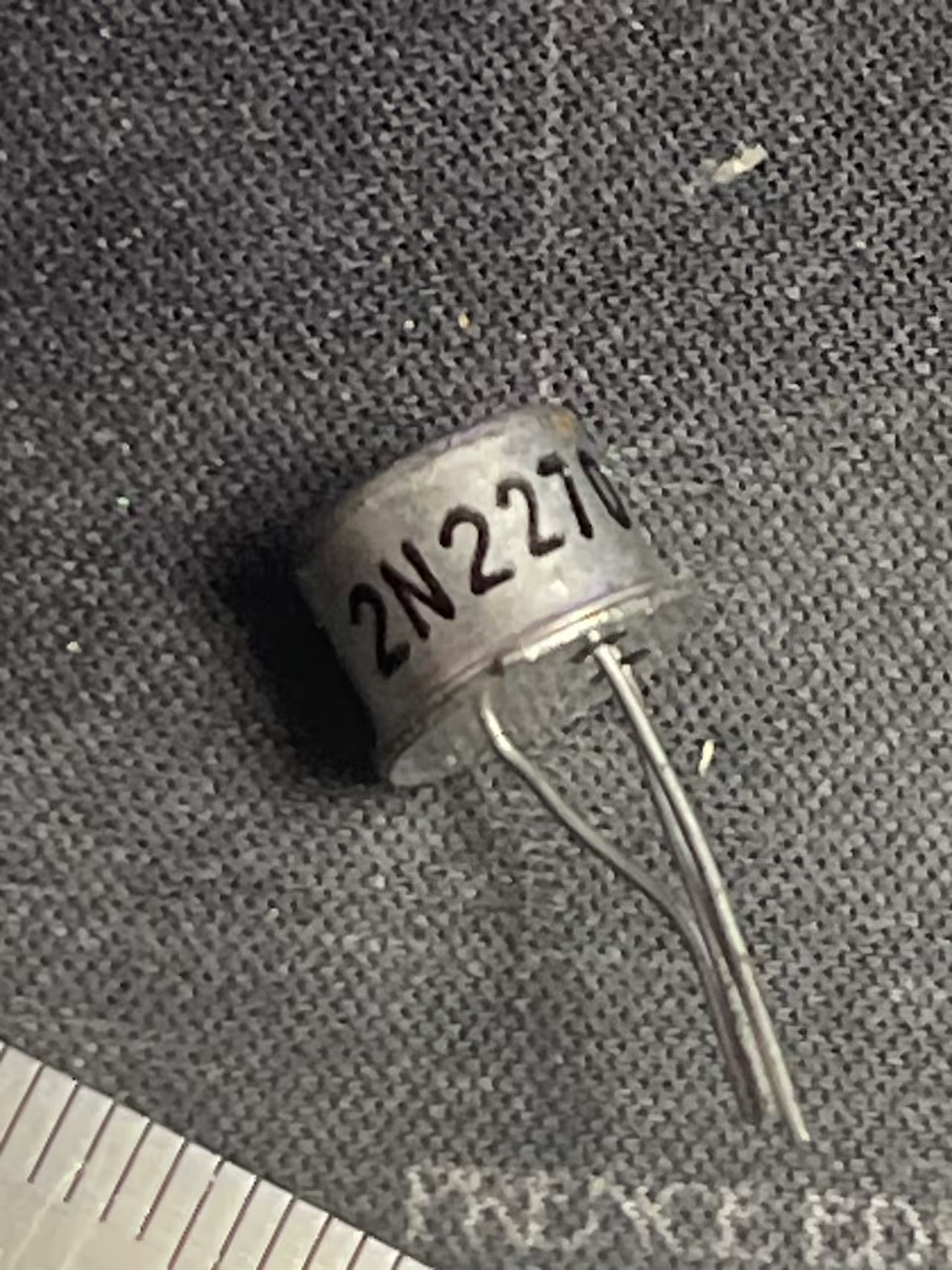
- 2 photos
Never used. The original pack has been opened, or the quantity was split off a full reel or tube. Leads are original and unclipped.
New old stock, open stock on the grading scaleSend the quantity you need. You get a quote back with shipping before anything is charged.
Video
Filmed on the bench. Sound is stripped from product clips.
- 0:05
Specifications
| Specification | Value |
|---|---|
| Identification | |
| Part number | 2N2270 |
| Manufacturer | Not recorded |
| Condition | New old stock, open stock |
| Date code | Not recorded |
| Package | Early hermetically sealed metal can |
| Country of origin | Not recorded |
| Family | 2N227 series |
| Stock number | DNKXSJSA |
| Overview | |
| Case marking | 2N2270 |
| Manufacturer | Unmarked. Family historically associated with Philco |
| Electrical | |
| Polarity and material | PNP germanium |
| Class | Audio frequency amplifier and switching |
| Construction | |
| Package | Early hermetically sealed metal can |
| Condition | |
| Leads | Original and intact |
| Condition | New old stock, open stock. Never installed, never soldered |
| Testing | Sold untested. Ask and the exact piece going in the envelope is metered first |
About this part
A germanium device from the early part of the transistor era, in a hermetically sealed metal can of the shape that predates the standardised outlines. The 2N227 family is documented as PNP germanium intended for audio frequency amplifier and switching work, and historical references place the type among early Philco devices used as audio amplifiers and output transistors.
Audio output is where the interest sits today. A germanium output stage sounds different from a silicon one for reasons that are entirely measurable, mostly the softer transition through crossover and the way gain and leakage move with temperature, and the people restoring period amplifiers or building deliberately vintage circuits are chasing precisely that difference. A modern silicon part fitted in the same place measures better and does not sound the same, which is either a problem or the whole point depending on what you are building.
One is on the shelf, marked 2N2270. Hermetic can, original leads, unused. Sold untested and worth saying why: with germanium the number that decides usability is leakage, it varies enormously between surviving pieces of the same type, and there is no way to know it without measuring the individual part. Ask and we will do that before it ships.
Questions about this part
Why buy germanium for an audio output stage?
Because it behaves differently in ways you can measure and hear: a softer transition through crossover, and gain and leakage that move with temperature. Period amplifiers were designed around that. A modern silicon part in the same socket measures better and does not sound the same, which is either a fault or the entire objective depending on the build.
What is the leakage like?
Unknown until it is measured, and it varies enormously between surviving germanium parts of the same type. That is why this is sold untested rather than with a published figure. Ask before ordering and we will meter this exact transistor.
Who made it?
The case does not say. The 2N227 family is historically associated with early Philco production, and we quote that as background rather than as a claim about this individual piece, because nothing on the part establishes it.
What does hermetically sealed buy me here?
The die sits in dry gas rather than behind a moulding, so moisture has no path in. For a germanium part that has spent sixty years in storage it is the main reason the device might still be healthy at all.