
2N2207 Germanium PNP Transistor, Four Lead Metal Can, Tektronix Era
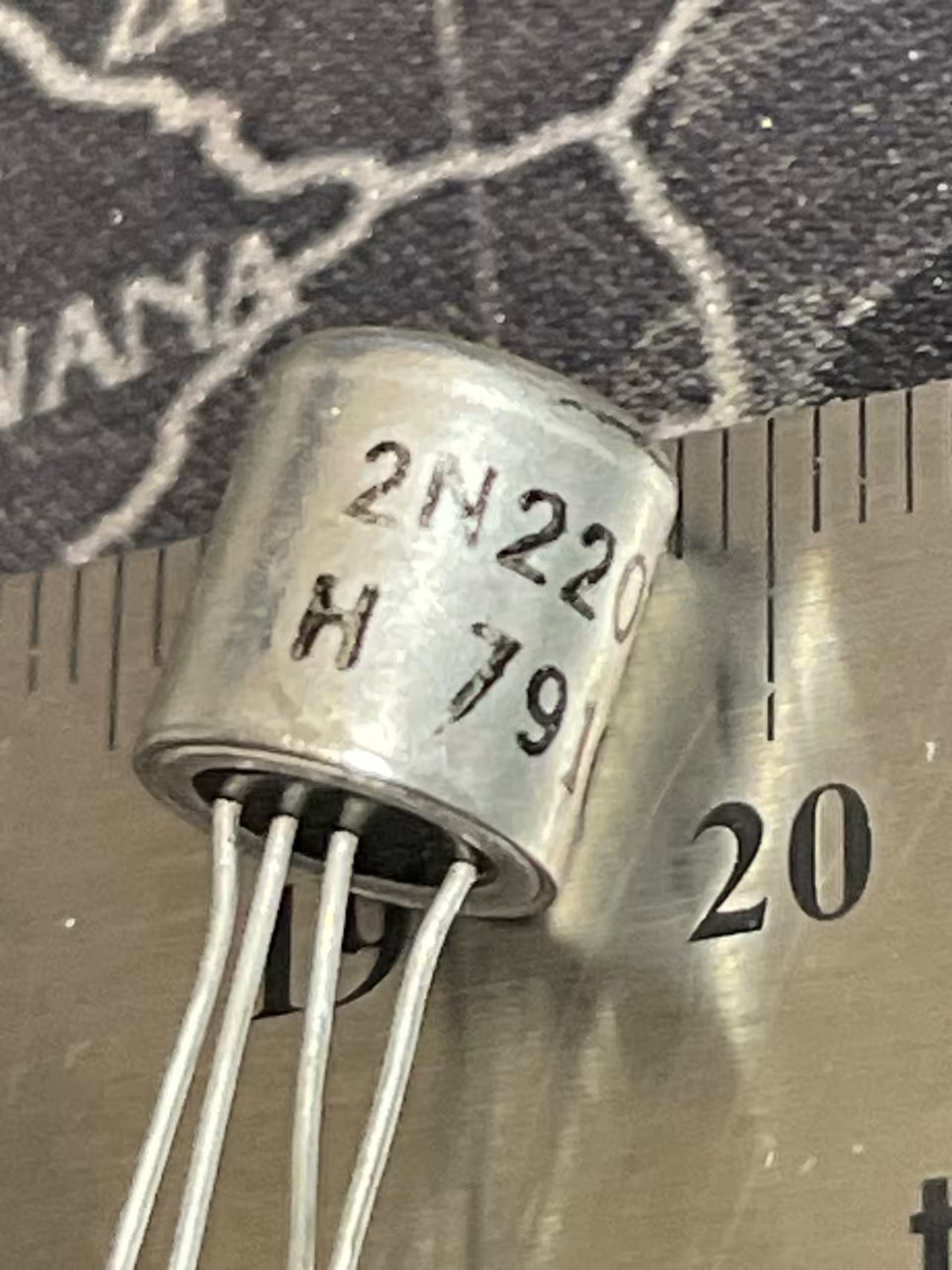
- 4 photos
Never used. The original pack has been opened, or the quantity was split off a full reel or tube. Leads are original and unclipped.
New old stock, open stock on the grading scaleSend the quantity you need. You get a quote back with shipping before anything is charged.
Video
Filmed on the bench. Sound is stripped from product clips.
- 0:12
Specifications
| Specification | Value |
|---|---|
| Identification | |
| Part number | 2N2207 |
| Manufacturer | Not recorded |
| Condition | New old stock, open stock |
| Date code | H 7910 |
| Package | Hermetically sealed metal can, four wire leads |
| Country of origin | Not recorded |
| Family | 2N2207 |
| Stock number | GPYXZ3R4 |
| Overview | |
| Case marking | 2N2207, with H 7910 production coding |
| Manufacturer | Unmarked. See the description |
| Electrical | |
| Polarity and material | PNP germanium |
| Class | High frequency small signal |
| Maximum collector current | About 50 mA |
| Construction | |
| Package | Hermetically sealed metal can |
| Leads | Four. The fourth connects to the case as a shield |
| Condition | |
| Lead condition | Exceptionally long, apparently never cut |
| Condition | Vintage old stock. Never installed, never soldered |
| Testing | Sold untested. Ask and the exact piece going in the envelope is metered first |
About this part
Four leads on a germanium transistor is the detail to notice first. Three carry the collector, base and emitter; the fourth connects to the case, so the can can be tied to a defined potential instead of floating. At the frequencies this device was built for that shield is not decoration: a floating metal can beside a high impedance node couples signal into places the designer did not intend, and grounding it is the difference between a clean trace and a mystery.
Which is why parts like this ended up in oscilloscopes. The 2N2207 is associated with Tektronix instruments and plug in modules of the 1960s, where high frequency germanium was doing the front end work before silicon caught up. Restoring one of those is the main reason anybody looks for this number today, and it is a case where the original part is genuinely hard to substitute: the circuit was drawn around germanium bias points and a four lead package.
Rated to about 50 mA of collector current, so it is a small signal device rather than anything that drives a load. The case is marked 2N2207 with H 7910 beside it as production coding. The leads are exceptionally long and appear never to have been cut, which is worth something on a restoration where the original lead dress is visible. Untested.
Questions about this part
What is the fourth lead for?
It connects to the metal can, so the case can be tied to a defined potential rather than left floating. At the frequencies this part was built for that matters: a floating can next to a high impedance node couples signal where it was not wanted, and grounding it is the difference between a clean measurement and an unexplained one.
Is this really a Tektronix part?
The type is associated with Tektronix instruments and plug in modules of the 1960s, which is where most demand for it still comes from. The case carries the JEDEC number and production coding rather than an instrument maker's name, so we describe the association and do not claim the part was made by or for anybody in particular.
How much current can it handle?
About 50 mA at the collector, so it is a small signal device. It was made to work at frequency, not to drive anything. Treat it as a front end part.
Why not just fit a silicon transistor?
In a period instrument, because the circuit was drawn around germanium bias points and a four lead package. A silicon part has a different junction drop, different leakage and usually three leads, so fitting one means re biasing the stage and finding somewhere for the shield connection to go.