
2N1051 NPN Silicon Transistor, TO-28 Metal Can, MIL-S-19500/216 Type
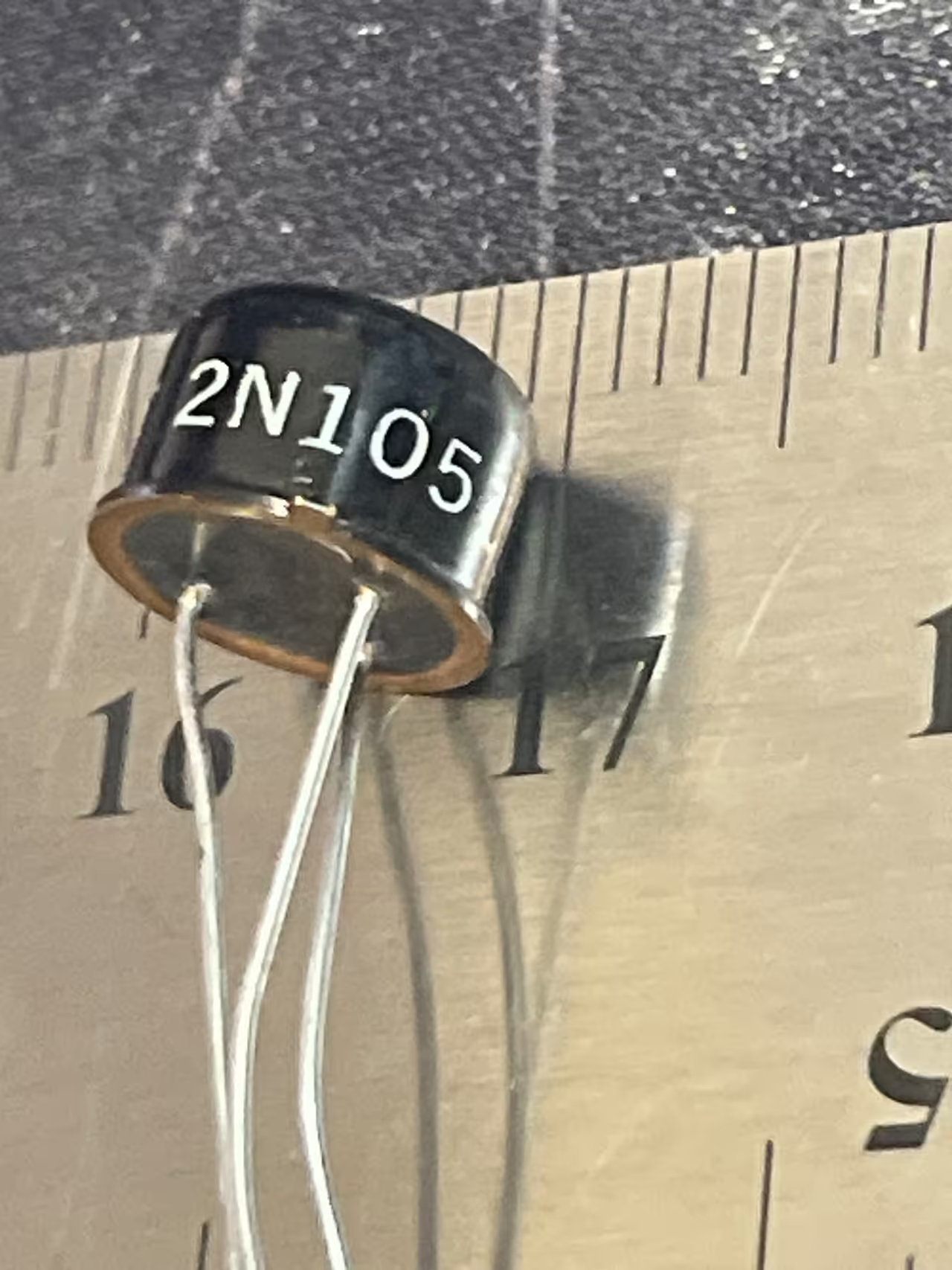
- 3 photos
Never used. The original pack has been opened, or the quantity was split off a full reel or tube. Leads are original and unclipped.
New old stock, open stock on the grading scaleSend the quantity you need. You get a quote back with shipping before anything is charged.
Video
Filmed on the bench. Sound is stripped from product clips.
- 0:10
Specifications
| Specification | Value |
|---|---|
| Identification | |
| Part number | 2N1051 |
| Manufacturer | Not recorded |
| Condition | New old stock, open stock |
| Date code | 413A |
| Package | TO-28 hermetically sealed metal can |
| Country of origin | Not recorded |
| Family | 2N1051 |
| Stock number | R2V9DEA6 |
| Overview | |
| Case marking | 2N1051, with 413A production coding |
| Manufacturer | Unmarked. See the description |
| Specification | The TYPE is covered by MIL-S-19500/216. This piece is not marked JAN |
| Electrical | |
| Polarity and material | NPN silicon, double diffused |
| Collector emitter voltage | About 40 V |
| Collector base voltage | About 60 V |
| Collector current | Up to 500 mA |
| Dissipation | About 500 mW |
| Gain | hFE about 30 to 100 |
| Construction | |
| Package | TO-28 hermetically sealed metal can, an uncommon outline |
| Condition | |
| Condition | Vintage old stock. Never installed, never soldered |
| Testing | Sold untested. Ask and the exact piece going in the envelope is metered first |
About this part
TO-28 is the detail worth noticing. Most small metal can transistors of this era are TO-5 or TO-18, and both are common enough that nobody remarks on them. TO-28 is not, and if you are matching a mechanical fit rather than just a pinout, the outline is the first thing to check against your board or your clip.
The type is covered by the United States military semiconductor specification MIL-S-19500/216, and period literature describes it as a double diffused silicon NPN for military service, small signal amplification and linear high frequency work. The published figures run to around 40 volts collector to emitter, 60 volts collector to base, up to 500 milliamps and about 500 milliwatts, with gain somewhere between 30 and 100.
One thing this listing deliberately does not say is that the part is JAN. The type has a military specification behind it, which is not the same claim: JAN means an individual device came off a qualified line and was screened, and it is printed on the can when it is true. It is not printed on this one and no original packaging came with it to say otherwise, so it is not claimed. The case reads 2N1051 with 413A beside it, which appears to be production coding. Loose old stock, untested.
Questions about this part
Is this a JAN part?
No, and the difference is worth being precise about. The TYPE is covered by MIL-S-19500/216, which is a specification for the device. JAN means a particular piece came off a qualified line and was screened against that specification, and it is printed on the can when it is true. It is not printed on this one, and no original packaging came with it, so it is not claimed.
Why does TO-28 matter?
Because it is uncommon. Most small metal cans of this era are TO-5 or TO-18 and nobody thinks about the outline. If you are matching a mechanical fit, a clip, a heatsink or a hole in a board rather than only a pinout, check the outline against yours before ordering.
What was it designed for?
Period literature puts it in military service, small signal amplification and linear high frequency work. Double diffused silicon was the high reliability construction of the day, which is the same reason the type ended up with a military specification behind it.
What is 413A?
It appears to be production, date or lot coding rather than a second part number. It is quoted exactly as it reads on the case and not decoded, because guessing at a scheme nobody can name here would be inventing provenance.