
Cinch Connectivity Solutions Johnson
Johnson 105-0301-001 Standard Tip Plug, White, Solderless, NOS
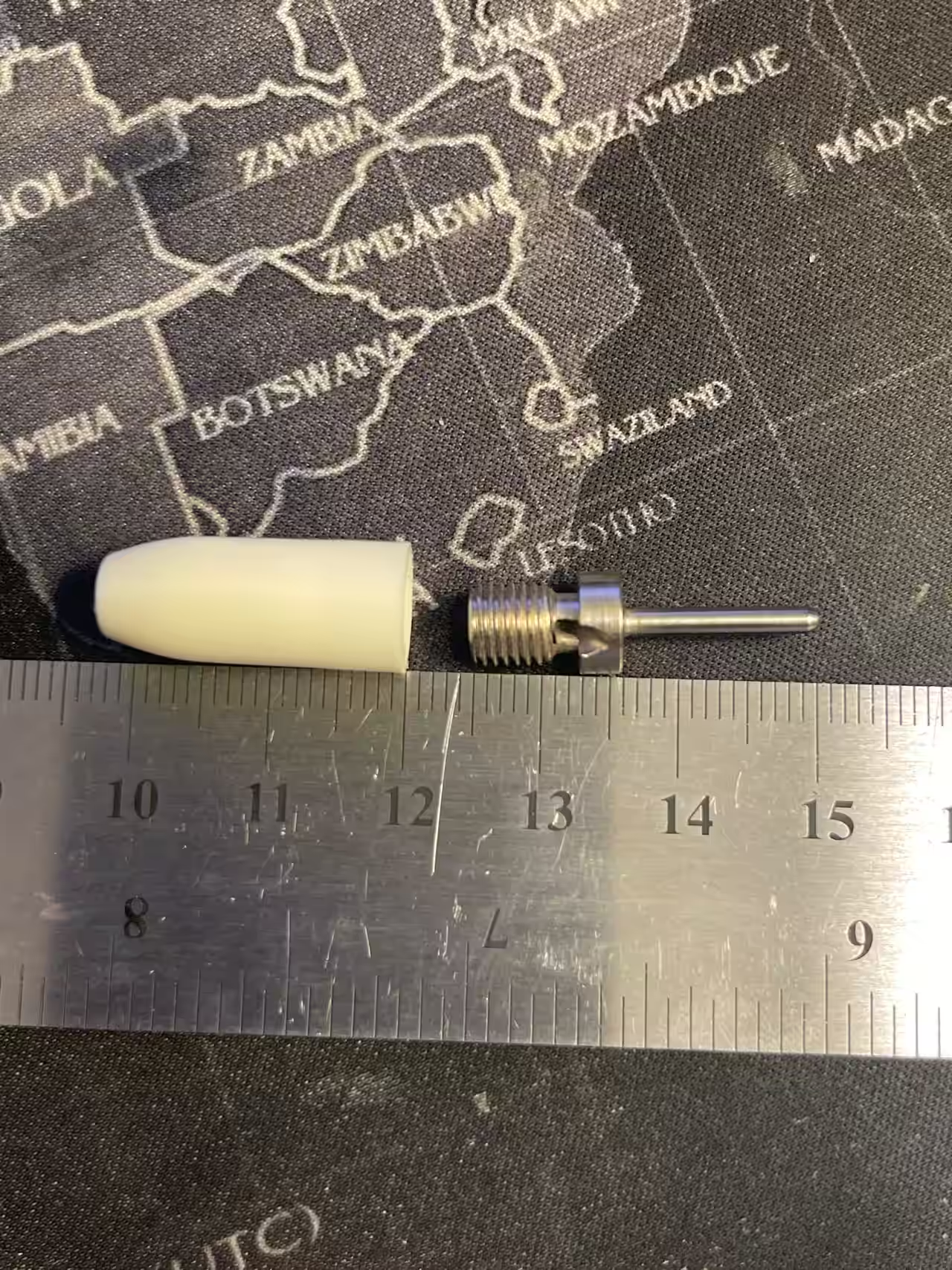
- 3 photos
Never used. The original pack has been opened, or the quantity was split off a full reel or tube. Leads are original and unclipped.
New old stock, open stock on the grading scaleSend the quantity you need. You get a quote back with shipping before anything is charged.
Video
Filmed on the bench. Sound is stripped from product clips.
- 0:15
Specifications
| Specification | Value |
|---|---|
| Identification | |
| Part number | 105-0301-001 |
| Manufacturer | Cinch Connectivity Solutions Johnson |
| Condition | New old stock, open stock |
| Date code | Not recorded |
| Package | Loose, sold individually. Body and insulating cover supplied together |
| Country of origin | Not recorded |
| Family | 105 series tip plug |
| Stock number | 3KJXXE93 |
| Overview | |
| Manufacturer part number | 105-0301-001 |
| Distributor reference | DigiKey J300 ND |
| Connector type | Male standard tip plug, free hanging in line |
| Construction | |
| Insulator colour | White |
| Termination | Solderless. The stripped wire clamps when the cover screws down |
| Contact material | Nickel plated brass |
| Insulator | Moulded nylon, removable, colour coded |
| Ratings | |
| Maximum wire size | 16 AWG |
| Dimensions | |
| Overall length | About 40 mm assembled, measured from the listing photographs |
| Condition | |
| Condition | New old stock, open stock. Never wired, never installed |
About this part
This is the documented one of the three tip plugs in this drawer. The workshop paperwork that came with the bag names it as Johnson 105-0301-001, distributor reference J300 ND, and the catalogue description for that number reads as a solderless tip plug in white, which is exactly what is in the photographs. Everything below is therefore a quoted specification rather than an inference drawn from the object.
A standard tip plug is the slim pinned connector that older bench equipment used before the banana plug became universal. The pin pushes into a matching tip jack, the sort found on laboratory supplies, patch panels, older bench meters and a great deal of communications and military test gear. It is smaller than a banana connector and does not substitute for one in either direction, so measure the socket you intend to use before ordering. The contact is brass with a nickel finish and the handle is a hard nylon that shrugs off flux and solvent.
White is the plain end of the colour range and tends to get used for a signal or sense lead where red and black are already committed to a supply pair. Twenty six are on the shelf, counted by hand. None has been wired, and the plating carries no green and no pitting under a loupe.
Questions about this part
How do you know this one is a Johnson 105-0301-001?
The paperwork that came with the bag names that part number and the distributor reference J300 ND, and the manufacturer's own description for 105-0301-001 is a solderless tip plug in white. The colour, the thread, the clamp and the pin in the photographs all match that description. The two other tip plugs in this drawer arrived without paperwork, so their listings do not claim a maker.
Will this fit a banana jack?
No. A standard tip plug has a much slimmer pin than a banana plug and the two patterns do not interchange in either direction. If you push a tip plug into a banana socket it will not grip, and a banana plug will not enter a tip jack at all. Measure the socket first.
Do I need to solder anything?
No. Strip the wire, feed it into the hollow end of the body, and screw the insulating cover down to clamp it. A wire stripper is the only tool. You can undo it later and move the plug to another lead, which is why these survived so long in test lead sets.
What is the largest wire it takes?
16 AWG. Anything thinner is fine. Anything thicker will not enter the barrel, and forcing it spreads the clamp permanently, so check before you strip.
Are all twenty six identical?
Yes, they came from one bag and were counted by hand out of it. If you need more than twenty six, ask, because a second bag of the same part often turns up behind the first.