
KEMET
KEMET C322C223J5R5CA7301 0.022 uF 50 V X7R Radial Ceramic Capacitor
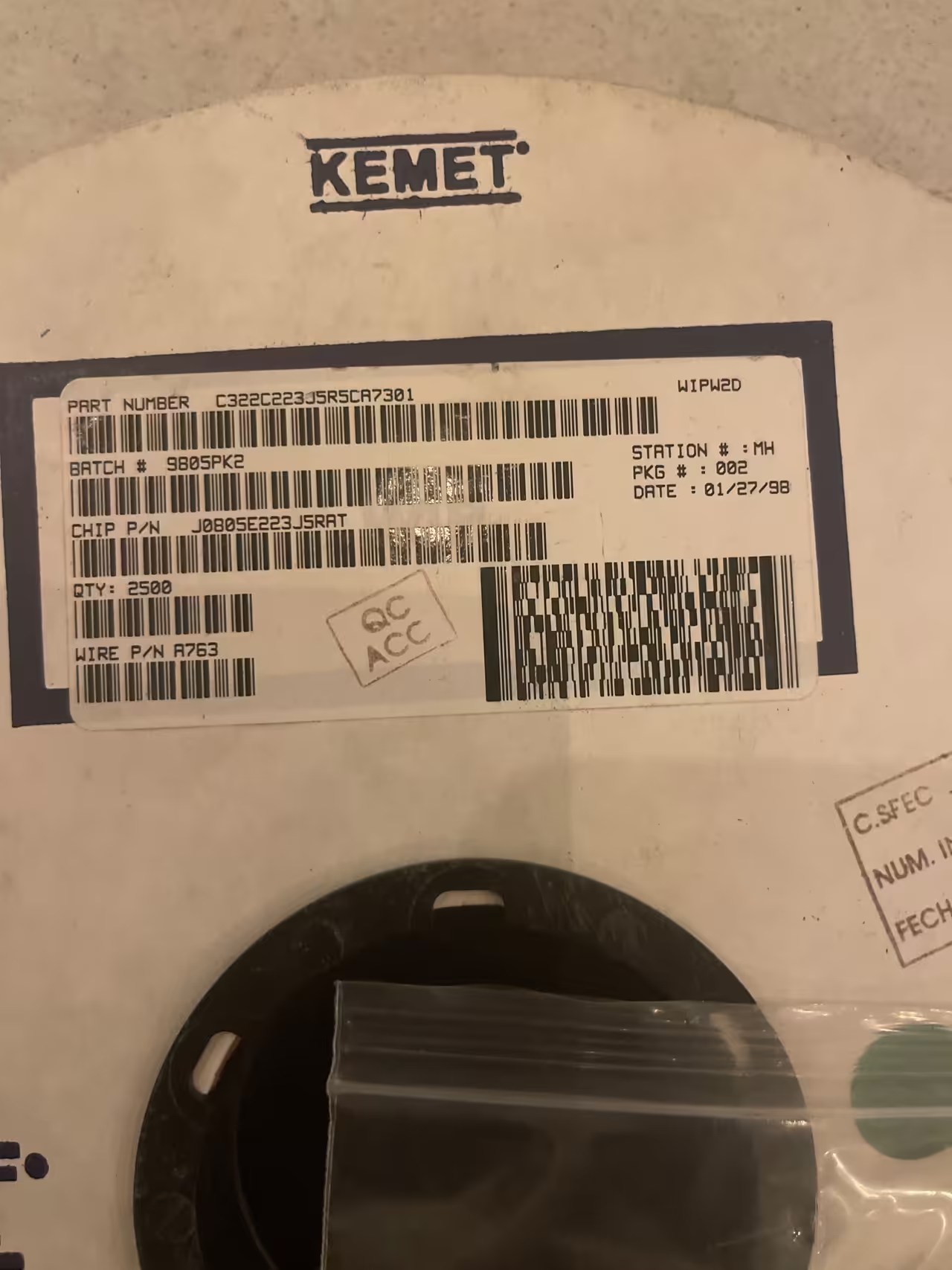
- 5 photos
Never used. The original pack has been opened, or the quantity was split off a full reel or tube. Leads are original and unclipped.
New old stock, open stock on the grading scaleSend the quantity you need. You get a quote back with shipping before anything is charged.
Video
Filmed on the bench. Sound is stripped from product clips.
- 0:13
Specifications
| Specification | Value |
|---|---|
| Identification | |
| Part number | C322C223J5R5CA7301 |
| Manufacturer | KEMET |
| Condition | New old stock, open stock |
| Date code | 9805 |
| Package | Radial leaded, 0.200 inch (5.08 mm) lead spacing, on factory tape |
| Country of origin | Assembled from United States and Mexico components |
| Family | GoldMax 300 |
| Stock number | P2D4PZE9 |
| Overview | |
| Manufacturer part number | C322C223J5R5CA7301 |
| KEMET part description | CAP CER .022 50V, printed on the KEMET packing label |
| Electrical | |
| Capacitance | 0.022 uF, which is 22 nF or 22000 pF |
| Capacitance tolerance | Plus or minus 5 percent |
| Rated voltage | 50 V DC |
| Dielectric | X7R, EIA Class II |
| Capacitance change over temperature | Within plus or minus 15 percent, minus 55 C to 125 C |
| Operating temperature range | Minus 55 C to 125 C |
| Construction | |
| Series | GoldMax 300, conformally coated |
| Chip inside | 0805 case size chip, marked J0805E223J5RAT on the reel label |
| Physical | |
| Mounting | Through hole, radial leads |
| Lead spacing | 0.200 inch (5.08 mm) |
| Body size | 0.200 inch long by 0.125 inch wide, 0.260 inch maximum seated height |
| Packaging | |
| Packaging | Radial tape, KEMET packaging code 7301, packaging part 2549024 |
| Provenance | |
| Reel label quantity | 2500 pieces, the factory fill of a full reel and not the count on hand |
| Reel label | Batch 9805PK2, dated 01/27/98 |
| Packing label dates | FECHA 12/98, FTC date 04/17/00 |
About this part
A KEMET C322C223J5R5CA7301 radial leaded multilayer ceramic capacitor, 0.022 uF at 50 V DC, plus or minus 5 percent, from a partial factory reel with its original KEMET labels. Batch 9805PK2, dated 01/27/98.
Two KEMET labels came with this stock and they agree. The reel label gives the full part number and the chip number J0805E223J5RAT. The packing label spells the value out in KEMET's own words, CAP CER.022 50V, confirming the decode.
Plus or minus 5 percent is tight, and tight tolerances are more often seen on C0G, so it is easy to call this a C0G part. It is not. Both part numbers read X7R: the R in C322C223J5R5CA7301 and the R in the chip number. X7R is Class II, so the capacitance still moves within plus or minus 15 percent across the rated range.
Inside each one is an 0805 chip with leads attached and a conformal coating over it, which is how KEMET built the GoldMax 300 radials. These filled decoupling and coupling positions in 1990s instruments and industrial boards. The packing label reads assembled from United States and Mexico components, with a FECHA of 12/98 and an FTC date of 04/17/00.
Sold by the piece. This is a partial reel: the 2500 printed on the labels is the factory fill, and the quantity offered here is the counted quantity on the shelf. Ceramic does not dry out the way an electrolytic does, and the leads predate RoHS, so they take solder readily.
Questions about this part
How do I read C322C223J5R5CA7301?
Field by field. C is ceramic. 322 is the case style, which carries 0.200 inch lead spacing. The C that follows is the commercial specification. 223 is the capacitance in picofarads written as 22 plus three zeros, so 22000 pF or 0.022 uF. J is the tolerance at plus or minus 5 percent. 5 is the rated voltage, 50 V. R is the temperature characteristic, X7R. The 5 after it is KEMET's failure rate field, which reads 5 on commercial parts. CA is the lead option and 7301 is the packaging code for radial tape and reel. KEMET's own packing label describes the same part number as CAP CER .022 50V, which confirms the reading.
Is this C0G or X7R? Plus or minus 5 percent usually means C0G.
It is X7R, and the tolerance is the reason people get this one wrong. Both part numbers on the reel label say so independently: the R in the tenth field of C322C223J5R5CA7301, and the R in the chip number J0805E223J5RAT. KEMET did offer a J tolerance in this X7R family alongside the usual K and M, so a tight tolerance here is a tighter grade of X7R, not a different dielectric.
Does the tight tolerance make it behave like a C0G part?
No, and this is the practical consequence. Plus or minus 5 percent is the initial tolerance measured at reference conditions. X7R is Class II: capacitance moves within plus or minus 15 percent across minus 55 C to 125 C, drifts down with age, and falls further under applied DC bias. If your circuit needs a value that holds still, an oscillator, a precision filter, a timing network, buy a C0G part. For decoupling, coupling and bypass, which is what these were made for, X7R is the right choice and the tight tolerance is a bonus.
How many of these can I actually get?
Read the quantity line on this listing, and nothing else. These are priced and sold by the piece, and the quantity shown is what has been counted on the shelf. The 2500 printed on both KEMET labels is the factory fill of a complete reel; this stock is a partial, so 2500 is a statement about the reel the parts came off and not about availability here. If you need a particular quantity, check the number before you order rather than working from the labels in the photographs.
Do ceramic capacitors from 1998 still meet their published spec?
Ceramic is the family that survives storage best. There is no electrolyte to dry out and no seal to fail, so a Class II ceramic left in a drawer for twenty five years measures much as it did when it was made, with the slow logarithmic ageing that X7R shows from the moment it is fired. A quick bake and remeasure recovers that ageing if you care about it. The part that does age on a shelf is the lead finish, not the dielectric.
Will the leads still take solder?
Yes. These were made in 1998, well before RoHS, so the lead finish is a solder coat of the period and wets easily. Solder coated leads do tarnish in storage, and the film fights an iron set too cool. If a joint hesitates, wipe the lead, use a slightly hotter tip and a flux cored solder, or retin the lead before you fit it. Nothing about this is unusual for stock of this age.
What should I check when they arrive?
Count them against the quantity you ordered first, then read the markings on the packaging against this listing. Measure a few on a bridge or an LCR meter at 1 kHz: you are checking that the value lands inside plus or minus 5 percent and that nothing reads short. Leave the parts in their carrier tape until you need them, because the tape is what keeps the leads straight and the pitch even if you are feeding a sequencer or an insertion machine.